

The year 2026 is a major turning point for customer service. We have moved past the old, frustrating bots that only followed simple scripts. Now, we use “Cognitive Service Agents.” These AI chatbots, powered by smart models like Large Language Models (LLMs), have become the main way brands and customers talk to each other. AI Based Chatbots For Customer Service Optimization are revolutionizing the way businesses interact with their customers. They are no longer just a way to save money; they are the secret to keeping customers happy and loyal.
The scale of this change is huge. Data from 2025 shows that businesses using advanced AI saw customer satisfaction jump by 35%. At the same time, they cut running costs by 40%. This article looks at how these bots have improved, how they change the way we work, and how they provide 24/7 service that learns as it goes.
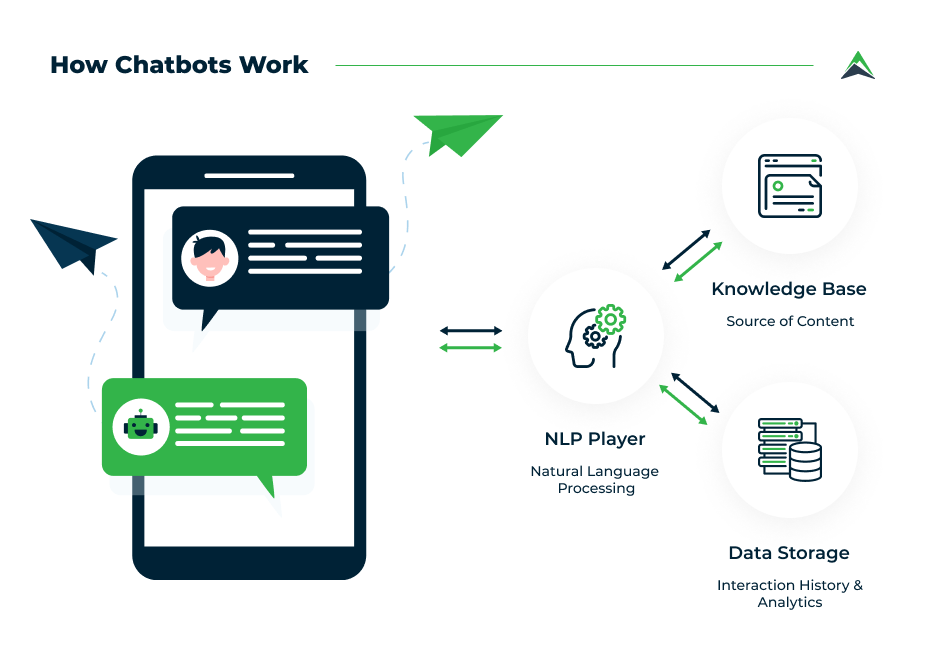
The first chatbots were like simple flowcharts. If a customer didn’t use the exact right word, the bot failed. Today, AI bots use “Natural Language Understanding.” They don’t just look for keywords; they understand what you mean, how you feel, and the context of your question. They can even handle sarcasm or complex questions with a human-like touch.
In 2026, the best bots are “Context-Aware.” These bots are connected to all of a company’s data. If you say, “It’s broken again,” the bot already knows what you bought, your repair history, and your warranty. It doesn’t need to ask for an account number because it recognizes you through biometrics or secure codes. This makes solving problems fast and easy.
Natural Language Processing (NLP): Turning human talk into data a computer can use.
Sentiment Analysis: Figuring out if a customer is upset so the bot can change its tone or call a human for help.
Smart Answers (RAG): Making sure the AI only gives answers based on real company files to prevent it from making things up.
We live in a world that never sleeps. A customer in Tokyo might need help while the support team in New York is still in bed. AI chatbots fill this gap perfectly. They offer “Zero-Latency Service,” meaning they answer and often fix problems in seconds. This speed is now what customers expect.
Recent stats show that 68% of people would rather talk to a bot for simple tasks—like tracking a package—than wait on hold for a person. By handling these easy tasks, AI bots prevent “Queue Burnout.” This ensures that when a human agent does step in, they aren’t tired out by boring questions. They can focus on the big problems that need real empathy.
Global Reach: One AI can talk to thousands of people in over 100 languages at once.
No More Waiting: Getting rid of the “on-hold” music that makes customers quit.
Steady Messaging: Unlike humans, a bot never has a “bad day” and always gives the right info.
Modern AI bots are data powerhouses. By linking with customer systems like Salesforce, the bot provides a level of personal service that humans struggle to match. In 2026, bots act like personal shoppers or advisors.
<p>For example, a bank bot might see that you are paying high fees while traveling. Instead of waiting for you to complain, it can start a chat: “Hi Sarah, I see you’re traveling! Want to switch to our ‘Traveler’ card this month to save on fees?” This changes customer service from a department that just fixes problems into one that actually makes money.</p>
Predicting Needs: Guessing what a customer wants by looking at what they bought before.
Live Changes: Changing the chat or suggestions on the fly during a talk.
User Profiles: Remembering if you like to keep things professional or if you prefer a friendly chat with emojis.
The goal for using AI chatbots is clear. A human service call can cost a business $5 to $12. An AI chat costs just pennies. For a company with millions of customers, the savings are massive. But the real value is in “Operational Elasticity.”
During busy times, like Black Friday, the number of help requests can jump by 500%. In the past, companies had to hire extra staff who weren’t well-trained. AI bots scale up instantly to meet this need. In 2026, smart companies use these savings to pay their best human staff higher salaries to handle the most important client relationships.
Lower Costs: Moving most help requests to a channel that costs almost nothing.
Faster Training: You can update an AI’s brain in minutes; training 500 people takes weeks.
More Sales: Bots can lead customers directly to a purchase during a chat.
In 2024, a major phone company replaced its old phone menus with an AI chat. The results were a gold standard for the industry. Before AI, 40% of people hung up because the wait was too long. After the AI arrived, the “First Contact Resolution” rate jumped from 55% to 82%.
The AI was given the power to actually do things, like resetting routers or checking signal strength. Because the AI could “talk” to the company’s hardware, it could find a line fault in six seconds. A human used to take five minutes to do the same task. This proves that when AI can act and not just talk, it becomes a powerful tool.
Tech Help: Bots that can run tests and fix software issues from afar.
Live Updates: Connecting the bot to the company’s main systems to update accounts instantly.
Better Self-Service: Giving customers the tools to fix their own problems with AI guides.
Many people worry that AI will take all jobs. In reality, 2026 is the year of the “Cyborg Agent.” The best service teams use an “Agent Assist” model. The AI listens to a call or reads a chat and helps the human agent. It finds the right files, suggests the best answer, and even writes the follow-up email.
This makes the job much easier for humans. Agents no longer have to memorize thousands of pages of rules. They can focus on being “Human”—showing kindness and calming down angry callers. This leads to shorter calls and happier workers, as the AI takes away the boring parts of the job.
Instant Knowledge: The AI acts like a fast library for the human worker.
Auto-Notes: The AI writes the call summary, saving the agent several minutes per call.
Compliance: The AI can remind an agent if they forget to say a legal disclaimer.
Despite the perks, there are hurdles. Sometimes AI “hallucinates” and says things that aren’t true. In 2026, companies use a second, smaller AI to check the work of the first bot. Privacy is also a big deal. Customers must know their data is safe.
There is also the “Uncanny Valley.” If a bot tries too hard to sound human but gets it wrong, people stop trusting it. The best move in 2026 is “Total Transparency.” Bots should say they are AI from the start. They must also offer an easy way to talk to a real person at any time. Balancing machine speed with human trust is the main goal for leaders this year.
Data Privacy: Following all the new 2026 AI laws to keep data safe.
Fairness: Making sure the AI doesn’t learn bad biases from old data.
The “Human Hatch”: Always letting customers switch to a real person when they need to.
AI chatbots have grown from simple tools into the main engine for customer service. By combining machine speed with deep data, they offer service that is faster and more personal than ever. This helps businesses save money, lets human workers do better work, and gives customers the instant help they want.
Key Takeaways:
More Than Just Help: Bots are now used for sales and loyalty, not just fixing errors.
Data is Key: The best bots are the ones linked to the company’s main data.
The Hybrid Way: The best results come from humans and AI working as a team.
Trust Matters: Being honest about using AI is the only way to keep customers happy.
Growing Fast: AI lets brands grow around the world without needing a massive staff.