

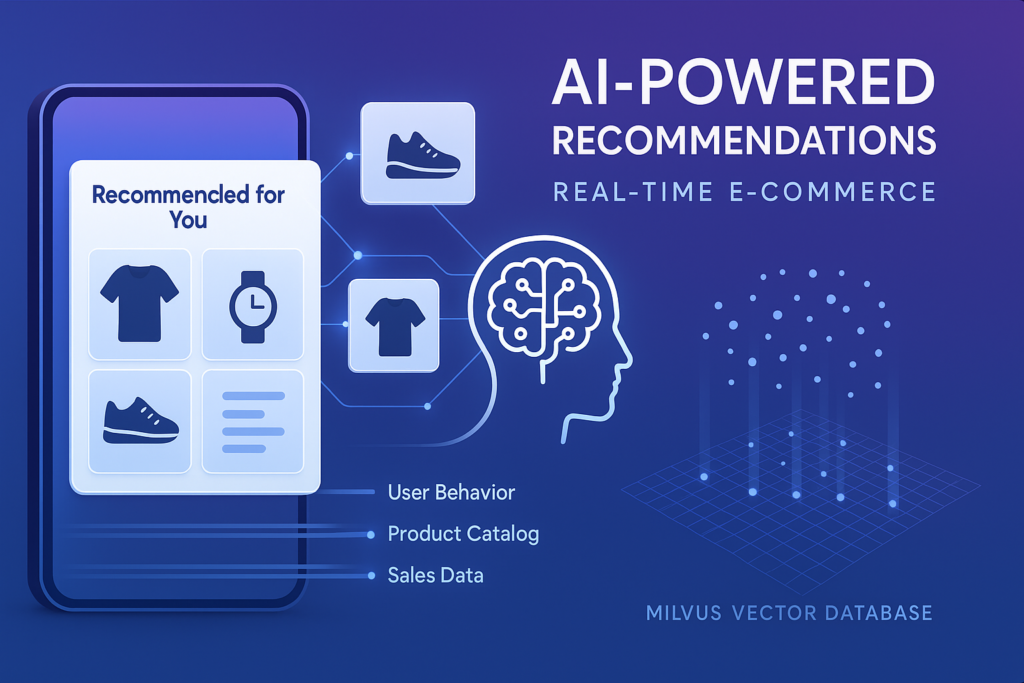
In the fast world of online shopping, having too many choices can be a problem. When customers see thousands of items, they often get tired of choosing and leave without buying anything. This is where AI-Powered Recommendation Systems for E-Commerce help. By 2026, these tools have moved beyond simple “people also bought” lists. They are now smart engines that provide deep personalization. They act like a digital personal shopper, guessing what a customer wants before they even say it.
The impact on sales is huge. Data shows that recommendation engines drive up to 35% of Amazon’s revenue and 75% of what people watch on Netflix. For online stores, a good AI strategy can raise sales rates by 20% to 30%. It also helps increase the average order value by suggesting related items. This article explores how these systems work, the different types of math used, and how they are changing the future of retail.
At its heart, a recommendation system is a data factory. It takes huge amounts of raw info—called “signals”—and turns them into a list of products made for one person. Modern systems use real-time processing to make sure suggestions fit what the user is doing right now.
The process starts with gathering data. AI tracks two types: explicit and implicit. Explicit data is direct feedback, like star ratings or reviews. Implicit data is more common and often more useful. it includes what you click on, how long you stay on a page, and your past orders. By 2026, smart systems also look at “context.” This includes the local weather, the device you are using, and the time of day to give even better suggestions.
Collaborative filtering is an old but powerful method. It works on a simple idea: if User A and User B liked the same things in the past, and User A buys something new, User B will likely like it too. It doesn’t look at what the product is; it only looks at how people behave.
There are two main types: User-based and Item-based. User-based filtering finds “look-alike” shoppers and suggests items they bought. Item-based filtering, made famous by Amazon, looks at how products relate. If millions buy a camera and a tripod together, the system learns they go together. The main problem here is the “Cold Start.” It is hard to suggest brand-new items that no one has bought yet, or to help new users who have no history.
Unlike the “crowd” method, content-based filtering looks at the “DNA” of the product. The AI looks at the details of items you liked before—such as brand, color, or price. It then finds other items with those same traits. If you bought organic cotton shirts before, the system will show you more eco-friendly clothes.
This is great for suggesting new products. As soon as a seller adds a new item with a good description, the AI can show it to people who like those features. However, it can be too predictable. It rarely suggests something outside of what you usually buy. In 2026, the best stores use “Hybrid Systems.” These combine both methods to give the best results.
Sephora uses a smart hybrid system. Their AI looks at your skin type and color likes (content). It also looks at what other people with similar skin are buying (collaborative). This makes sure the suggestions work for the user and are popular with others. This has greatly increased their customer loyalty.
The biggest change lately is the move to Deep Learning. Traditional math is often simple, but human behavior is not. Deep Learning uses “neural networks” to map complex relationships. These models can understand “steps.” For example, it can learn that someone who buys a phone today will likely want a case tomorrow and a new charger in three months.
Deep Learning also allows for “Visual Suggestions.” Using computer vision, the AI can “see” a product image. If a customer clicks a dress with a floral pattern, the AI can find other dresses with a similar style, even if the written descriptions are different. This has changed fashion retail, where style is easier to see than to describe.
Using an AI system is a smart business move. The goal is to move from just selling once to building a relationship. When a customer feels understood, they stay loyal longer. They are less likely to hunt for lower prices elsewhere because they find exactly what they need on your site.
Important numbers improve quickly. Click rates on suggested items are often 5 to 10 times higher than regular ads. Average order totals go up because the AI suggests the perfect add-ons at checkout. Most importantly, it keeps people on the site. If a user finds an item that is out of stock, the AI can show a similar one that is available, saving the sale.
With great power comes a need for care. AI has started many talks about privacy. In 2026, new laws require stores to be clear about how they use data. Shoppers are also more careful. This has led to the rise of “Zero-Party Data”—info that a customer gives on purpose.
Zero-party data includes things like taking a “Style Quiz” or choosing dietary needs. AI is now built to prefer this “opt-in” info over secret tracking. Ethical AI also balances “knowing” you with “surprising” you. A good system must show you what you like but also offer new things so you don’t get bored in a “filter bubble.”
Building a top-tier system is hard. One big wall is “Data Silos.” If the AI doesn’t know what a customer bought in a physical store, its guesses will be poor. It is also frustrating for a customer to be told to buy something that is actually out of stock.
Another problem is speed. A suggestion is useless if it takes five seconds to appear. Modern shoppers want results now. This requires expensive servers and fast databases. Finally, there is the “Black Box” problem. As AI gets smarter, it is harder for humans to explain why it chose a certain product, making it tough to fix mistakes.
The future of shopping is not a grid of boxes; it is a talk. Generative AI is turning these systems into “Shopping Assistants.” Instead of searching, a user might say: “I’m going to a summer wedding in Italy, what should I wear?” The AI will then suggest a full outfit based on the user’s size and the local weather.
We are also seeing “Hyper-Personalized Content.” Soon, product pictures and descriptions might change for every person. If the AI knows you are an athlete, it will show a watch’s fitness features. If you love tech, it will show the same watch but talk about its sensors. This makes every store feel like it was built for just one person.
In 2026, AI recommendation systems are a must-have for online stores. By using deep learning and real-time data, stores can help customers instead of annoying them. The main takeaways are:
The goal of AI in retail is to bring back the “human touch” to the web—giving every shopper the expert help they would find in a local shop.