

As we move through 2026, the world’s energy depends on a fragile network of narrow sea paths and long pipelines. In this volatile world, Disruption of Oil Transportation Routes is a constant threat to stability. Oil is the lifeblood of modern life. It powers our factories, trucks, and military machines. However, when war breaks out, these paths become the first targets. Blocking oil isn’t just a side effect of fighting; it is often a plan used to crush economies and force countries to give in.
Today, the danger to these “arteries” is clearer than ever. From drone attacks in the Red Sea to bombed pipelines in Eastern Europe, energy is under constant threat. This article looks at how war stops the flow of oil, why certain sea paths matter so much, and how these threats are forcing the world to find new ways to stay powered.
Most of the world’s oil moves by sea. Giant tankers carrying millions of barrels must pass through narrow gaps called “chokepoints.” These are the weakest links in the global supply chain. In a war, closing just one gap can instantly stop a huge amount of oil from reaching the market, causing prices to skyrocket.
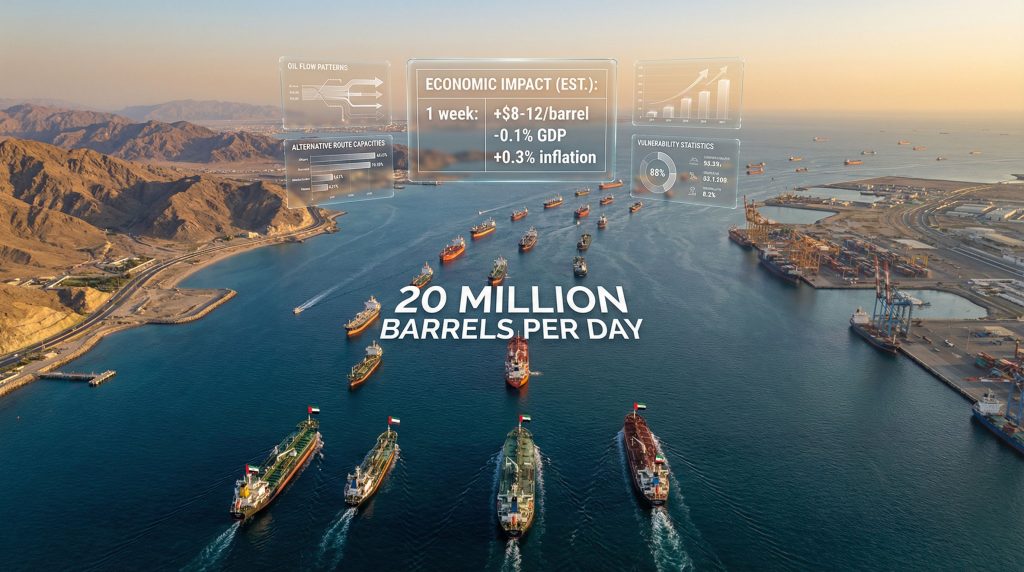
The Strait of Hormuz is the most important oil path in the world. In early 2026, as fights broke out nearby, the threat of a blockade became a daily worry. About 21% of the world’s daily oil passes through this one spot. Even a small fight in these waters adds a “risk fee” to the price of oil, affecting the global economy in just a few hours.
The events of late 2025 and early 2026 taught the world a hard lesson. Attacks on ships in the Red Sea forced oil companies to stop using the Suez Canal. Instead, tankers had to take a massive detour around the bottom of Africa (the Cape of Good Hope).
This detour added up to 6,000 miles to the trip. In real terms, it made the journey 10 to 14 days longer. This caused two main problems: it cost much more in fuel and labor, and it meant fewer ships were available because they were stuck at sea for longer. By February 2026, shipping costs had more than doubled, and those costs ended up being paid by regular people at the gas pump.
While sea paths get the headlines, pipelines on land are just as important and even harder to protect. They stretch across thousands of miles of empty land, making them easy targets for bombs or hackers. In modern wars, attacking energy infrastructure is now a top military goal.
Destroying a pipeline hub does more than just stop the oil; it creates a mess that can ruin the local environment. Also, the parts needed to fix high-pressure pumps are hard to find during a war. In 2026, we have seen a rise in “hidden warfare,” where hackers break into the computer systems that control pipeline pressure, causing them to burst without a single bomb being dropped.
The most direct effect of blocked oil is price volatility. Markets hate the unknown. Even if no oil is actually lost, the fear of a shortage makes traders raise prices. This “war fee” can add $30 to the cost of a barrel almost overnight.
For the world economy, this leads to “oil inflation.” Since oil is needed for almost everything—from farming to shipping—when oil prices go up, everything else gets more expensive. In early 2026, trouble in the Strait of Hormuz caused food prices to jump by 15% in just two months. This happened because the cost of moving grain and fertilizer became too high. Poorer nations suffer the most, often leading to protests and more unrest.
War often leads to trade bans (sanctions). To get around these, a “shadow fleet” has emerged. these are old, poorly kept tankers with secret owners. By 2026, about 15% of the world’s tankers are part of this “gray market.”
This shadow fleet is a ticking time bomb. These ships often lack proper insurance and turn off their tracking systems to stay hidden. This makes them much more likely to crash or spill oil. In a war zone, these ghost ships make naval missions harder. If one of these old tankers sank in a narrow path, the cleanup could block the route for weeks, causing a bigger crisis than the war itself.
The constant threat to oil in 2026 has changed how countries think about safety. When a nation sees its economy can be stopped by a single missile in a distant ocean, they want to stop relying on foreign oil. This is called “energy sovereignty.”
Nations are now doing two things at once. They are pumping more of their own oil to avoid risky sea paths, and they are spending billions on electric power. Electric cars and solar power are no longer just about the environment; they are now about national safety. In Europe, a new plan aims to cut oil use by 30% by 2030, replacing it with local nuclear and renewable energy. War is actually speeding up the move to green energy.
It is easy to focus on “barrels” and “prices,” but blocked oil routes have a massive human cost. In many countries, oil is the main source of electricity. When the oil stops, the lights go out.
In war zones, no fuel means hospitals can’t run their machines, water pumps stop working, and food rots without fridges. During the cold winter of 2025-2026, fuel shortages in parts of Europe and the Middle East left millions of people without heat. Using energy as a weapon is a direct attack on regular people. Groups are now calling for “energy corridors” to protect fuel for civilians, but these are often ignored during a war.
Looking ahead, the days of “cheap and easy” oil travel are over. We have entered an era where protecting oil paths is just as important as drilling for the oil itself. Using navy ships to guard tankers and using high-tech domes to protect pipelines are now normal costs of doing business.
Technology will be a huge help. AI systems can now spot leaks or hackers in real-time. Also, countries are building smaller refineries closer to home so they don’t have to ship fuel across the world. However, as long as the world is addicted to oil, the paths that carry it will be the most dangerous places on earth.
The blocking of oil routes due to war is a global crisis. As we have seen in 2026, the weakness of sea paths and pipelines makes the whole world unstable.
In the end, blocking oil routes is a reminder that energy is a matter of survival. In a world of conflict, the struggle to keep these “arteries” open will decide which nations thrive and which fail.