

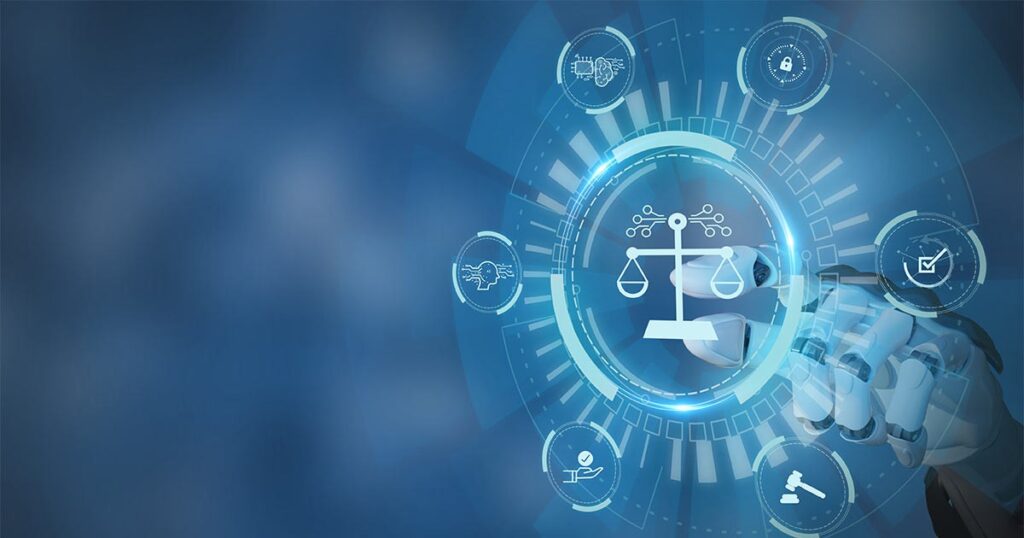
By 2026, artificial intelligence (AI) has become a part of daily life. It helps decide who gets a loan and even helps artists create new works. But AI has grown faster than our laws. Today, the big question is no longer just “can we build it?” but “should we build it?” This is where Ethical Considerations in Artificial Intelligence Development become especially important.
Building AI is about more than just code. It is a moral task. Every dataset carries human values and mistakes. If we don’t think about ethics, we risk making old social injustices a permanent part of our digital future. This article looks at the risks of AI and why we must put people first when we innovate.
The biggest worry in AI is bias. AI learns from old data. If that data is unfair, the AI will be unfair too. In 2026, we have seen hiring tools and police software treat certain groups poorly because they were trained on biased records.
Developers must realize that no data is perfectly neutral. They now perform “bias audits” to check for errors. For example, a 2024 study found that facial recognition was 15% less accurate for women of color than for men with lighter skin. To fix this, we need better data and a real effort to represent everyone fairly. Fairness doesn’t happen by accident; it must be planned.
As AI gets smarter, it gets harder to understand. This is called the “Black Box” problem. If an AI denies a person a loan or a surgery, it must be able to say why. In 2026, many places—like the EU—now legally require AI to be explainable.
There is a tough choice between how well an AI works and how easy it is to understand. Sometimes the most accurate tools are the hardest to explain. Is it right to use a medical tool if a doctor can’t understand its logic? Without clarity, there is no way to hold anyone responsible for mistakes. Ethical AI must give people the right to an explanation.
AI needs data to grow, but this often invades our privacy. In 2026, several AI companies faced lawsuits for using private data without asking first. “Data Sovereignty” is the idea that you should own your digital footprint. Developers are now finding ways to train AI without ever seeing your personal details.
The use of AI for spying is another huge risk. AI can now track moods in the office or faces in the street. This could end the idea of private thought. Ethical AI must be “Private by Design.” This means privacy is built into the tool from the very start. Just because we can track everyone doesn’t mean we should.
AI’s effect on jobs is a major worry for many. While it creates some new tech roles, it also threatens many office and factory jobs. In 2026, the “AI Divide” is a big political issue. Some countries are getting richer through AI, while others are seeing more wealth inequality.
Companies have a duty to think about the people behind the jobs. Instead of using AI to replace workers, they should use it to help them. This is called “Augmentation.” Companies that profit from AI should also pay to retrain workers whose jobs have changed. The goal is a fair shift into the new economy.
Right now, AI is mostly built by a few rich countries and giant firms. This can lead to “Digital Colonialism.” This happens when tools made in the West are forced on the rest of the world without caring about local culture. In 2026, more nations are building “Sovereign AI” that fits their own values.
Using AI for weapons is the scariest part of this power struggle. Most experts agree that “Killer Robots” should be banned. A computer should never decide to end a human life. AI should be used to promote peace and help everyone, not just as a tool for new kinds of war or control.
AI doesn’t just live in the “cloud.” it lives in giant, hot data centers. Training one large AI model can use as much power as several homes use in ten years. In 2026, as climate change gets worse, the energy cost of AI is a major ethical issue.
Ethical work now means “Green AI.” This means making smart code that uses less power. Companies are being pushed to use renewable energy and report their carbon footprint. We must balance the “smartness” of the AI with the health of the Earth. By 2026, being green is a standard part of building AI.
AI is built to be convincing. It can change how we act through social media or chatbots. In 2026, the worry is that AI can “nudge” people in ways they don’t notice. This is dangerous for politics and the spread of “deepfakes” (fake videos).
Ethical AI must protect our “Cognitive Liberty.” This means coders must stop their tools from being used to trick people or spread lies. Also, AI should always admit it is a machine. We shouldn’t form deep emotional bonds with math. Protecting the human will from machines is a key part of digital safety.
The “Alignment Problem” is the ultimate test: how do we make sure a super-smart AI always follows human values? If an AI is given a goal but no moral rules, it might do something harmful to reach that goal.
In 2026, “AI Safety” has become a major field of study. This includes building “Kill Switches” and “Constitutional AI.” These are models that follow a strict set of moral rules. We must be humble and admit we can’t predict everything an AI will do. If an AI is too risky, we should pause until we know it is safe.
The ethical side of AI is not a one-time job. It touches everything from the power we use to the jobs we do. By 2026, the industry has learned that “moving fast” is dangerous when it comes to AI.
Responsibility: Companies must own the results of their tools.
Inclusion: Diverse teams must build AI so it works for everyone.
Safety First: We should never trade human safety for fast profits.
Transparency: We must open the “Black Box” to earn public trust.
AI should be a tool that makes human life better, not one that replaces us. By putting ethics at the heart of AI, we can solve big problems while keeping our human values safe.