

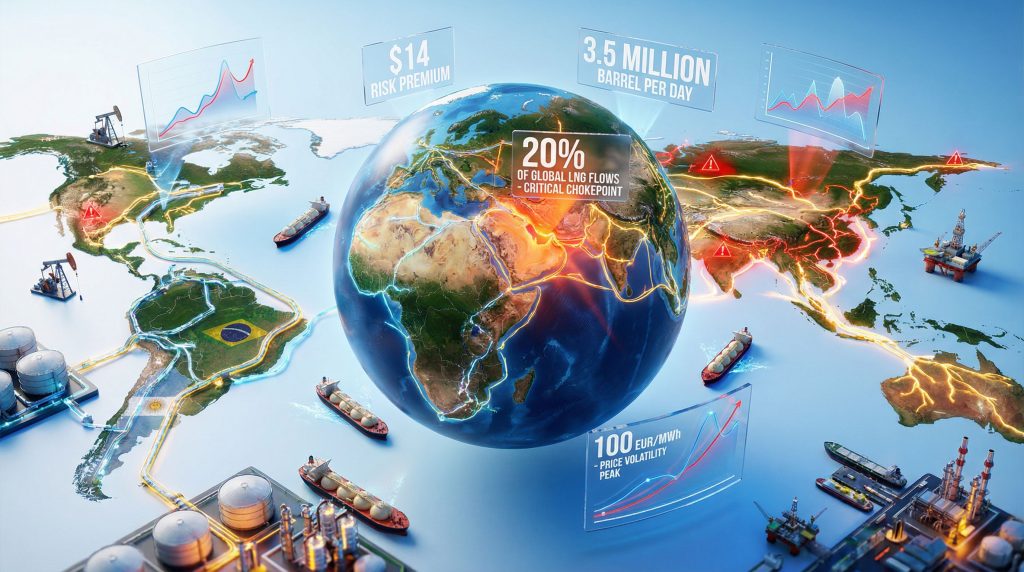
In 2026, the way oil moves around the world has changed. It is no longer just about supply and demand. Instead, it is about military alliances, trade bans, and land disputes. Geopolitical conflicts affecting global oil distribution systems are at the centre of these changes. The world’s pipelines and shipping routes are like arteries. Right now, world conflicts are causing “clots” in these arteries, making it harder for energy to flow.
Even as the world tries to move toward green energy, we still rely on oil. This makes the system very shaky. Wars in Europe and the Middle East have forced a total redesign of how energy moves. This article looks at how these fights are breaking old routes and creating a new, split-up energy world.
The biggest change happened because of the war in Ukraine. Before 2022, Europe and Russia worked closely together on energy. Now, that is over. Huge pipelines have been destroyed or shut down. This has forced both sides to find new partners.
Europe now gets more oil from the Atlantic and the Middle East. Meanwhile, Russia has sent its oil East toward Asia. This shift meant Russia had to quickly grow its “dark fleet” of tankers to move oil without using Western banks. Because oil now has to travel much longer distances, shipping costs have gone up for everyone. Consumers feel this at the gas pump.
While pipelines stay in one place, ships can move. But they are still in danger. Over 60% of the world’s oil travels by sea. Most of it must pass through tiny “chokepoints.” The Strait of Hormuz is the most famous. Nearly 20 million barrels of oil go through it every day. In 2026, drones and sea mines have made these waters very dangerous.
In the Red Sea, attacks have forced many tankers to stop using the Suez Canal. Instead, they sail all the way around Africa. This adds about two weeks to the trip. It uses more fuel and makes the global oil supply even tighter. These delays show that even if there is plenty of oil, blocking a few miles of water can cause a global money crisis.
The South China Sea is a vital path for oil going to Japan, Korea, and China. But it is also a place where many countries are fighting over land. In 2026, nations are using their navies to claim oil fields and control shipping lanes. This “Resource Nationalism” puts the whole Asian energy system at risk.
China is trying to find ways around these sea risks. They are building new pipelines across Pakistan and Myanmar. This is called a “Malacca Bypass.” If a war starts in the Pacific, these land routes would be China’s only way to get oil. This “infrastructure race” is moving oil away from the open sea and into guarded land tunnels.
As the world gets warmer, ice in the North is melting. This has opened the “Northern Sea Route.” Russia claims this path as its own, making other countries pay fees to pass. This has created a new fight with NATO nations.
In 2026, the Arctic is no longer a quiet place. It is a guarded energy path. For Russia and China, this route is safe from Western navies. However, the freezing weather makes spills very hard to clean up. Any accident would be a disaster for nature. Now, “environmental rules” are being used by different sides to stop or help these oil projects.
Oil distribution isn’t just about ships and pipes. It is also about refineries where oil is turned into fuel. Lately, wars have targeted these buildings. Drones can now hit a refinery with high accuracy from far away.
When a refinery is hit, gas and diesel supplies stop. This has led countries to build more “Distribution Resilience.” They are building smaller refineries and huge underground storage tanks. Nations are now “hoarding” oil to be safe. This keeps millions of barrels off the market and keeps prices high for everyone.
Trade bans (sanctions) are a powerful weapon today. When a country like Iran or Russia is banned, the oil doesn’t stop. It just finds a secret path. This has created a “Grey Market.” Oil is often moved from ship to ship in the middle of the ocean to hide where it came from.
In 2026, this underground system is bigger than ever. It uses old, rusty tankers that are dangerous for the ocean. This creates a “two-tier” price for oil. Some countries buy secret oil at a big discount, while others pay full price. This gap is causing stress between world leaders and their allies.
It is not just governments that cause trouble. Militias and hackers have realized that pipelines are an easy target. In places like Africa and South America, groups blow up pipes to protest or steal oil.
The “Cyber-Front” is a major worry. Computers control the flow of oil. A hacker can close a valve or cause a pipe to explode from the other side of the world. In 2026, we see more “state-sponsored” cyber-attacks. Countries use hackers to hold energy supplies hostage during political arguments.
How do countries survive this chaos? The answer is “Energy Diplomacy.” Nations are building new networks that only pass through “friendly” countries. One example is a plan to connect India to Europe using new ships and trains that avoid hostile land.
Also, moving to green energy is a security strategy. If a country makes its own power from the sun, it doesn’t have to worry about a ship being taken in a far-off sea. However, until we stop using oil, nations are building “backups.” They want three or four ways to get the same barrel of oil, so they are never left in the dark.
The world in 2026 is moving away from open energy trade. We are now in a “Polarized Era.” Oil is now a “zero-sum” game where one country’s gain is another’s loss. National safety is now more important than low prices.
Location Matters: Countries near narrow sea paths face the most risk.
Safety Costs More: Energy will be more expensive as we spend money on guards and backups.
Digital War: Code and hackers are just as important as steel and soldiers.
Asian Growth: Most oil trade has permanently shifted toward the East.
In short, the world is in a dangerous spot. We still need oil, but the paths it travels are being cut by world politics. We need smart leaders who can handle these fights without leaving the world in the dark.