

In 2026, the global energy world is facing extreme ups and downs. How Armed Conflict Shakes Energy Markets in 2026 has become an urgent question, as war has pushed supply chains to their breaking point. While the world is slowly moving toward green energy, we still rely heavily on oil. This makes energy markets very sensitive to any fighting. From strikes in the Middle East to the ongoing war in Eastern Europe, military conflict is now the main driver of oil prices. This reminds us that energy safety is the same thing as national safety.
As of April 2026, the oil market is facing its biggest security challenge in history. The trouble started in late February 2026 with air strikes between U.S.-Israeli forces and Iran. Before this, oil prices were stable at around $60 per barrel. Within weeks, prices doubled to over $120, sending a shock through the global economy.
This volatility is more than just fear; it is based on the reality of lost supply. On March 4, 2026, the Strait of Hormuz effectively closed. This narrow waterway carries 20% of the world’s oil and gas. Its closure has created a supply shock not seen since the 1970s. For everyone involved, the “war premium”—the extra cost added because of conflict—is now a daily reality. It affects everything from the price of gas to how banks manage money.
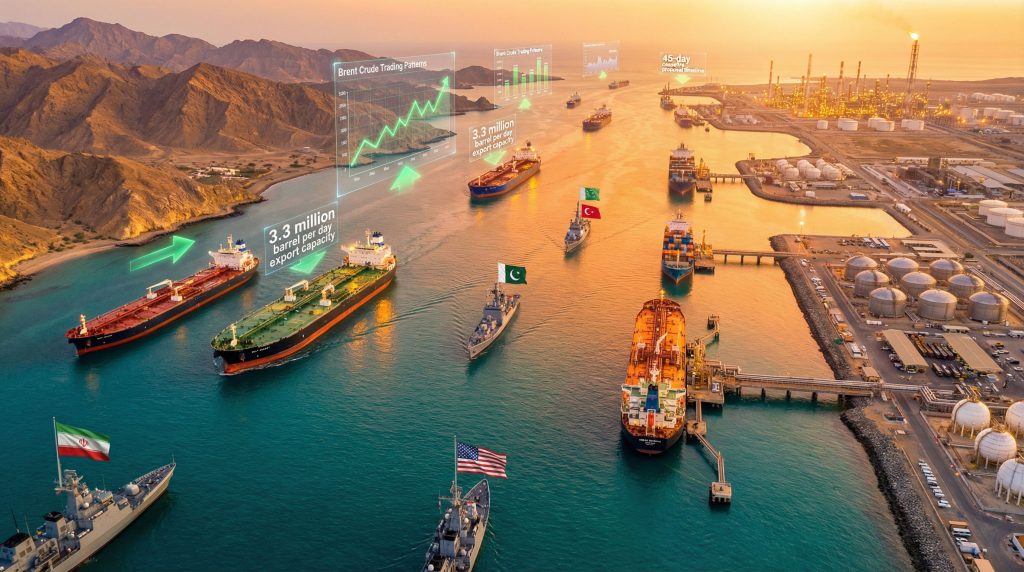
The biggest reason for the price swings in 2026 is the blockade of the Strait of Hormuz. Unlike past threats, the current war has stopped tanker traffic for a long time. This has “stranded” roughly 20 million barrels of oil and gas every day. In Saudi Arabia and the UAE, export volumes dropped by 10 million barrels a day by mid-March.
This shortage has forced major buyers in Asia—like China, India, Japan, and South Korea—to find oil elsewhere at any cost. These four nations buy most of the oil that usually goes through the Strait. Their race to buy oil from places like the U.S., Brazil, and Nigeria has caused prices to skyrocket. This has created a fractured market where prices vary wildly depending on how close a country is to a safe oil source.
Economists warn that this oil shock could cause a global recession if prices stay high. Energy costs are pushing world inflation toward 5.8%. For places like Europe and Japan, the result is “stagflation.” This is a painful mix of high prices and no economic growth.
Families feel this most at home. The cost of diesel and jet fuel has more than doubled, making travel and shipping very expensive. Airlines are canceling flights to save cash, and shipping companies are adding large fees. This “energy tax” is eating up the money people would usually spend on other things, causing the economy to stall.
While the Middle East is the main focus, the war in Ukraine still pressures the market. In early 2026, Russia began attacking Ukraine’s energy systems again. While Ukraine’s defenses have improved, the damage to power grids and diesel supplies keeps European markets nervous.
The war in Ukraine has permanently changed how Europe trades. Europe has cut its use of Russian gas from 40% down to 10%. However, this has made Europe rely more on the global gas market—the same market now suffering because of the Iran war. This “double crisis” has left Europe’s gas storage dangerously low, causing prices to double by mid-March.
In 2026, oil price swings are made worse by computer trading and speculators. When fighting starts, prices jump instantly because traders expect the worst. Experts say oil was already priced $10 higher than it should have been even before the first strikes, simply because people were worried about a conflict.
Once the fighting began, the market entered a state where today’s oil is much more expensive than oil promised for the future. This discourages companies from saving oil and encourages them to sell it immediately. To help, the IEA released 400 million barrels of emergency oil in March to calm the market and keep oil moving.
When there is a crisis, the world looks for other sources of oil. In 2026, most new oil is coming from the United States, Kazakhstan, and Brazil. The U.S. shale industry is booming again because high prices make it profitable to drill in expensive areas.
However, there is a limit to how fast this oil can help. U.S. pipelines and ports are already nearly full. Also, U.S. oil is “light,” while many refineries in Europe and Asia are built to use “heavy” oil from the Middle East. Changing these refineries is difficult and expensive, meaning U.S. oil cannot perfectly replace what was lost.
The biggest long-term result of the 2026 war will be a faster move to green energy. Experts say this crisis is a turning point. It proves that relying on fossil fuels is a safety risk. Countries that once saw climate goals as just “helping the planet” now see them as a way to stay safe from foreign wars.
By the end of 2026, investment in solar, wind, and electric cars is expected to hit record levels. In China, electric car sales have sped up because gas is so expensive. The cost of protecting oil routes with navies and soldiers is making fossil fuels much more expensive than using local, renewable power.
The market remains in a dangerous spot for the rest of 2026. If the fighting stops and the Strait of Hormuz reopens soon, prices could drop back to $60. However, the history of attacks on tankers and oil plants has changed how investors think.
The “new normal” means everyone will be watching world conflicts more closely. Even in times of peace, the fear of another blockade will likely keep oil prices $5 to $10 higher than usual. Investors are being told to expect price swings as a permanent part of the end of the oil era. The world is now looking for ways to make sure its economy no longer depends on war-prone regions.
Summary: The Big Picture
The 2026 war has shown us how fragile the oil market really is. The main lessons are:
In short, while we focus on the high price of oil today, the real story is about a world trying to break its habit of using fuels that lead to war.