

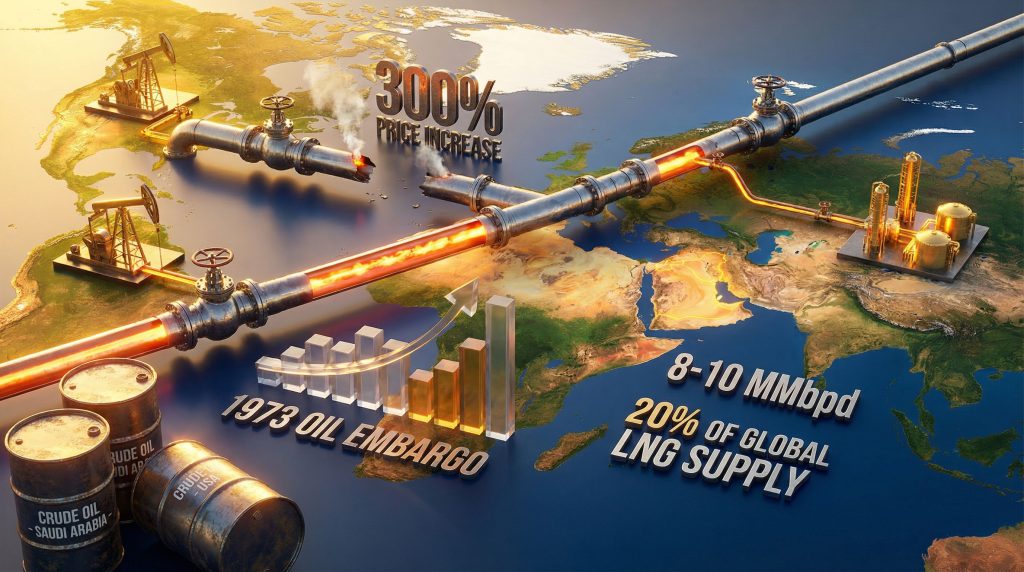
In 2026, the world’s energy market is facing a strange problem. Even though we are moving faster toward green energy, we still rely heavily on crude oil. This deep dependence has created a shaky balance. We now face serious oil shortages and prices that jump up and down wildly. Navigating global oil supply shortages and price volatility has become a challenge for industries and consumers alike. For today’s economy, oil is more than just fuel. It is the basic ingredient for plastics, medicines, and shipping. When the supply of this “black gold” breaks down, everyone feels it—from big corporations to regular families.
The current crisis isn’t caused by just one event. It is a “perfect storm.” Wars have disrupted trade, companies haven’t spent enough money on new wells, and some green policies have moved faster than the technology could keep up. According to the International Energy Agency (IEA), the world’s “spare capacity”—the extra oil kept for emergencies—is at its lowest level in decades. This article looks at why we have a shortage, what drives price swings, and how countries are trying to stay secure.
Politics has always controlled oil prices. In 2026, the map of oil production is split. Long wars in Eastern Europe and tension in the Middle East have removed millions of barrels of steady oil from the market. We are also seeing a rise in “Resource Nationalism.” This happens when countries keep their oil for themselves to stay stable at home instead of selling it to the rest of the world.
Because of these shifts, major oil prices often jump by 10% in a single day. For countries that have to buy all their oil, like those in Asia and Europe, these jumps hurt their entire economy. Nations are no longer just looking for the cheapest oil; they are looking for the safest source. This “security cost” is now part of the price of every barrel, making energy more expensive than old economic models predicted.
A main cause of the 2026 shortage is a lack of spending. For nearly ten years, global investment in finding and digging up new oil has dropped. Banks and investors have moved their money away from fossil fuels to support environmental goals. While this was meant to help the planet, it happened before we had enough green energy to replace oil completely.
The result is a supply gap. Oil fields naturally dry up over time. Without constant work to find new spots, production drops by about 5% every year. By 2026, the industry is struggling to keep up with how much oil we use. Even with prices so high, it takes years to start a new project. This has created a “price floor”—a level below which prices simply won’t fall, no matter what happens to demand.
Even when we have raw oil, the world has another problem: a lack of refineries. Raw oil is useless until a factory “cracks” it into gasoline, diesel, and jet fuel. In 2026, the world’s refineries are working at their absolute limit. Many old plants in the West closed down a few years ago, and almost no new ones are being built because of strict rules and high costs.
This has caused the price of “fuel” to move differently than the price of “raw oil.” Even if the price of raw oil drops, the price of diesel at the pump might stay high because there aren’t enough factories to make it. This is a huge problem for inflation. Diesel powers the trucks and ships that move almost every product we buy.
Wild oil prices in 2026 are the main reason why everything else is getting more expensive. Because oil is needed for transport, every price jump at the pump becomes an extra fee on a shipping container. Large shipping companies now have to spend hundreds of millions of dollars more whenever oil prices rise.
Usually, the consumer pays for these extra costs. In 2026, we see a clear link between energy and food. Modern farming needs oil for tractors and natural gas for fertilizer. When energy prices are unstable, food prices go up and down too. This makes it very hard for banks to control inflation because the problem isn’t how much people are spending, but how much it costs to make the goods.
To fight the shortage, many wealthy nations have used their Strategic Petroleum Reserves (SPR). These are emergency oil piles meant for disasters like total blockades. But lately, governments have used them just to try and lower prices. While this helped for a short time, it has created a new risk.
By mid-2026, these emergency piles in the U.S. and Europe are at 40-year lows. Traders now know that the “safety net” is gone. This has actually made prices swing more wildly. People panic-buy oil because they know there is no backup left. Now, governments must compete with private companies to buy oil back to refill their reserves, which keeps prices high.
In the past, U.S. Shale companies could quickly pump more oil to stop prices from rising. In 2026, that has changed. These companies are now focused on “Capital Discipline.” This means they want to give money back to their investors rather than drilling as many wells as possible. Even with oil over $100, they are growing slowly.
Also, the best spots to drill have already been used. The remaining oil is harder and more expensive to get out of the ground. In 2026, the U.S. is still a top producer, but it can’t just “turn on the tap” to help the rest of the world anymore. This makes the global market more dependent on other regions than it has been in two decades.
2026 is a year of “Energy Dualism.” Nations want to hit “Net-Zero” targets, but they also need more oil to keep their economies from crashing. This split personality causes price swings. Policies that stop long-term oil investment make the supply weak, while the world still needs more oil for places like India and Africa.
This “messy middle” of the energy transition is risky. We face “energy famines” if we don’t plan carefully. We are also seeing “Greenflation.” This is when high energy costs make it more expensive to build the very things we need for a green future, like wind turbines or electric car batteries. Oil price swings are a symptom of a world trying to change its entire power source while it is still growing.
To survive the wild market of 2026, companies and countries are using new tricks. Many are “Hedging”—buying oil at a set price now to use much later. This protects them if prices spike. This has created a massive “paper market” where people trade oil contracts rather than the actual physical liquid.
Countries are also using “Energy Diplomacy.” Some nations are signing long-term contracts with new partners or trading in different currencies to avoid the U.S. Dollar. In Europe, the focus is on “Demand Management”—using AI and smart tools to help people use less oil when prices are high. These strategies show that the days of “cheap and easy” oil are gone.
The oil shortages and price swings of 2026 aren’t just temporary blips. They are part of a world that is changing its energy system. This “Crude Awakening” shows that we can’t just stop using oil before we have a reliable and cheap replacement ready to go. The crisis comes from a mismatch between our green goals and the daily needs of an economy that still runs on oil.
Key Takeaways:
In 2026, the winners are those who use energy efficiently and have many different sources of power. Looking toward the 2030s, the best way to stay safe from oil price swings is to need less oil and manage what we have with much better technology.