
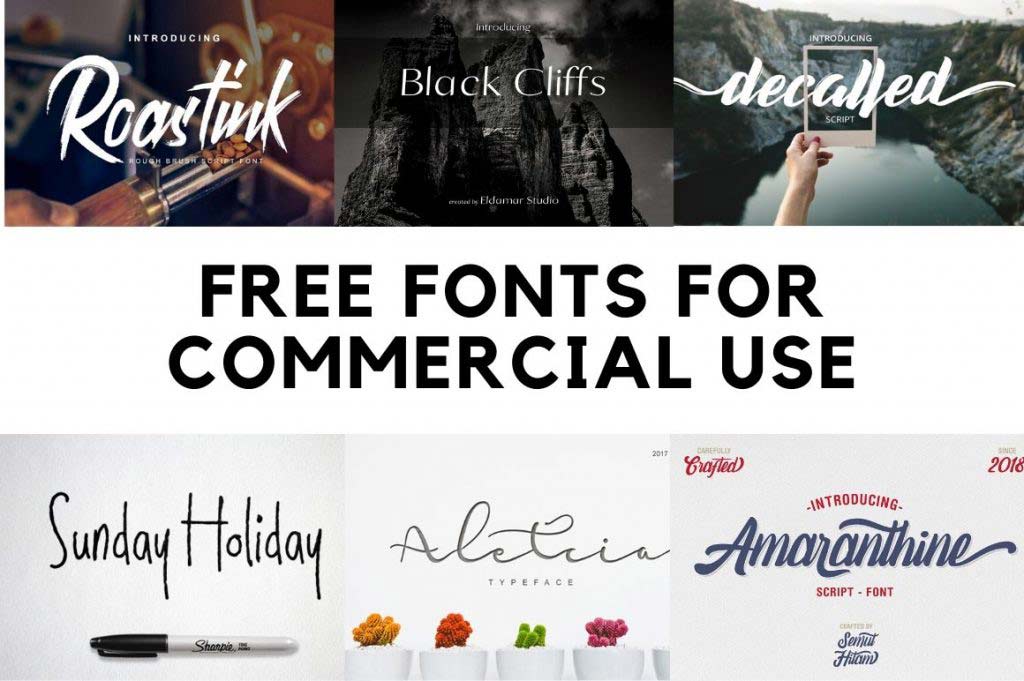
In the modern digital landscape, typography is no longer just a functional tool for legibility; it is a vital pillar of brand identity and user experience. As businesses shift toward more agile content creation, the demand for high-quality, professional-grade typefaces has skyrocketed. However, licensing premium fonts from major foundries can often cost hundreds or even thousands of dollars per year. This economic barrier has birthed a new era of open-source and free-to-use typography. By 2026, the quality gap between paid and free fonts has virtually vanished, allowing designers to build world-class brands without a massive budget.
For a project to be truly “commercial use,” the font must be licensed under specific terms—most commonly the SIL Open Font License (OFL) or the Apache License. These licenses allow you to use the font in logos, print advertisements, websites, and even mobile applications without paying royalties. Choosing the wrong license can lead to severe legal consequences, making it essential to understand which fonts are truly free. This article explores the most popular, versatile, and aesthetically pleasing free fonts available for commercial use today, providing insights into their history, usage, and why they dominate the industry.
Google Fonts has revolutionized the web by providing a massive library of open-source fonts that are optimized for performance. Statistics show that Google Fonts is used by over 50% of the top 1 million websites globally. The primary advantage of using Google Fonts in a commercial project is their cross-platform compatibility and rapid loading speeds. Because many of these fonts are cached in users’ browsers across different sites, your website’s load time can actually improve when using popular choices.
Beyond the technical perks, the sheer variety within the Google Fonts library is staggering. Whether you are building a minimalist tech startup landing page or a classical editorial magazine, there is a typeface designed to meet those specific needs. The most successful commercial projects often leverage these fonts because they provide a sense of familiarity and trust. In a world of digital noise, using a font that users are subconsciously comfortable with can significantly increase conversion rates and session durations.
Roboto is perhaps the most famous free font in the world. Originally developed by Google as the system font for Android, it has since become a staple for web and UI designers everywhere. Roboto is a “neo-grotesque” sans-serif that strikes a perfect balance between mechanical geometry and friendly, open curves. Its dual nature allows it to feel professional and technical while remaining approachable for a general audience.
In a commercial context, Roboto is a safe bet for almost any industry. A 2024 case study of a major fintech app showed that switching from a custom premium font to Roboto improved readability for aging users by 12% without sacrificing the brand’s modern “tech” feel. Because it is so ubiquitous, it doesn’t distract the user; instead, it lets the content take center stage. For developers, the “Roboto Flex” variable font offers even more control, allowing for fluid weight and width adjustments within a single file.
Designed by Steve Matteson, Open Sans is a humanist sans-serif optimized for print, web, and mobile interfaces. It is characterized by its upright stress, open forms, and neutral yet friendly appearance. It is often cited as the font with the highest legibility scores in various user experience testing environments. Many government websites and large-scale corporate portals use Open Sans because it conveys authority without feeling cold or intimidating.
For commercial branding, Open Sans works beautifully as a body font paired with a more “loud” or decorative header. It is the “white t-shirt” of typography—it goes with everything. Its wide character support makes it ideal for companies that plan to scale internationally. Whether it’s a PDF brochure or a complex SaaS dashboard, Open Sans ensures that the information is conveyed with absolute transparency.
For a long time, the world of free fonts was dominated by sans-serifs, while high-quality serifs remained behind expensive paywalls. That has changed dramatically. Serifs are making a massive comeback in 2026, as brands look for ways to appear more “authentic,” “human,” and “established” in the age of AI-generated content. Free serif fonts now offer the same level of elegance and fine-tuned kerning as their paid counterparts.
Serif fonts are particularly effective for lifestyle brands, luxury products, and long-form editorial content. They provide a “rhythm” to reading that sans-serifs sometimes lack, making them better suited for deep focus. Using a free serif font in a commercial project can immediately elevate the perceived value of the product, moving it away from the “generic startup” look and toward a more “timeless” aesthetic.
Playfair Display is the go-to font for luxury and fashion brands on a budget. Drawing inspiration from the Enlightenment period, it features high contrast between thick and thin lines. This contrast makes it feel incredibly upscale. However, because of this contrast, it is best used for large titles and headers rather than long paragraphs of small text, where the thin lines might “disappear” on low-resolution screens.
Case studies in the e-commerce sector have shown that luxury brands using Playfair Display for product titles see a higher “perceived quality” rating from customers compared to brands using standard sans-serifs. It evokes the feeling of a high-end print magazine like Vogue or Harper’s Bazaar. When used in white text over a high-quality photography background, Playfair Display creates a premium commercial look that is hard to beat for zero dollars.
Lora is a well-balanced contemporary serif with a touch of calligraphy. It is unique because it manages to look classic and modern at the same time. Lora is highly optimized for the screen but looks equally impressive in a physical book. It is often used by consulting firms, law offices, and high-end blogs that want to project intelligence and reliability.
For commercial projects that involve heavy reading—such as white papers, annual reports, or case studies—Lora is an exceptional choice. It provides enough visual interest to keep the reader engaged without being tiring. Its curves are gentle, making it feel more “warm” and “conversational” than a rigid font like Times New Roman. In 2026, Lora remains one of the most downloaded serif fonts due to its consistent performance across all digital environments.
While “workhorse” fonts are great for body text, commercial projects often need something unique for logos and social media graphics. Display fonts are designed to be used at large sizes and often carry a very specific “vibe”—whether it’s retro, futuristic, or hand-drawn. The open-source community has contributed some incredible display fonts that allow brands to stand out in a crowded market.
Using a unique display font can be a double-edged sword. If used too much, it can make a website hard to navigate. However, when used strategically for a single word in a logo or a striking headline, it defines the brand’s personality. Statistics from marketing firms suggest that brands using a distinctive typeface in their visual identity are 27% more likely to be remembered by consumers after a single exposure compared to those using generic fonts.
Montserrat is everywhere—and for a good reason. Its geometric simplicity makes it look incredibly modern and “clean.” It was inspired by the posters and signs in the Montserrat neighborhood of Buenos Aires, giving it a slightly “architectural” feel. In the commercial world, it is the darling of creative agencies, real estate firms, and lifestyle startups.
One of Montserrat’s greatest strengths is its wide range of weights. The “Extra Bold” weight is perfect for punchy social media ads, while the “Light” weight creates a sophisticated, airy feel for high-end interior design websites. It is a font that feels “expensive” despite being free. Designers often pair Montserrat (for headers) with a font like Open Sans or Lora (for body text) to create a balanced, professional visual hierarchy.
If your commercial project is a software application or a data-heavy dashboard, Inter is arguably the best free font you can use. Designed by Rasmus Andersson specifically for computer screens, it features a tall x-height to aid in readability of mixed-case and lower-case text. Inter has a very “neutral” look, similar to Helvetica or San Francisco (Apple’s system font), but with a much more open license.
Inter is a technical masterpiece. It includes “contextual alternates” that adjust the shape of characters based on their neighbors to improve legibility. For example, it can automatically change the shape of the number “0” to look different from the letter “O” to avoid confusion in data displays. Because of these features, many of the world’s leading tech companies have adopted Inter for their internal tools and public-facing interfaces, saving them millions in licensing fees while providing a top-tier user experience.
Even if a font is “free,” you must read the license. The most common license is the SIL Open Font License (OFL). This is the gold standard for commercial use because it allows you to use, study, modify, and redistribute the font. You can use it in a logo that you trademark, in a book you sell, or on a website that generates millions in revenue.
However, some fonts on sites like DaFont or 1001Fonts are labeled “Free for Personal Use.” This is a trap for commercial projects. Using such a font for a business logo or an ad campaign can lead to a “cease and desist” letter or a lawsuit. In 2023, a small e-commerce brand was forced to pay $15,000 in damages because they used a “personal use only” font in their Instagram ads. Always check for the OFL or Apache license to ensure your business is legally protected.
A common mistake in commercial projects is using too many fonts. A professional design typically uses no more than two font families. The goal is to create “contrast” while maintaining “harmony.” For example, pairing a bold, geometric sans-serif header (like Montserrat) with a traditional serif body font (like Lora) creates a sophisticated look that is easy to read.
Another technique is to use different weights from the same “Superfamily.” For example, the Roboto family includes Roboto (sans-serif), Roboto Slab (serif), and Roboto Mono (monospaced). By using Roboto Slab for your headers and Roboto for your body text, you ensure perfect mathematical harmony because both fonts were designed with the same underlying structure. This “Superfamily” approach is a “cheat code” for non-designers to achieve professional results every time.
The era of expensive font licensing is no longer a barrier to professional design. By leveraging high-quality, open-source typefaces, businesses can create compelling visual identities that resonate with their audience. The key takeaways for your next commercial project include:
Typography is the “voice” of your brand. By choosing the right free commercial font, you aren’t just saving money—you are choosing a voice that is clear, professional, and built for the modern digital age.