

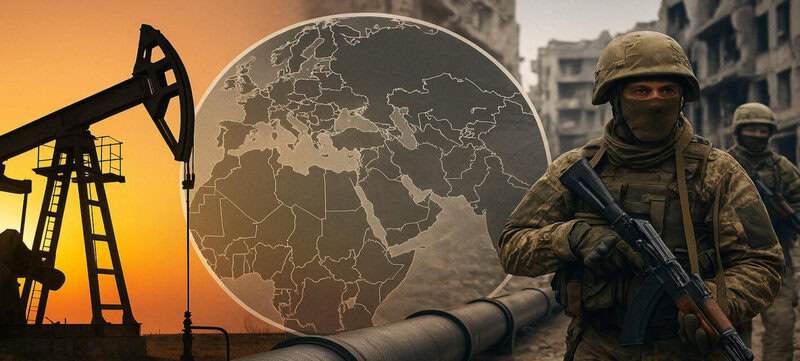
Oil has powered the world for over a century. However, its value is a double-edged sword. The Black Gold Curse: How Oil Drives Global Conflict is evident when considering that, while it provides wealth, the fight to control it has caused some of history’s worst wars. As we navigate 2026, the shift to green energy has actually made the scramble for oil more intense. Nations are rushing to secure their economies during a time of great change.
The link between oil and war is deep. It involves the “Resource Curse,” where oil-rich nations suffer from bad leaders and corruption. It also leads to fights over sea borders and the use of oil as a political weapon. Experts say that since 1973, between 25% and 50% of wars between countries have been linked to oil. This article looks at how the hunt for “Black Gold” continues to topple governments and shape the plans of the world’s most powerful nations.
No place shows the link between oil and war better than the Middle East. The Persian Gulf holds over 48% of the world’s oil. Because of this, it has been a target for foreign interference and local rivalries for decades. The fight here isn’t just about selling oil; it’s about who controls the price and the paths it takes.
The 1990 invasion of Kuwait by Iraq is a clear example of oil-driven greed. Saddam Hussein wanted to grab Kuwait’s massive oil fields to pay for his military. Today, the tension between Saudi Arabia and Iran is still about who rules the oil market. Both nations use their oil money to fund “proxy wars” in places like Yemen and Syria. They want to control the region and keep shipping lanes, like the Strait of Hormuz, open for their own use.
In the 21st century, the fight for oil has moved to the sea. The South China Sea may hold 11 billion barrels of oil. This has led to a tense standoff between China and its neighbors, including Vietnam, the Philippines, and Malaysia.
China claims almost the entire sea, which overlaps with the waters of other nations. They have placed huge drilling platforms in these disputed areas, guarded by armed boats. This isn’t just about the oil itself; it’s about control. One-third of the world’s shipping passes through these waters. For China, securing this oil is a way to make sure no other power can cut off their energy supply during a war.
The “Resource Curse” explains why having too much oil can actually hurt a country. When a government lives off oil money instead of taxes, it stops listening to its people. This leads to corruption and unfair rule. Eventually, different groups start fighting to control the “oil tap,” leading to civil war.
Nigeria is a key example. It is Africa’s top oil producer, but its oil region has faced decades of violence. Local groups have blown up pipelines and kidnapped workers. They argue that the oil wealth only helps the government and big companies while ruining the local environment. We see the same pattern in South Sudan, where the fight for oil-rich border lands has caused constant war since the nation was born.
As global warming melts Arctic ice, a new race for oil is starting. Experts think 13% of the world’s hidden oil is under the Arctic sea. This has started a “cold” conflict between the U.S., Russia, Canada, Norway, and Denmark.
Russia has been the most aggressive here. They have reopened old military bases and even planted a flag on the seabed at the North Pole. Right now, the fight is mostly in courtrooms over who owns the sea floor. However, as land-based oil runs out, the Arctic could become a place where powerful navies clash by the end of the decade.
History shows many cases where oil interests led to the overthrow of leaders. When a leader tries to take control of their nation’s oil away from foreign companies, they often face a coup or an invasion.
In 1953, the U.S. and UK helped overthrow Iran’s leader after he tried to take back his country’s oil. More recently, the crisis in Venezuela is tied to its oil. Venezuela has the world’s largest oil reserves. When the state’s economy collapsed, it was largely because they relied too much on oil. Now, global powers use sanctions on that oil to try and force a change in leadership.
Conflict isn’t just about where oil is found, but how it travels. Pipelines cost billions and cross many borders. This makes them easy targets for sabotage or political threats. The country that the pipe passes through often has a lot of power over the country that produced the oil.
The pipelines in Eastern Europe are a major part of the conflict between Russia and the West. Russia has been accused of cutting off oil and gas to punish neighbors like Ukraine. Similarly, in the Middle East, different groups fight over who can tax the oil flowing through pipes to the coast. If you control the pipe, you control the money.
In many countries, the state-owned oil company is more powerful than the army. Companies like Saudi Aramco or Russia’s Gazprom are not just businesses; they are tools of the government.
For example, Russia uses Gazprom to offer cheap energy to friends and high prices to enemies. In Brazil, a massive scandal involving the state oil company, Petrobras, showed how oil money was used to bribe politicians. When the line between a company and the government disappears, the oil wealth usually leads to political fighting and corruption.
The illegal oil trade has become a major way for terrorist groups to make money. When a government loses control of its oil fields, “blood oil” becomes the currency of war.
The rise of ISIS in 2014 was funded by captured oil fields in Syria and Iraq. At their peak, they made up to $2 million a day selling oil on the black market. This money paid for soldiers and weapons. To stop them, the world had to bomb oil refineries—a move that was bad for the environment but necessary to bankrupt the terrorists. This shows that oil doesn’t just cause wars between nations; it fuels the world’s most violent groups.
When oil prices change suddenly, the whole world feels it. Since so many nations depend on oil to survive, a price crash or a price spike can cause riots or even the fall of a government.
The 2011 Arab Spring was partly caused by high oil prices, which made food too expensive for many people. On the flip side, the price crash in 2014 ruined the budgets of countries like Nigeria and Venezuela, leading to massive protests. In 2026, as the world uses less oil, prices will likely stay unstable, causing more friction between the nations that sell it.
The world is moving to green energy, but this transition is creating new fights. We are now in a “hybrid era” where the old politics of oil and the new politics of “green minerals” (like lithium for batteries) meet.
Some experts think oil regions will become more dangerous in the short term. As oil loses its value over time, countries might become more aggressive to make a profit while they still can. Also, when oil money disappears, the governments that used it to keep people happy might collapse. The wars of the future might not be about getting oil, but about the mess left behind when the oil money runs out.
The history of our modern world is written in oil. From the Middle East to the South China Sea, the fight for this resource has:
As we reach the middle of 2026, the world faces a strange problem: the more we try to stop using oil, the harder countries fight to control what is left. True peace will require us to stop playing this “winner-takes-all” game with the world’s resources.