

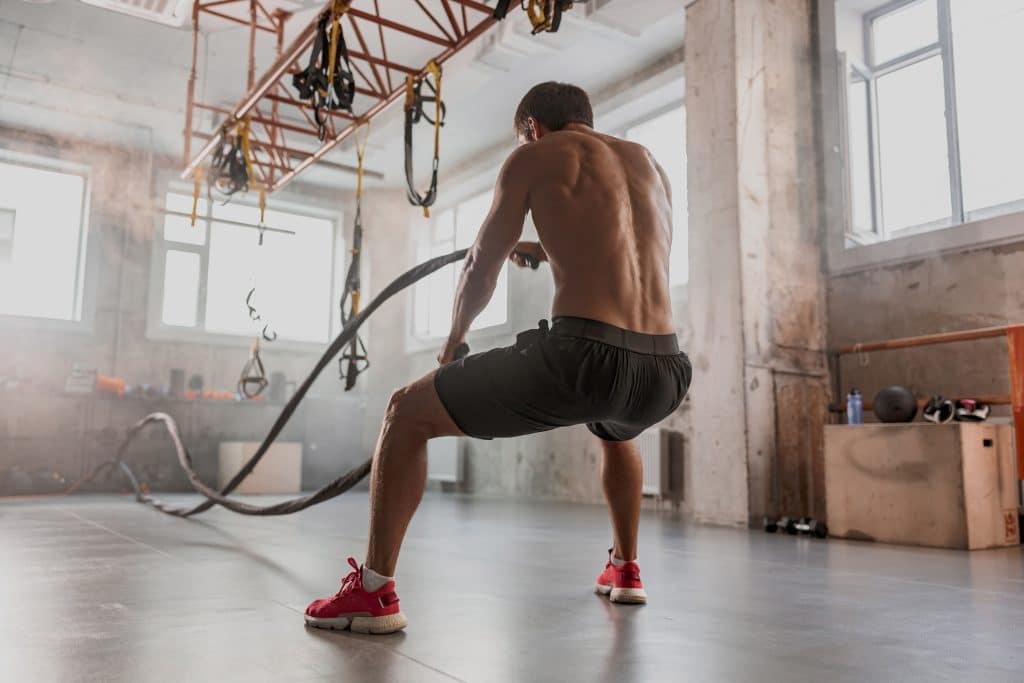
In the modern era of sports, the difference between a podium finish and a mid-pack result often comes down to the precision of an athlete’s strength and conditioning program. As we move through 2026, the philosophy of “training for the sake of sweating” has been replaced by data-driven, sport-specific physiological preparation. Top Fitness Exercises for Sports Performance Improvement are increasingly used to help athletes excel. Improving sports performance is no longer about just lifting heavy weights. Instead, it is about developing a kinetic chain that can produce maximum power, maintain stability under duress, and resist injury during high-velocity movements.
According to a 2025 meta-analysis published in the International Journal of Sports Physiology and Performance, athletes who incorporated a balanced mix of multi-planar strength and plyometric training saw a 14% improvement in vertical jump height and a 9% increase in sprint mechanical efficiency over a 12-week period. This article explores the essential exercises that bridge the gap between general fitness and elite-level sports performance. Furthermore, these findings are backed by biomechanical principles and real-world case studies.
Power is the product of force and velocity. In almost every sport—from basketball to rugby—the ability to generate force quickly is the ultimate “X-factor.” Explosive compound movements train the central nervous system (CNS) to recruit high-threshold motor units. These units are essential for sprinting, jumping, and striking.
The Power Clean remains the gold standard for developing total-body explosiveness. Because it requires the athlete to move a significant load from the floor to the shoulders at high speed, it mimics the “triple extension” (simultaneous extension of the hips, knees, and ankles) found in sprinting and jumping. A case study of Division I football players showed that those who prioritized Olympic lifting variants over traditional slow-tempo lifting had significantly higher peak power outputs during on-field tackling drills.
Most gym exercises occur in the sagittal plane (forward and backward). However, sports are played in 360 degrees. To improve performance, athletes must train in the frontal plane (side-to-side) and transverse plane (rotational). Failure to do so not only limits performance but significantly increases the risk of ACL tears and ankle sprains.
The Lateral Lunge and Cossack Squat are vital for developing strength in the frontal plane. By strengthening the adductors and abductors under load, athletes become more efficient at “cutting”—the act of rapidly changing direction. Statistics from 2024 injury reports in professional soccer indicated that teams utilizing multi-planar strength protocols saw a 22% reduction in non-contact lower-limb injuries compared to those sticking to linear-only programs.
Plyometrics utilize the “stretch-shortening cycle” (SSC) of the muscles. Think of your tendons like rubber bands; the faster you can stretch them and release them, the more “free” energy you can produce. This is what coaches refer to as “bounciness” or “reactivity.”
The Depth Jump is perhaps the most potent plyometric exercise. By stepping off a box and immediately jumping upward upon landing, the athlete trains their muscles to handle high eccentric loads and transition into a concentric contraction instantly. This specific training improves “stiffness” in the lower leg, which is a key metric for world-class sprinters. A 2026 study on track athletes found that high-intensity plyometrics reduced ground contact time by an average of 0.04 seconds. This is a massive margin in a 100m sprint.
In sports performance, the core is not about “six-pack abs”; it is about force transfer. If an athlete has a weak midsection, energy is “leaked” during movement. For example, a boxer’s punch starts in the legs. However, if the core is unstable, the power dissipates before it reaches the fist.
Modern performance training focuses on “Anti-Core” exercises: anti-extension, anti-rotation, and anti-lateral flexion. The Pallof Press is a premier example of anti-rotational training. By resisting a cable or band trying to pull the body to the side, the athlete builds the stability needed to stay upright while being bumped by an opponent or while executing a high-speed turn. This type of “isometric” core strength is far more applicable to the field than traditional crunches.
The posterior chain—comprising the glutes, hamstrings, and lower back—is the engine of the human body. Almost all forward propulsion in sports comes from these muscles. A common mistake among amateur athletes is over-developing the quadriceps (the front of the leg), which leads to an imbalance that often causes hamstring strains.
The Nordic Hamstring Curl has gained immense popularity in 2026 due to its proven ability to prevent injuries. By focusing on the eccentric (lowering) strength of the hamstring, it prepares the muscle for the high-intensity stretching that occurs during full-speed sprinting. Professional rugby and American football teams that implemented Nordic curls into their weekly routine reported a 35% decrease in hamstring-related missed practice days over two seasons.
Sports are rarely played with both feet planted firmly on the ground. Running is essentially a series of single-leg hops. Therefore, training only with bilateral movements (like the standard barbell squat) can hide weaknesses where one leg is stronger than the other.
The Bulgarian Split Squat is widely regarded as one of the most effective—and painful—unilateral exercises. It challenges balance, hip mobility, and single-leg strength simultaneously. By forcing each leg to work independently, athletes can eliminate “asymmetries” that would otherwise lead to overuse injuries. Data from biomechanical screenings show that athletes with more than a 10% strength deficit between legs are 2.5 times more likely to suffer a lower-body injury.
While the legs provide the power, the upper body provides the stability and secondary propulsion. In sports like swimming, wrestling, or even sprinting (where arm swing is vital), upper body strength is a necessity. However, the focus should be on “pulling” movements to counteract the “pushing” dominance found in many general fitness routines.
The Weighted Pull-Up is an essential metric for relative upper-body strength. A strong back protects the shoulders from injury during throwing or striking movements. Furthermore, the Landmine Press has become a favorite for overhead athletes (like pitchers or quarterbacks) because it allows for a more natural scapular movement than a traditional vertical overhead press, reducing the risk of impingement.
Improving sports performance is a holistic endeavor that requires a strategic blend of strength, power, and movement quality. The exercises highlighted in this article—from the explosive Power Clean to the stabilizing Pallof Press—work together to create an athlete who is not just strong in the gym, but dominant on the field. To maximize results, these movements should be programmed using a periodized approach. This approach starts with a focus on movement quality and hypertrophy, transitions into maximum strength, and finally peaks with explosive power and sport-specific speed.
Key Takeaways for Athletes and Coaches:
By shifting the focus from “looking fit” to “performing well,” athletes can unlock new levels of potential. Whether you are a weekend warrior or a professional competitor, these foundational exercises provide the blueprint for a faster, stronger, and more resilient athletic career.