

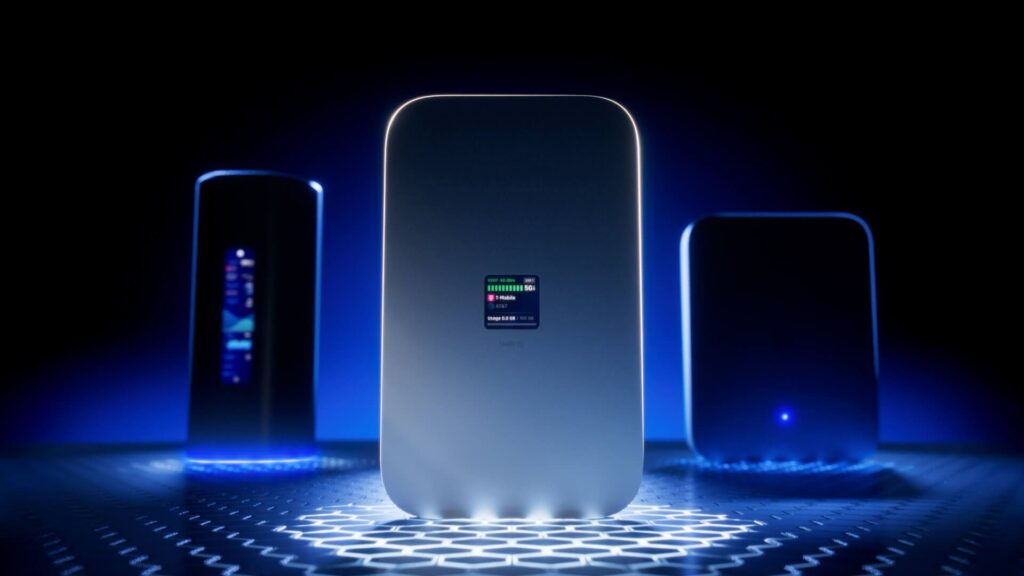
Ubiquiti has long been known for building reliable networking gear that balances professional-grade performance with a clean, modern design. From UniFi access points to switches and security cameras, the company has created an ecosystem that is especially popular among IT professionals, businesses, and tech-savvy users. With the introduction of Ubiquiti UniFi 5G routers, Ubiquiti is extending that ecosystem into the world of cellular connectivity.
These routers aren’t about replacing traditional wired internet everywhere. Instead, they focus on flexibility, redundancy, and deployment in places where fiber or cable simply isn’t practical.
UniFi 5G routers are networking devices that use 5G cellular networks as their primary or secondary internet connection. Instead of relying solely on fixed broadband like fiber, DSL, or cable, these routers connect to mobile carrier networks using a SIM or eSIM.
What makes them different from typical 5G routers is their full integration into the UniFi Network ecosystem. That means administrators can manage them through the same UniFi Controller interface used for access points, switches, and gateways. For businesses already using UniFi, this is a major advantage.
Rather than juggling multiple management platforms, everything stays centralized and consistent.
5G has changed how people think about mobile connectivity. Compared to 4G LTE, 5G offers higher speeds, lower latency, and better capacity in crowded areas. While real-world performance depends heavily on carrier coverage, 5G can now support workloads that were once impossible on cellular connections.
For businesses, this opens up new possibilities:
Temporary locations and pop-up stores
Remote offices without wired internet
Backup connections for mission-critical networks
Mobile operations like construction sites or outdoor events
UniFi 5G routers target exactly these use cases.
One of the strongest selling points of UniFi 5G routers is how naturally they fit into the existing UniFi lineup. Configuration, monitoring, and troubleshooting all happen within the familiar UniFi Network dashboard.
Admins can view cellular signal strength, data usage, uptime, and failover status in real time. Policies like traffic prioritization, firewall rules, and VLANs apply the same way they would on a wired UniFi gateway.
This makes deployment faster and reduces the learning curve, especially for organizations already invested in UniFi hardware.
UniFi 5G routers are flexible when it comes to deployment. They can be used as:
Primary internet connections in locations without reliable wired service
Failover links that automatically activate when the main connection goes down
In failover setups, the router constantly monitors the wired connection. If it detects an outage, traffic switches to 5G almost instantly. When the primary link is restored, the system switches back without manual intervention.
This is especially valuable for businesses where downtime means lost revenue, disrupted operations, or unhappy customers.
On paper, 5G promises impressive speeds. In reality, performance depends on location, carrier quality, signal strength, and network congestion. UniFi 5G routers are designed to make the most of available conditions, often using advanced antennas and carrier aggregation features.
While they may not always match the consistency of fiber, modern 5G connections are more than capable of handling video conferencing, cloud applications, VoIP, and day-to-day business traffic.
For many use cases, especially backup connectivity, performance is more than sufficient.
Security is another area where UniFi 5G routers stand out from consumer-grade alternatives. Instead of basic firewall settings, users get access to UniFi’s advanced security features, including:
Stateful firewall rules
Network segmentation with VLANs
VPN support for site-to-site and remote access
Traffic monitoring and threat awareness
This makes them suitable not just for small businesses, but also for enterprises with strict security requirements.
UniFi 5G routers aren’t for everyone, but they shine in specific scenarios.
Retail stores can use them for failover to keep payment systems online during outages. Construction sites can deploy full networks without waiting weeks for wired installations. Remote offices can operate independently with centralized IT management.
Even larger enterprises benefit by standardizing backup connectivity across multiple locations, all controlled from a single UniFi dashboard.
Like most UniFi products, these routers follow a clean and practical design philosophy. They are built to be mounted in network racks or positioned discretely in offices, with attention paid to thermal management and long-term reliability.
SIM management, antenna placement, and carrier compatibility are clearly documented, which helps avoid issues during setup. While initial configuration may require coordinating with mobile carriers, ongoing management is straightforward.
Despite their strengths, UniFi 5G routers have limitations. Cellular data plans can be expensive, especially for high-traffic environments. Performance can fluctuate depending on network conditions, and latency may still be higher than wired alternatives.
They also require planning around data usage policies and fair-use limits set by carriers. For bandwidth-intensive workloads, wired internet remains the better choice whenever available.
Ubiquiti UniFi 5G routers are not about replacing traditional networking—they are about adding resilience and flexibility. In a world where businesses rely heavily on cloud services and always-on connectivity, having a reliable cellular option is no longer a luxury.
By integrating 5G directly into the UniFi ecosystem, Ubiquiti makes cellular networking easier to manage, more secure, and more practical for professional deployments.
For organizations already using UniFi, these routers feel like a natural next step. For others, they offer a compelling introduction to a unified approach to modern networking.