
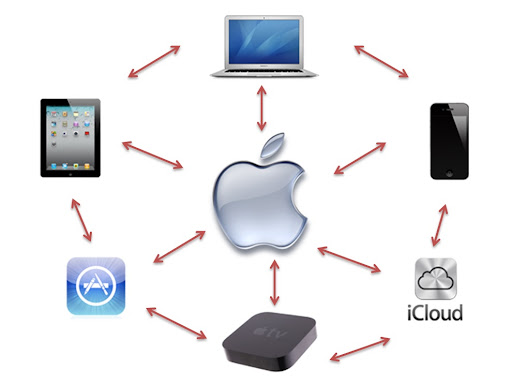
In today’s tech world, many companies talk about their “ecosystem.” But no one has mastered the art of making devices work together quite like Apple. By 2026, Apple has turned a simple collection of gadgets into a smooth, invisible web of services and software. Users often describe it with one simple phrase: “It just works.”
Apple’s philosophy is that all its parts should be worth more when used together. With over 2.2 billion devices in use, Apple has built a system where every new product you buy makes the ones you already own even better. This article looks at how this system works, why people stay, and where it is headed.
At the heart of the experience is a feature called Continuity. This allows your iPhone, Mac, and Apple Watch to “talk” to each other using Bluetooth and Wi-Fi. By 2026, these devices are so well-synced that they feel like one single tool.
iCloud is the “brain” of this setup. It is much more than just a place to store photos. It is a live database that keeps every device ready for you.
Universal Clipboard: Copy text on your iPhone and paste it instantly on your Mac.
Handoff: Start an email on your Watch and finish it on your iPad with one tap.
AirDrop: Quickly send files between devices without needing cables or the internet.
Universal Control: Use one mouse and keyboard to control your Mac and iPad at the same time.
A major turning point was the switch to Apple Silicon (the M-series and A-series chips). Because Apple designs its own chips, it can do things that other companies cannot. Since iPhones and Macs now share the same basic “brain” architecture, they work together perfectly.
This power allows for features like iPhone Mirroring. You can use your iPhone apps directly on your Mac screen, even if your phone is in another room. Also, if your Mac is working too hard on a task, it can share some of that work with a nearby iPad. This creates a powerful computer network right on your desk.
The “Walled Garden” describes how Apple keeps its software and hardware under tight control. While some say this limits freedom, fans say it makes everything more secure and stable.
From a business view, this creates “switching costs.” If you leave Apple for Android in 2026, you don’t just lose a phone. You lose your Apple Watch features, your iMessage history, and your photo library.
iMessage: The “blue bubbles” make it hard for people to leave their social groups.
App Store: Your paid apps are tied to your Apple ID and won’t work on other phones.
Apple Watch: You need an iPhone to use the world’s most popular smartwatch.
This is why Apple has a 92% loyalty rate. For most people, the convenience of everything working together is worth more than the freedom to switch brands.
Apple has expanded into “satellite” devices like AirPods and the Apple Watch. AirPods can automatically switch sounds. If you are watching a movie on your laptop and your phone rings, the headphones switch to the phone instantly.
Apple Services (like Apple Music and Fitness+) act as the glue. By 2026, many families use the “Apple One” bundle. These services are built specifically for Apple gear. For example, your Apple Watch heart rate shows up right on your TV screen during a workout.
In 2026, the biggest upgrade is Apple Intelligence. This is a smart system that understands your life. If you ask, “When does my mom’s flight land?”, the AI checks your emails for the ticket, looks at your contacts to see who “Mom” is, and finds the flight status online.
Apple stays focused on privacy. Most of this thinking happens right on your device, not on a faraway server. This means your personal data stays yours.
Apple still faces challenges. Governments in Europe and the U.S. are forcing Apple to be more open. This is why iPhones now use USB-C chargers and allow other app stores.
The future is “Ambient Computing.” This is the idea that tech should disappear into the background. With Apple Glasses and the Watch, you might soon interact with the digital world without even looking at a screen.
The Apple ecosystem stands on three pillars:
Unified Parts: Apple makes the chips, the hardware, and the software.
Smooth Experience: iCloud makes moving between devices effortless.
Trust: Privacy and security keep users feeling safe.
As we move through 2026, Apple is becoming more than a tech brand—it is becoming a “personal operating system” for daily life.