

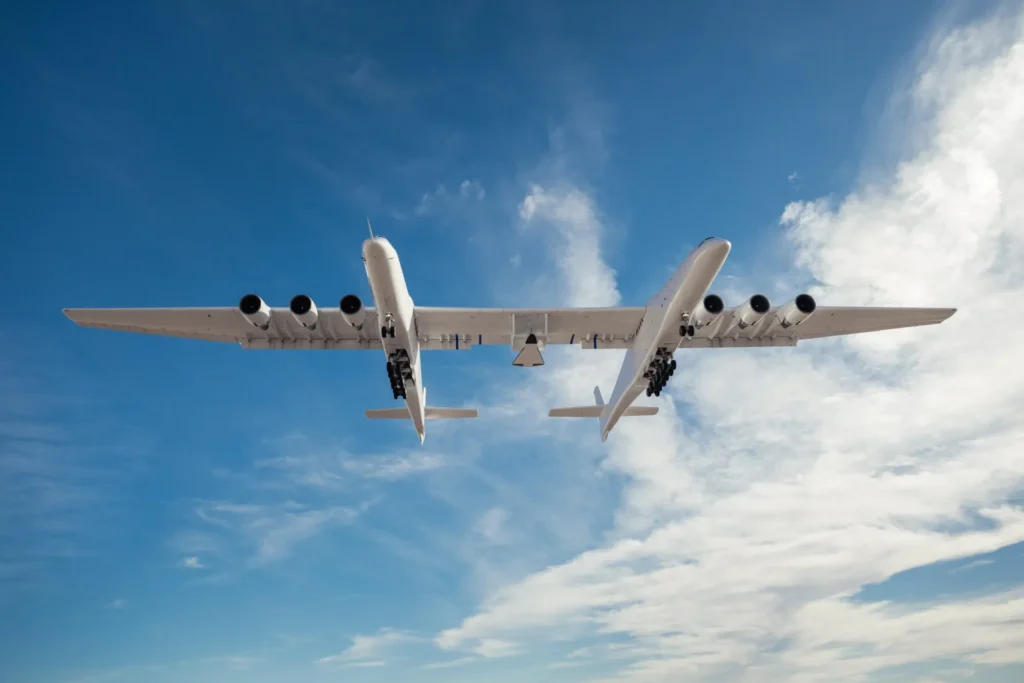
The early 2020s sparked a global race to master hypersonic technology—flight at speeds over Mach 5, or roughly 3,800 miles per hour. In this high-stakes field, a vital partnership has formed between Ursa Major, a top rocket engine builder, and Stratolaunch, the operator of the world’s largest carrier plane. By 2026, this team-up has moved from experimental trials to regular flight operations. Together, they are changing how the United States builds prototypes and prepares its defenses.
This partnership solves a major problem in aerospace: the “valley of death” that separates lab research from real-world use. Most hypersonic tests rely on expensive, one-time-use boosters that provide very little data. In contrast, the Ursa Major-powered Stratolaunch system is reusable. It mimics how real missiles behave while allowing engineers to recover data and hardware after the flight.
At the core of every Stratolaunch flight is a reliable propulsion system. Ursa Major uses 3D printing to make rocket engines with fewer parts, which speeds up production. Two specific engines drive this partnership: the Hadley and the Draper.
The Hadley engine delivers 5,000 pounds of thrust. It is perfectly sized for small-to-medium vehicles like the Stratolaunch Talon-A. Unlike traditional solid-fuel motors, the Hadley uses liquid fuel (Oxygen and Kerosene). This allows it to be “throttled”—meaning pilots can adjust the speed during flight. This is essential for testing because it lets engineers maintain exact speeds even as the air gets thinner at high altitudes.
Fuel: Liquid Oxygen (LOX) and Kerosene.
Thrust: 5,000 lbs at sea level; 6,500 lbs in space.
Milestone: The first American engine to reach sustained Mach 5+ speeds on a reusable craft.
The Draper engine is the next step. It uses a special “storable” liquid setup. This means it can sit in storage for years like a solid rocket but remains as agile as a liquid engine. In early 2026, Ursa Major and the Air Force successfully tested Draper, proving that high agility can be packed into a standard missile format.
While Ursa Major provides the “heart,” Stratolaunch provides the “stage.” The Roc carrier plane is a massive aircraft with a 385-foot wingspan. It acts as a mobile, reusable launchpad. By carrying hypersonic vehicles to 35,000 feet before releasing them, the Roc skips the thickest part of the atmosphere. This saves a massive amount of energy and fuel.
The primary test vehicle is the Talon-A. This autonomous, rocket-powered craft carries payloads at speeds between Mach 5 and Mach 7. Early versions were lost after one flight, but the new TA-2 and TA-3 versions are fully reusable. Because the vehicle lands on a standard runway, engineers can analyze data and prep the craft for its next flight in just a few weeks.
The TA-2 flights in late 2024 and early 2025 were historic. It was the first time a privately funded, self-flying hypersonic vehicle reached Mach 5 and returned to a runway.
Flight data showed that the Hadley engine provided the exact power needed to push the 3,700-pound vehicle into hypersonic speeds. Because the engine could be adjusted, the craft held a steady Mach 5 speed during its glide. This gave the government “steady-state” data—something almost impossible to get from standard missiles that only hit peak speeds for a fraction of a second.
Flight Time: About 15 minutes of power and gliding.
Data: Over 10,000 channels of sensor info collected.
Speed: Repairs dropped from years to just a few weeks.
In early 2026, Ursa Major introduced the HAVOC Missile System. HAVOC uses the Draper engine to create a hypersonic weapon that can be launched from jets or ground stations. The goal here is “Affordable Mass.”
Current hypersonic weapons are very expensive and hard to mass-produce. By using 3D printing, Ursa Major aims to slash costs. This is vital for modern defense; having hundreds of “good” missiles is often better than having just a few “perfect” ones. High volume can overwhelm enemy defenses.
Liquid engines also help the missiles survive. Unlike solid-fuel missiles that follow a predictable path, a liquid-powered missile can stop, restart, or change its thrust to dodge interceptors. This makes it much harder to shoot down.
The partnership is now moving into an industrial phase. Stratolaunch is adding a second carrier plane, a modified Boeing 747 called the “Spirit of Mojave.” This will double how many launches they can do.
The goal is to reach 24 missions per year. This would be a massive shift. Currently, the U.S. government often struggles to fly even five hypersonic tests a year. Flying twice a month would allow for a “fail-fast, learn-fast” cycle—the same method that made SpaceX successful in the space industry.
The Ursa Major and Stratolaunch partnership is a pillar of national security. By merging a massive launch plane with 3D-printed liquid engines, they have made hypersonic flight affordable and frequent. This collaboration is proving that private innovation can solve the toughest challenges in aerospace.