

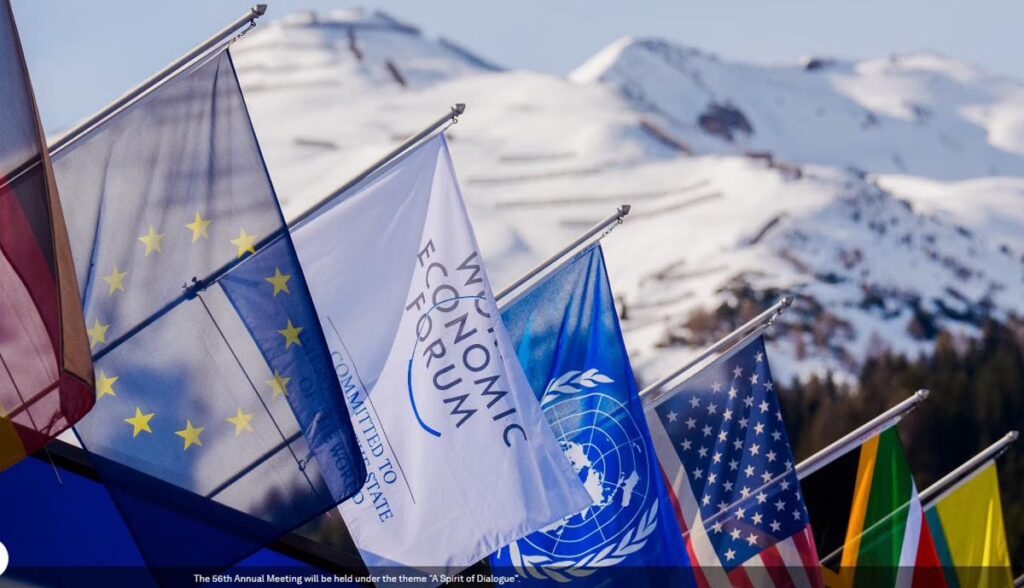
For one week in early 2026, the small Swiss town of Davos once again became the center of the world. The World Economic Forum (WEF) Davos 2026 didn’t just attract presidents, billionaires, and tech CEOs—it completely dominated global news headlines. From economic uncertainty and AI disruption to climate anxiety and geopolitical tension, almost every major global issue found its way onto the Davos stage.
While critics still question whether Davos delivers real solutions or just powerful networking, one thing is clear: in 2026, what happened in Davos mattered more than ever.
Davos happens every year, but 2026 carried a different energy. The world arrived in Switzerland facing overlapping crises that could no longer be ignored or postponed.
Global economic growth remains fragile. Wars and regional conflicts continue to reshape alliances. Artificial intelligence is moving faster than regulation. Climate impacts are becoming more visible, more destructive, and more expensive.
Davos 2026 wasn’t just about long-term vision. It felt urgent. Leaders weren’t talking about what might happen in ten years—they were debating what could go wrong in the next twelve months.
That urgency is one reason global media paid such close attention.
One of the biggest themes dominating Davos headlines was the global economy. While some countries are seeing signs of recovery, many others are still struggling with high debt, inflation pressure, and slowing growth.
Central bankers and finance ministers used Davos to send signals. Some warned that interest rates may stay higher for longer. Others pushed for coordinated policies to avoid another global downturn.
Business leaders, meanwhile, spoke openly about uncertainty. Supply chains are still vulnerable. Investment decisions are being delayed. Confidence, many said, is the real missing ingredient in today’s economy.
These comments didn’t stay in conference rooms—they were quoted, analyzed, and debated across global media outlets.
If there was one topic that truly dominated Davos 2026, it was artificial intelligence.
AI leaders, tech CEOs, and policymakers all agreed on one thing: AI is no longer a future issue. It’s already reshaping jobs, productivity, security, and even politics.
But agreement mostly ended there.
Some speakers highlighted AI as a historic productivity boost that could unlock massive economic growth. Others warned of job displacement, misinformation, and the concentration of power in the hands of a few tech giants.
Calls for global AI regulation grew louder. Several leaders pushed for international standards to control advanced AI systems, while tech companies urged flexibility to avoid slowing innovation.
Every major AI comment from Davos quickly became breaking news.
Climate change has always been part of the Davos agenda, but in 2026 the conversation shifted. It was no longer just about targets and pledges—it was about cost.
Extreme weather events are now directly hitting economies. Floods, droughts, heatwaves, and storms are disrupting food supplies, insurance markets, and infrastructure.
At Davos, CEOs admitted that climate risk is now a financial risk. Governments discussed how climate damage is stretching budgets and increasing inequality.
The message was blunt: delaying climate action is no longer cheaper than acting. That framing resonated strongly with global media and investors watching closely.
Davos 2026 also reflected a world that feels more divided than cooperative. Geopolitical tensions were never far from the conversation.
Trade fragmentation, sanctions, military conflicts, and strategic rivalry between major powers all shaped discussions. Leaders spoke carefully, but the underlying concern was clear: globalization as we knew it is changing.
Some argued the world is entering a new era of “selective globalization,” where trust matters more than efficiency. Others warned that fragmentation could slow growth and increase instability.
These debates turned Davos into a live mirror of global power shifts—and the headlines followed.
Another reason Davos 2026 dominated news coverage was growing scrutiny of corporate power. Protesters outside Davos questioned whether the world’s biggest problems can really be solved by the same elites who benefit from the current system.
Inside the forum, business leaders tried to respond. Many spoke about responsibility, sustainability, and inclusive growth. Some announced investments in green energy, education, and emerging markets.
Still, skepticism remained. Critics argued that Davos often produces more promises than accountability.
That tension—between influence and legitimacy—kept Davos firmly in the spotlight.
Leaders from emerging economies were especially vocal at Davos 2026. Many argued that global institutions still favor wealthy nations, even as economic power shifts.
They pushed for reforms in global finance, fairer access to capital, and stronger support for development and climate adaptation.
This push added another layer to Davos discussions: the future global order may not be shaped only by traditional powers anymore.
One reason Davos continues to dominate global news is its media ecosystem. Every speech, panel, and hallway comment is amplified in real time through social media, livestreams, and instant analysis.
A single quote from Davos can move markets, spark political debate, or trigger public backlash within hours.
In 2026, that effect was stronger than ever. Davos wasn’t just an event—it was a content engine feeding global news cycles non-stop.
This question comes up every year, and 2026 was no exception. Critics argue Davos is out of touch, exclusive, and slow to deliver real change. Supporters say it remains one of the few places where global leaders can talk openly across sectors.
The truth likely sits somewhere in between.
Davos doesn’t solve global problems on its own. But it does shape narratives, priorities, and connections that influence decisions long after the snow melts.
WEF Davos 2026 dominated global news because it reflected the world’s anxiety—and its uncertainty—better than any single event.
Economic fragility, AI disruption, climate urgency, and geopolitical tension all collided in one place. The conversations may not have produced instant solutions, but they highlighted the scale of the challenges ahead.
In a world searching for direction, Davos 2026 became a focal point for debate, disagreement, and cautious optimism.
Love it or hate it, Davos still matters. And in 2026, it proved once again why the world keeps watching.