

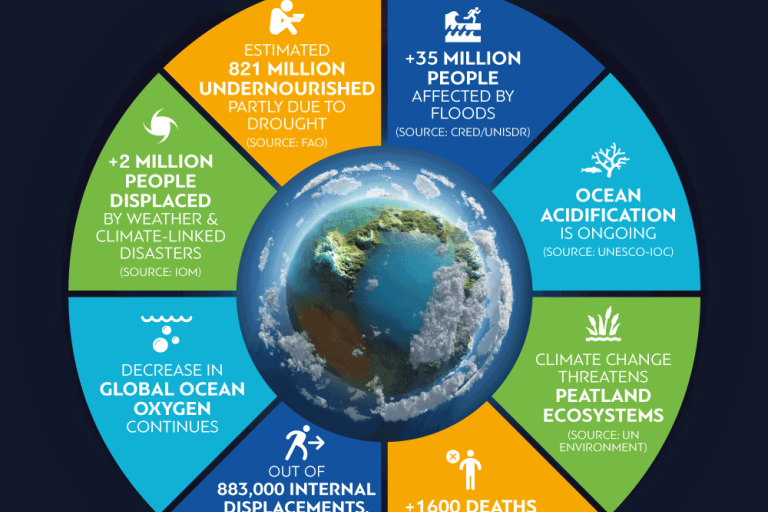
In the spring of 2026, the conversation surrounding climate change has shifted from a distant warning to an immediate, lived reality. We are no longer debating whether the climate is changing; we are witnessing the restructuring of the Earth’s biosphere in real-time. The worldwide climate change crisis and environmental impact is a multifaceted phenomenon driven primarily by the anthropogenic emission of greenhouse gases (GHGs), leading to a rapid rise in global mean temperatures. This temperature shift triggers a “domino effect” across every ecological niche, from the deepest ocean trenches to the highest alpine peaks.
The environmental impact of this crisis is not uniform, yet it is universal. While one region may suffer from unprecedented megadroughts, another is submerged by “thousand-year” floods occurring with startling frequency. According to the Intergovernmental Panel on Climate Change (IPCC) 2025 Special Report, the window to limit warming to 1.5°C above pre-industrial levels is closing rapidly. This article provides a comprehensive analysis of the current state of our planet, the specific environmental systems under threat, and the systemic changes required to mitigate a total ecological collapse.
The cryosphere—the portions of Earth where water is in solid form—acts as the planet’s air conditioner. However, the Arctic is currently warming at nearly four times the global average. This “Arctic Amplification” is a dangerous feedback loop: as white ice melts, it reveals dark ocean water, which absorbs more solar heat, leading to even more melting. In 2026, satellite data shows that the Thwaites Glacier in Antarctica, often called the “Doomsday Glacier,” is showing signs of structural instability that could lead to a significant rise in global sea levels much sooner than previously modeled.
The environmental impact of a disappearing cryosphere extends far beyond the poles. Coastal megacities like Jakarta, Miami, and Bangkok are already investing billions in “managed retreat” and sea wall infrastructure. Statistics indicate that a sea-level rise of just one meter could displace over 150 million people by 2050. Furthermore, the loss of mountain glaciers in the Himalayas and the Andes threatens the primary water source for over a billion people, turning a climate issue into a humanitarian and geopolitical crisis.
Climate change is the primary driver of what biologists are calling the Sixth Mass Extinction. Unlike previous extinctions caused by asteroids or volcanic activity, this one is driven by habitat destruction and rapid atmospheric change. Ecosystems that have remained stable for millennia are now shifting faster than species can adapt or migrate. Coral reefs, which support 25% of all marine life, are a prime example of this fragility.
In 2024 and 2025, the Great Barrier Reef experienced back-to-back mass bleaching events due to record-high ocean temperatures. When corals die, the entire ecosystem—from tiny crustaceans to large predatory fish—collapses. On land, “phenological mismatch” is occurring, where the timing of bird migrations or insect hatchings no longer aligns with the blooming of the plants they depend on. This disruption of the food web threatens not only “charismatic megafauna” like polar bears and tigers but also the fundamental biological processes that provide humans with clean air and pollinated crops.
The worldwide climate change crisis has “loaded the weather dice.” While climate change doesn’t necessarily create every storm, it makes them more intense and unpredictable. Warmer air holds more moisture (approximately 7% more for every degree Celsius of warming), which translates to more extreme precipitation events. Simultaneously, higher temperatures accelerate evaporation, leading to more severe and prolonged droughts in arid regions.
A case study of the 2025 “Heat Dome” over Southern Europe saw temperatures reach a staggering 49°C in parts of Italy and Greece. This wasn’t just a heatwave; it was an industrial-scale environmental disaster that sparked wildfires so intense they created their own weather systems (pyrocumulonimbus clouds). These “megafires” destroy the very forests that act as carbon sinks, releasing millions of tons of stored $CO_2$ back into the atmosphere. This cycle of disaster followed by carbon release is one of the most difficult hurdles in our path toward net-zero emissions.
[Image showing the chemical reaction of CO2 with seawater]Often referred to as the “evil twin” of global warming, ocean acidification is a direct result of the ocean absorbing roughly 30% of the $CO_2$ we emit. When $CO_2$ dissolves in seawater, it forms carbonic acid, lowering the pH of the water. Since the beginning of the Industrial Revolution, the acidity of the ocean surface has increased by about 30%. This change makes it harder for calcifying organisms, such as oysters, crabs, and tiny pteropods (sea butterflies), to build their shells.
The environmental impact of acidification is profound because pteropods are a foundational food source for salmon, mackerel, and whales. If the bottom of the marine food chain collapses, the multi-billion dollar global fishing industry collapses with it. Furthermore, the ocean’s ability to act as a carbon sink is diminishing; as it becomes more acidic and warmer, it becomes less efficient at absorbing $CO_2$. This chemical shift in our oceans is perhaps the most permanent environmental impact of the climate crisis, as it will take tens of thousands of years for the ocean’s pH to return to pre-industrial levels.
The worldwide climate change crisis is also a global health crisis. As temperatures rise, the geographic range of disease-carrying vectors, such as mosquitoes and ticks, expands. Diseases previously confined to the tropics, such as Dengue fever, Malaria, and West Nile virus, are now being recorded at higher latitudes and altitudes. In 2026, southern Europe and the United States have seen a 20% increase in cases of tick-borne illnesses compared to the previous decade.
Beyond infectious diseases, climate change exacerbates respiratory and cardiovascular conditions. Longer and more intense pollen seasons increase the prevalence of asthma and allergies. Heat-related mortality is also on the rise; a 2024 study estimated that without significant adaptation, heat-related deaths could triple by 2050. Furthermore, the mental health impact of “eco-anxiety” and the trauma associated with losing one’s home to a climate disaster is creating a new category of psychological distress that healthcare systems are struggling to address.
[Image comparing the cost of climate inaction vs. the cost of green transition]The environmental impact of climate change has a massive price tag. In 2025, the global cost of climate-related disasters reached a record high of over $400 billion. However, economists are now emphasizing that the cost of inaction far outweighs the cost of a transition to a sustainable economy. We are seeing a “Green Industrial Revolution” where renewable energy sources like wind and solar are now cheaper than coal and gas in 90% of the world.
The shift toward “Circular Economies”—where waste is minimized and materials are reused—is becoming a cornerstone of industrial policy in 2026. Companies are being forced to adopt ESG (Environmental, Social, and Governance) standards to access capital. This isn’t just about saving the planet; it’s about economic survival. The transition to a “Hydrogen Economy” and the massive expansion of battery storage technologies are creating millions of new jobs, suggesting that the path to environmental restoration is also a path to future prosperity.
As we face the limitations of traditional mitigation, the role of “Frontier Technology” has become central to the climate debate. Direct Air Capture (DAC) plants are now coming online in Iceland and Canada, literally vacuuming $CO_2$ out of the sky and pumping it underground into basalt rock where it turns to stone. While still expensive, these technologies are seen as essential for addressing “legacy emissions” that are already in the atmosphere.
However, more controversial is the rise of geoengineering—deliberate, large-scale intervention in the Earth’s natural systems. Proposals to spray sulfur aerosols into the stratosphere to reflect sunlight back into space are being discussed in high-level diplomatic circles in 2026. The environmental impact of such a move is unknown and potentially dangerous, as it could disrupt monsoon patterns and lead to unintended consequences in the global food supply. This highlights the ethical dilemma: are we desperate enough to “hack” the planet to save it?
The worldwide climate change crisis and its environmental impact represent the greatest challenge human civilization has ever faced. From the melting of our polar ice caps to the silent acidification of our oceans and the loss of our planet’s precious biodiversity, every indicator points to a system in distress. However, 2026 is also a year of unprecedented technological innovation and global cooperation. The crisis is forcing us to rethink our relationship with the natural world and move away from an extractive economy toward a regenerative one.
Key Takeaways:
Ultimately, the story of the climate crisis is not yet finished. The actions we take in this decade—to cut emissions, protect what remains of our wilderness, and innovate new ways to live sustainably—will determine the environmental legacy we leave for the next thousand years. The earth is resilient, but that resilience has limits. It is time for a global mandate that prioritizes the health of our shared home above all else.