

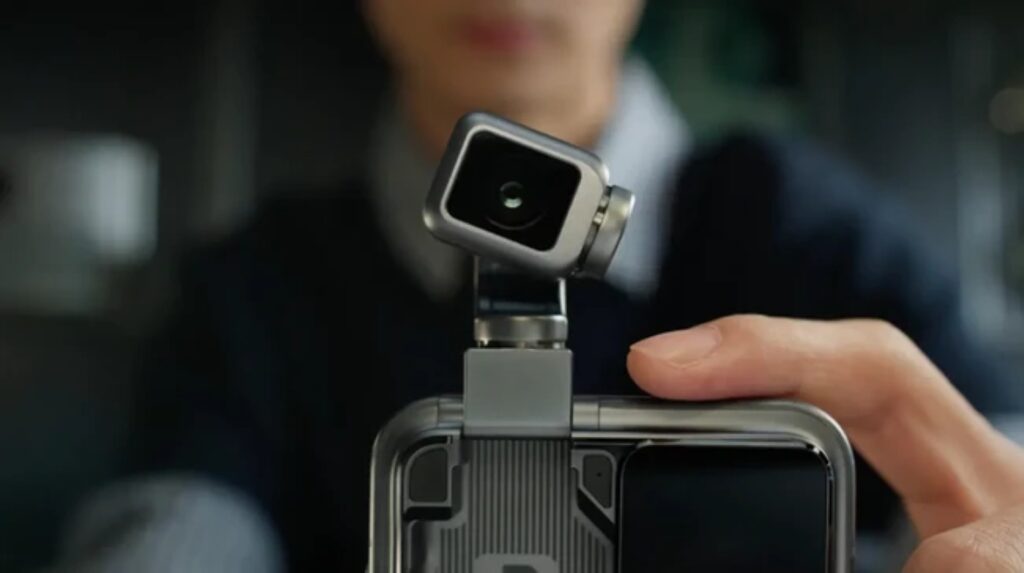
Honor is clearly done playing it safe. At MWC 2026, the brand showed off something it calls the Robot Phone—and yes, it’s basically a smartphone that acts like it has a tiny “robot body.” The headline feature? A moving, gimbal-stabilized camera arm paired with built-in AI that can track you, react to you, and even do playful gestures like nodding, shaking its “head,” or dancing to music.
If you’re tired of phones that all look the same, this one is meant to feel different in a way you can actually see. Honor calls it a “new species of smartphone,” built around “embodied AI interaction” and “robot-grade motion control.” That sounds dramatic, but the demo videos and hands-on impressions suggest Honor really is trying to make AI feel less like a feature buried in menus—and more like a visible, physical behavior.
So… what is the Robot Phone, exactly?
Despite the name, this isn’t a full robot you put in your pocket. Think of it as a phone with a clever mechanical module—most notably a camera arm that can extend and move, supported by a stabilizing system. In demos, the camera pops out, follows the user, then retracts back into the phone body.
Honor is pushing the idea that a phone can “look” at you more naturally, not just through a static front camera. That’s where the built-in AI comes in: it’s not only about processing photos, but also about tracking, framing, and reacting during real-time use.
Built-in AI, but with “embodied” interaction
Most phones in 2026 already scream “AI!” on the box. The difference here is how Honor wants AI to show up in your day-to-day life.
On Honor’s official pages and MWC announcements, the Robot Phone is positioned as an embodied AI experience—meaning the AI isn’t only in software prompts. It’s paired with motion so it can respond like a little companion: nod when it agrees, shake when it disagrees, and respond in a more expressive way than a plain text reply.
Is it essential? Maybe not. But it’s a fresh take on making human-device interaction feel more “alive,” especially for people who use their phone camera constantly.
All-angle AI video calling: the practical flex
Let’s talk about the feature that could actually be useful (and not just cute): all-angle AI video calling.
Honor says the Robot Phone can follow the user and stay focused during calls using its motion system, aiming for smoother framing and fewer “wait, I can’t see you” moments. This is the kind of thing that matters if you:
-
take lots of video calls while moving around,
-
stream content casually,
-
record tutorials, cooking videos, or behind-the-scenes clips,
-
or just want hands-free framing without setting up a tripod.
Honor frames this as breaking the “screen limitation” of typical video calling by letting the camera physically adjust its viewpoint.
The camera hardware: a big-number sensor with a moving brain
Honor also leaned hard into imaging specs. In coverage from MWC, the Robot Phone was shown with a 200MP camera sensor mounted on that moving camera arm. The company also claims it’s using a compact multi-degree-of-freedom gimbal-like approach for stabilization and movement.
Now, megapixels aren’t everything. But pairing high-resolution capture with smart tracking and stabilization could be a real combo for creators—especially if Honor’s AI can keep subjects centered and footage steady while you move.
There’s also an early report about Honor partnering with ARRI for “cinematic” imaging work related to the Robot Phone—suggesting they want this to feel like a creator device, not only a gimmick.
“It can dance to music” — fun, but also a signal
Yes, the Robot Phone can “dance.” Honor described the phone sensing music mood/beat and moving its “head” to the rhythm. It sounds silly, but it signals what Honor is aiming for: a device that feels emotionally responsive, not just functional.
And honestly, this is where the marketing gets interesting. For years, phone brands sold us on speed, battery, and camera bumps. Now, some brands are trying to sell personality.
Is that the future? Maybe. Or maybe it’s just a phase. Either way, Honor is betting that people will remember a phone that moves.
Where this fits in Honor’s bigger AI push
Honor didn’t show the Robot Phone in isolation. The company used MWC 2026 to talk up a broader AI vision—positioning itself as an AI-first hardware brand and showing a humanoid robot alongside the Robot Phone. Even if that humanoid robot wasn’t fully autonomous in demos, the message was clear: Honor wants to be seen as more than “just another Android phone maker.”
This lines up with Honor’s public messaging around AI devices and ecosystem thinking (AI across imaging, communication, and daily tasks).
Release timing: when can people actually buy it?
Right now, Honor has not laid out full pricing and complete specs publicly in one neat sheet. However, coverage from MWC indicates Honor plans to launch the Robot Phone in China later in 2026, with more details expected as the event cycle continues.
So, at the moment, it’s part prototype showcase, part product tease. But it’s far enough along that journalists have seen it working on-camera.
Why the Robot Phone matters (even if you won’t buy it)
Even if you never touch this device, it represents a shift: AI isn’t only being treated as a software assistant anymore. Brands are experimenting with AI + hardware motion to create new experiences—especially around cameras, calls, and content creation.
The big question is whether people want their phone to feel like a companion, or if they just want it to quietly work. Honor is choosing the loud option: a phone that doesn’t just take photos—it performs.
And in a market where phones have started to blur together, being memorable is a serious competitive advantage.
Final thoughts
The Honor Robot Phone built-in AI concept is weird in the best way. It mixes a practical promise (better tracking for calls and video) with playful behavior (emotional gestures, dancing) and pushes AI into the physical world—literally.
Now we just need the next part: full specs, real-world battery life, durability of that moving module, and pricing that makes sense. Until then, Honor has already accomplished something important: it got everyone talking about a smartphone again.