

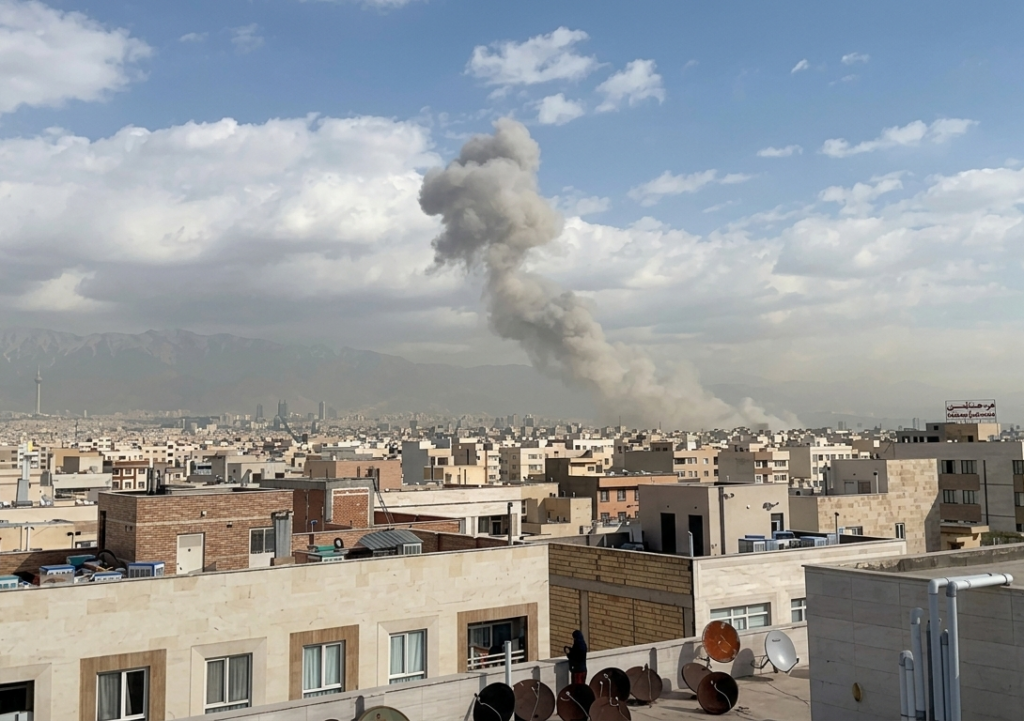
The Middle East just got a whole lot more tense. After major reports of U.S. and Israeli strikes on Iran, Iran responded with what many outlets describe as a retaliatory strike on U.S. military bases across the region. This move instantly raised fears of a wider conflict that could drag in more countries. Furthermore, it could disrupt global trade.
This isn’t the kind of “one-and-done” exchange people can ignore. When attacks involve multiple countries that host U.S. forces—like Bahrain, Qatar, Kuwait, and the UAE—the risk isn’t just military escalation. It’s also about aviation disruptions, shipping anxiety, and markets getting spooked.
Here’s what’s been reported so far, why this retaliation matters, and what signals to keep an eye on next.
Multiple major reports say the retaliation came after a major U.S.-Israel strike campaign on Iran. In some coverage, Iranian state media also confirmed the death of Iran’s Supreme Leader Ayatollah Ali Khamenei following those strikes. This event would massively raise the stakes and make retaliation far more likely.
In other words: this wasn’t framed as a “small incident.” It was framed as a huge escalation—followed by a response that spread across the region.
Reuters reporting described Iranian missiles being fired at multiple Gulf locations tied to U.S. military presence, with several governments saying they intercepted missiles. The countries repeatedly mentioned include Kuwait, Qatar, the United Arab Emirates, and Bahrain. Additionally, Jordan was also reported as intercepting missiles.
The Guardian’s coverage similarly described Iranian retaliation hitting American bases in Bahrain, Kuwait, Qatar, and the UAE.
Al Jazeera also reported that multiple Gulf Arab states hosting U.S. assets were targeted during Iran’s retaliation. Iran confirmed it was targeting U.S. bases across the region.
So the common thread across outlets is consistent: Iran’s retaliation wasn’t aimed at one single location. Instead, it was spread across several countries that host U.S. forces.
In breaking situations like this, exact damage counts often change as more verification arrives. Still, Reuters described loud blasts over Dubai and Doha and reported that the conflict was affecting Gulf aviation and trade hubs. This is one of the fastest ways a regional fight turns into a global headache.
Reuters also reported fatalities in connection with the strikes in the Gulf in at least one dispatch about the first day of retaliation.
And even when intercept systems work, the “normal life” impact can be immediate:
air-raid sirens
disrupted flight paths
temporary closures or reroutes
people sheltering indoors
governments issuing urgent advisories
A retaliation that targets U.S. bases creates a different kind of pressure than strikes confined to one country’s territory. It forces decisions fast, because the U.S. can’t treat an attack on its personnel or facilities as “background noise.”
Reuters reported a warning from Donald Trump saying the U.S. would respond with “unprecedented force” if Iran retaliated—highlighting how quickly the rhetoric escalated alongside events.
Even if leaders privately want de-escalation, public statements and military posture can lock everyone into a more dangerous rhythm. That’s why analysts watch not only what was hit, but also what gets said immediately afterward.
One brutal reality: many Gulf states host U.S. assets, but they also want stability above all else. Reuters analysis framed Iran’s strikes on Gulf countries as a way to show that U.S. allies aren’t out of reach, raising the cost for regional partners to back Washington’s campaign.
That creates a tough situation for those governments:
stay closely aligned with the U.S. and risk becoming targets, or
push harder for restraint and diplomacy to keep their cities and infrastructure out of the crossfire
This is also why you’re seeing “maximum restraint” language pop up in international reactions, including from Europe and regional mediators.
When conflict spreads around the Gulf, the world immediately worries about:
energy flows
commercial shipping safety
insurance costs
supply chain delays
And it’s not theoretical. Reuters reported that retaliatory strikes widened in the Gulf and that the situation began affecting major regional hubs.
Even if the Strait of Hormuz isn’t fully disrupted, just the perception of danger can push costs up fast—because insurers price risk, shippers reroute, and timelines get messy.
The UN’s posture matters because it signals whether major powers are trying to cool things down—or gearing up for a prolonged crisis.
A UN press release about the Security Council warned that Iran strikes could trigger a wider conflict in the Middle East, with calls for urgent de-escalation.
Al Jazeera also summarized global reaction with themes like restraint and concern about getting pulled further into a broader war.
The bigger the retaliation footprint, the more pressure builds for emergency sessions, ceasefire proposals, and backchannel diplomacy.
If you’re following the situation without a dedicated security briefing, focus on these signals:
Whether strikes continue into a “day three, day four” pattern
Sustained exchanges usually mean the political off-ramp is shrinking.
Whether attacks expand to new host countries or different types of targets
Expansion is one of the clearest signs a regional conflict is widening.
Clear statements about objectives (and red lines)
When leaders define “red lines,” it often hints at what they’re prepared to do next.
Aviation and maritime advisories
If airlines and shipping firms start making longer-term changes, that’s a sign the risk is being priced in.
Iran’s retaliatory strike on U.S. military bases across the Middle East is the kind of event that can either burn out quickly—or spiral. Right now, the world is worried because the retaliation reportedly touched multiple countries, disrupted key hubs, and raised the risk of a wider war nobody can easily control.