

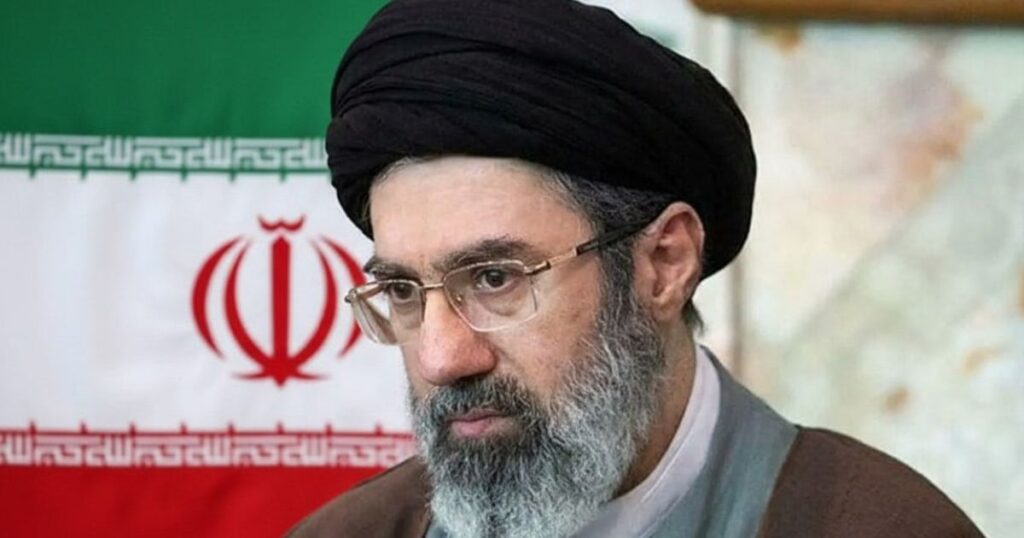
Iran has entered a new political era after Mojtaba Khamenei was named the country’s new Supreme Leader in March 2026. The decision came shortly after the death of his father, Ayatollah Ali Khamenei, who had led the Islamic Republic for nearly four decades.
The transition immediately attracted global attention. Many analysts say it marks one of the most controversial leadership changes in modern Iranian history because it appears to pass power from father to son—something the Islamic Republic was originally designed to avoid after the 1979 revolution.
So who exactly is Mojtaba Khamenei? How did he rise to power, and why is his leadership already shaping debate both inside and outside Iran? Let’s break it down.
Mojtaba Hosseini Khamenei was born in 1969 in Mashhad, Iran, into one of the most powerful religious families in the country. He is the second son of Ali Khamenei, who served as Iran’s Supreme Leader from 1989 until his death in 2026.
Growing up in the center of Iran’s political elite, Mojtaba was surrounded by clerics, military leaders, and political insiders. His father’s long rule meant that Mojtaba had access to Iran’s highest circles of power from a very young age.
Unlike many political leaders, however, Mojtaba rarely appeared in public speeches or elections. Instead, he built influence quietly behind the scenes.
Over the years, insiders described him as one of the most powerful figures in Tehran’s inner political networks—even without holding an official government position.
Like many Iranian clerics, Mojtaba studied Islamic theology in the religious seminaries of Qom, Iran’s most important center of Shiite scholarship.
He holds the clerical rank of Hojjatoleslam, which is considered a mid-level position among Shiite scholars. Some critics argue that this rank is lower than what many previous Supreme Leaders held.
However, in Iran’s political system, religious authority and political power often overlap. The Supreme Leader is chosen not through a public vote but by the Assembly of Experts, a body of clerics tasked with selecting the country’s top religious authority.
In March 2026, that assembly officially voted to appoint Mojtaba Khamenei as the third Supreme Leader of the Islamic Republic.
For years before becoming leader, Mojtaba Khamenei was widely believed to wield significant influence behind the curtain.
Political observers say he developed strong relationships with the Islamic Revolutionary Guard Corps (IRGC), one of the most powerful military and political institutions in Iran.
The IRGC plays a major role in Iran’s security, economy, and regional strategy. Their support is often seen as crucial for maintaining political stability inside the country.
Reports suggest Mojtaba was also involved in important political moments, including internal power struggles and elections. Some analysts even linked him to the rise of conservative leaders such as former president Mahmoud Ahmadinejad.
Because of these connections, many experts already considered him a potential successor long before 2026.
The leadership transition happened during a period of extreme tension in the Middle East.
Ali Khamenei reportedly died in February 2026 during joint U.S.–Israeli airstrikes in Tehran, triggering a major political and military crisis for Iran.
Following his death, Iran’s Assembly of Experts held emergency meetings to determine the next leader.
After several days of deliberation, Mojtaba Khamenei was selected to replace his father. The decision was quickly supported by key political and military institutions, including the IRGC.
This made Mojtaba the third Supreme Leader in Iran’s history, following Ayatollah Ruhollah Khomeini and his father Ali Khamenei.
While the leadership change was legally approved by Iran’s clerical institutions, it has sparked intense debate.
Iran’s Islamic Republic was founded after a revolution that overthrew a monarchy in 1979. Because of that history, critics say a father-to-son succession resembles a hereditary system rather than a purely religious appointment.
Some political figures inside Iran reportedly expressed concerns that the transition could undermine the ideological foundation of the republic.
Another criticism is that Mojtaba has never held elected office and has rarely appeared in public political roles.
Supporters argue that his behind-the-scenes experience and connections with the security establishment compensate for that lack of formal leadership.
Some scholars question whether Mojtaba’s clerical rank is high enough to justify becoming the country’s highest religious authority.
However, similar debates occurred when his father became Supreme Leader in 1989.
Taking power in 2026 means Mojtaba Khamenei inherits one of the most difficult political situations in Iran’s modern history.
The country is already involved in a major military confrontation involving Israel, the United States, and regional allies. The conflict has damaged infrastructure and destabilized energy markets.
Iran continues to face heavy international sanctions, high inflation, and economic instability.
Inside Iran, there are ongoing debates between hard-line conservatives and reformists about the country’s political future.
Mojtaba’s leadership style could determine whether Iran moves toward greater confrontation with the West or attempts diplomatic negotiations.
Political analysts say Mojtaba Khamenei may represent a continuation of his father’s hard-line policies.
His strong ties to the Revolutionary Guards suggest that security and military priorities could remain central to Iran’s strategy.
At the same time, his leadership might reshape internal power dynamics within the Iranian government, especially among clerics, military leaders, and elected officials.
Because he is relatively younger than previous leaders, some experts believe he could potentially rule for decades if political stability holds.
The appointment of Mojtaba Khamenei marks a historic turning point for the Islamic Republic.
For supporters, he represents continuity and strength during a time of crisis. For critics, his rise raises concerns about dynastic politics and the concentration of power.
What happens next will depend on many factors: regional conflicts, internal politics, economic pressures, and the global response to Iran’s new leadership.
One thing is certain—the world will be watching closely as Mojtaba Khamenei begins his tenure as Iran’s Supreme Leader.