

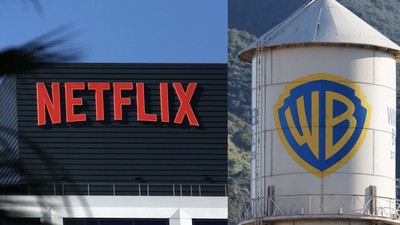
The media industry just witnessed a surprising twist. Paramount Skydance beats Netflix in Warner Bros bid, shifting the balance in one of the most talked-about entertainment deals of the year. While many expected Netflix to dominate the negotiation table, the outcome proved that legacy studios and strategic partnerships still have serious power.
What makes this situation even more interesting? Despite losing the bid, Netflix shares surge shortly after the news broke. Investors clearly see something bigger happening behind the scenes.
Let’s break down what this means for Warner Bros, Paramount Skydance, Netflix, and the future of streaming.
The Warner Bros bid became a hot topic as multiple entertainment giants showed interest in expanding their content libraries and strengthening their global positions.
In a competitive move, Paramount Skydance beats Netflix in Warner Bros bid, securing a stronger strategic advantage. Instead of Netflix expanding its traditional streaming empire through this acquisition, Paramount Skydance stepped in with a more appealing structure and long-term vision.
The bid was not just about acquiring content. It was about positioning. Warner Bros represents decades of intellectual property, iconic franchises, and production infrastructure. Winning this bid means gaining leverage in both theatrical releases and streaming ecosystems.
When Paramount Skydance beats Netflix in Warner Bros bid, it signals that traditional studios are not fading away. Instead, they are evolving.
Here’s why this move matters:
Paramount Skydance can blend production capabilities with distribution power. That gives them more control over blockbuster films and franchise expansions.
Warner Bros is home to major IPs that can be monetized across cinema, streaming, licensing, and merchandising.
While Netflix focuses primarily on digital streaming, Paramount Skydance benefits from a hybrid model that includes theatrical, licensing, and streaming layers.
This win could reshape competitive dynamics in the entertainment industry.
Here’s the twist: even though Paramount Skydance beats Netflix in Warner Bros bid, Netflix shares surge.
Why would investors react positively to what looks like a loss?
There are a few possible reasons:
Investors may see Netflix walking away as a disciplined move. Large acquisitions can be risky and expensive. By not overspending, Netflix preserves capital.
Netflix has been focusing heavily on ad-supported tiers, international expansion, and original content production. Investors might believe the company doesn’t need Warner Bros assets to grow.
Wall Street currently rewards profitability and sustainable margins more than aggressive expansion. Netflix maintaining financial discipline may boost investor confidence.
So while Paramount Skydance beats Netflix in Warner Bros bid, the stock market reaction shows confidence in Netflix’s long-term strategy.
The streaming wars have evolved.
A few years ago, the race was all about subscriber growth. Companies spent billions on content just to win new users. Now, the focus has shifted to:
Profitability
Retention
Ad revenue
Franchise monetization
Cross-platform synergy
In that context, Paramount Skydance beats Netflix in Warner Bros bid represents a strategic consolidation move rather than a pure streaming expansion.
Meanwhile, Netflix is proving it can grow without making every major acquisition.
The reason this deal matters so much is because both companies operate differently.
Digital-first model
Heavy investment in original content
Global subscriber focus
Data-driven programming decisions
Hybrid distribution model
Strong theatrical presence
Franchise-driven approach
Studio-based ecosystem
When Paramount Skydance beats Netflix in Warner Bros bid, it highlights the contrast between tech-driven streaming platforms and traditional studio alliances.
This isn’t just about content. It’s about business philosophy.
Netflix shares surge following the news, and that says a lot about market psychology.
Investors are currently more cautious about large-scale mergers and acquisitions. In recent years, aggressive media deals have sometimes led to:
Heavy debt
Integration challenges
Content overlap
Slower profitability
By losing the Warner Bros bid, Netflix avoids those potential complications.
Meanwhile, Paramount Skydance now carries the responsibility of making the acquisition successful. Winning a bid is one thing. Delivering financial returns is another.
For Warner Bros, the outcome could open a new chapter.
With Paramount Skydance stepping in, the studio could benefit from:
Strategic franchise development
Cross-platform storytelling
Expanded theatrical support
Global co-production opportunities
The partnership might create a stronger foundation for major film and TV properties moving forward.
When Paramount Skydance beats Netflix in Warner Bros bid, it could mean Warner Bros aligns more closely with a traditional studio expansion path rather than a streaming-only future.
The entertainment industry is constantly reshaping itself.
A few years ago, streaming platforms seemed unstoppable. Now, we’re seeing a balance between tech platforms and legacy studios.
If Paramount Skydance successfully integrates Warner Bros assets, it could strengthen studio-based ecosystems and reduce the dominance of purely digital streaming players.
However, Netflix shares surge reminds us that streaming remains powerful. Netflix still leads in global subscribers and content reach.
This situation doesn’t signal defeat for Netflix. It signals diversification in competitive strategies.
Every major deal carries risks.
For Paramount Skydance:
Integration complexity
Debt management
Market volatility
Execution pressure
For Netflix:
Increased competition
Content licensing challenges
Subscriber growth saturation
But both companies also have opportunities.
Paramount Skydance can leverage Warner Bros intellectual property for decades. Netflix can continue expanding globally with less financial burden.
When Paramount Skydance beats Netflix in Warner Bros bid, it’s not about winners and losers in a simple sense. It’s about strategic positioning.
Paramount Skydance beats Netflix in Warner Bros bid in a move that reshapes media competition. While Paramount Skydance strengthens its studio ecosystem, Netflix shares surge, showing investor confidence in its independent strategy.
The entertainment industry is entering a more mature phase. Growth alone is no longer enough. Efficiency, profitability, and smart acquisitions matter more than ever.
This story highlights a bigger trend: sometimes, not winning a deal can still be a win.
As streaming wars evolve and studios restructure, we’ll likely see more strategic shifts like this. And if this bid tells us anything, it’s that the future of entertainment will be defined by smart execution—not just aggressive expansion.