

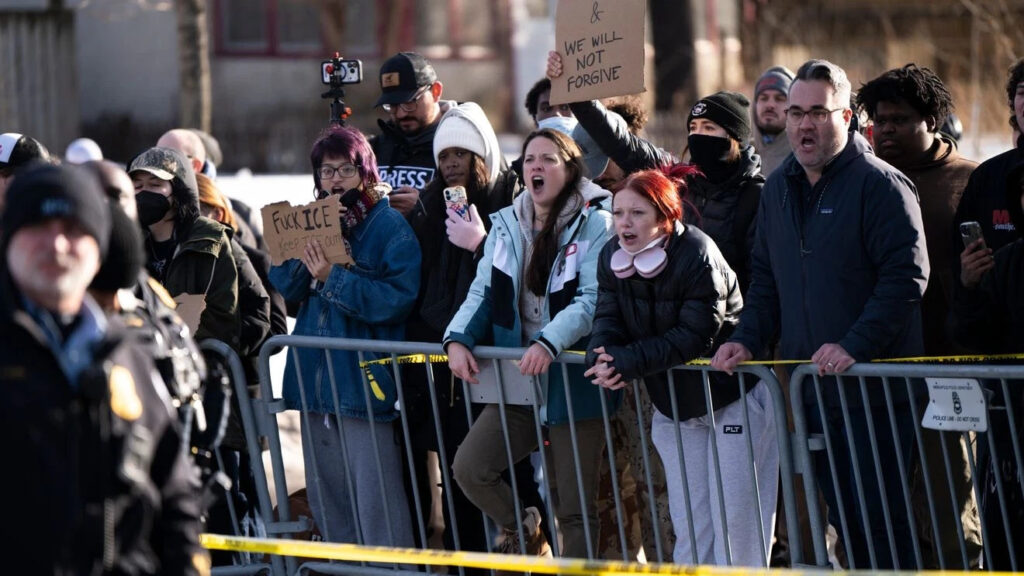
In recent days, Minneapolis has become the epicenter of one of the biggest protest movements in the United States so far this year. Minneapolis protesters march against ICE, and what started as local outrage over fatal encounters between federal immigration agents and civilians quickly grew into a massive, sustained march. This march was against U.S. Immigration and Customs Enforcement (ICE) and broader immigration enforcement operations in the state of Minnesota.
The protests were triggered by a series of controversial and deadly incidents involving federal agents. On January 7, a Minnesota resident named Renée Nicole Good was shot and killed by an ICE officer during an enforcement action. That incident drew local criticism. However, there were few sustained mass protests at first.
Things escalated dramatically on January 24, when Alex Pretti, a 37-year-old ICU nurse and Minneapolis resident, was shot and killed by U.S. Border Patrol agents during an ICE-related operation. Videos circulating online showed Pretti holding a phone, not a weapon, when agents confronted him. This detail has challenged the federal government’s official version of events and stoked widespread anger.
The deaths of Good and Pretti, along with other controversial actions like the detention of a child by ICE agents, ignited public outrage. These incidents also fed into a broader critique of immigration enforcement in the city.
Even before the killing of Pretti, Minneapolis and broader Minnesota had seen significant resistance to the federal immigration operation known as Operation Metro Surge. This operation deployed thousands of ICE and other federal agents across the state.
On January 23, community organizers, labor unions, religious groups, and advocacy organizations called for what was called the “Day of Truth & Freedom.” This wasn’t just a march — it was a general strike. Tens of thousands of Minnesotans skipped school, skipped work, and even shuttered local shops in solidarity with the protests. Statewide, businesses and cultural sites closed as part of a coordinated show of resistance. Additionally, hundreds of clergy members were arrested during peaceful demonstrations at the Minneapolis-Saint Paul International Airport.
Despite subzero temperatures — with wind chills dropping far below freezing — protesters filled the streets of downtown Minneapolis. They marched from public plazas through major thoroughfares, chanting slogans like “ICE out!” and “No hate, no fear, immigrants are welcome here.”
The crowds gathered in Minneapolis were motivated by several core demands:
Withdrawal of ICE and federal immigration agents from Minnesota, especially in Minneapolis.
Accountability for fatal shootings and use of force by federal agents.
Investigations into potential human rights violations during immigration operations.
Defunding or abolition of ICE and reforms to federal immigration policy.
These calls reflect broader frustration with what many Minnesotans see as overly aggressive and unchecked federal enforcement actions that disproportionately impact immigrant communities and erode trust in law enforcement.
The demonstration in Minneapolis wasn’t limited to protests. In many parts of the city, businesses and community organizations showed support in unique ways. Some local eateries closed their doors in solidarity — handing out free food to demonstrators as a show of unity.
Cities across the United States also saw solidarity rallies in support of Minneapolis protesters, including gatherings in places like Connecticut and other major cities. People held signs, chanted, and raised awareness about the situation in Minnesota.
The response from local officials has been stark. Minnesota’s governor and Minneapolis’s mayor publicly condemned the federal agents’ actions and demanded greater oversight and transparency. They called for independent investigations into the shootings and criticized what they view as federal interference in local law enforcement matters.
Meanwhile, federal defenders argued that the agents were acting in self-defense during enforcement operations — a claim that has been challenged by citizen videos and eyewitness accounts. This disagreement has fueled political tensions between state and federal leaders.
One striking element of the Minneapolis protests has been the weather. Despite dangerously cold conditions — with thermometers plummeting well below freezing — people continued to march, chant, and rally. For many participants, braving the harsh winter was a powerful symbol of their commitment to the cause.
The emotional intensity of the protests — fueled by grief over the deaths of community members and frustration with current enforcement policies — has kept the momentum going. Even as discussions about policy reform and investigations are just beginning, this momentum continues.
As demonstrations continue, major questions remain about the future of federal immigration enforcement in Minnesota and how local and national leaders will respond. Protesters vow to keep pressure on authorities, particularly around issues of accountability and meaningful change.
Meanwhile, discussions about immigration policy reform continue at state and national levels, with some calling for sweeping changes while others defend the actions of federal agencies. These protests reflect broader social debates in the United States about immigration, law enforcement, and civil rights. Such debates are likely to continue well beyond the current outbreak of marches and rallies.