

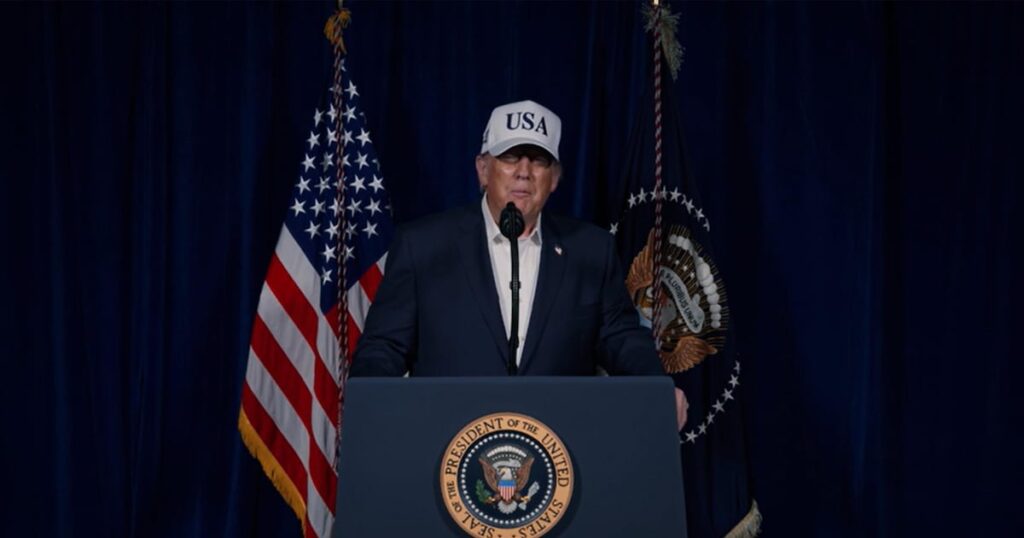
U.S. President Donald Trump says the strikes on Iran aren’t stopping anytime soon.
In a video statement posted to Truth Social, Trump said combat operations are “continuing at full force” and will keep going “until all of our objectives are achieved.”
That single line does a lot of work. It’s not just a status update—it’s a clear signal that the White House is framing this as an ongoing campaign, not a one-off response. And it lands at a moment when the region is already on edge, with retaliatory strikes, wider instability fears, and markets watching every headline.
So what exactly did Trump say, what does “objectives” even mean in real life, and what could happen next?
Trump’s core message was straightforward: the U.S. is actively conducting combat operations in Iran, and the mission continues until goals are met.
He also acknowledged U.S. losses—three U.S. service members were confirmed killed—and warned more casualties could come.
That matters because modern conflicts often begin with limited language (“targeted,” “measured,” “defensive”), then slowly expand. This time, the messaging is the opposite: it starts big and open-ended. “Until all objectives are achieved” is not a timetable. It’s a blank check—at least rhetorically.
Trump did not lay out a numbered list of objectives in the short statement itself, but reporting around the announcement frames the campaign as tied to major U.S. strategic goals in Iran, including preventing a nuclear-armed Iran and broader security aims.
In plain terms, “objectives” could refer to things like:
degrading Iran’s military capabilities
targeting command-and-control infrastructure
disrupting weapons programs
forcing a change in Iranian behavior (or leadership dynamics)
The big issue: if objectives are broad or political, they can be hard to “finish.” Military targets can be measured. Political outcomes are messy.
This statement isn’t happening in a vacuum. Reporting indicates a rapidly escalating regional conflict, including heavy strikes and retaliation across the region, and widespread international concern about spillover and instability.
And when you combine:
open-ended goals,
active combat operations,
and expectations of further casualties,
…you get a situation where the next steps can come fast.
No one outside the decision room can say what the next 7–14 days look like with certainty. But based on what’s publicly reported so far, here are the realistic directions this could go:
This is the “grind” scenario: continued operations, tit-for-tat responses, and rising pressure on shipping, energy markets, and regional bases.
It’s possible to see mixed signals—pressure through force while keeping diplomatic channels open. Some coverage suggests Trump has also hinted at talks in parallel with military action.
When leaders publicly warn “more casualties are expected,” it often means they’re preparing public opinion for further losses—and a harsher response if those losses mount.
If you’re not in Washington, you might be thinking: “Okay, but how does this affect me?”
Even if you’re halfway across the world, these kinds of conflicts typically ripple into:
oil price volatility and shipping risks (especially if major waterways are threatened)
airline route changes and travel disruption
heightened security alerts in multiple countries
financial market swings tied to uncertainty
Basically: geopolitics goes global fast.
Trump’s message—strikes continue until “all objectives” are achieved—signals a sustained military campaign rather than a short, limited operation.
The problem is that “objectives” can mean a lot of different things. If those objectives are narrow and measurable, the campaign could be shorter. If they’re broad and political, it could drag—and escalate—because the finish line keeps moving.
Either way, this is now a situation where the words matter, the timelines are unclear, and the next headline could change everything.