

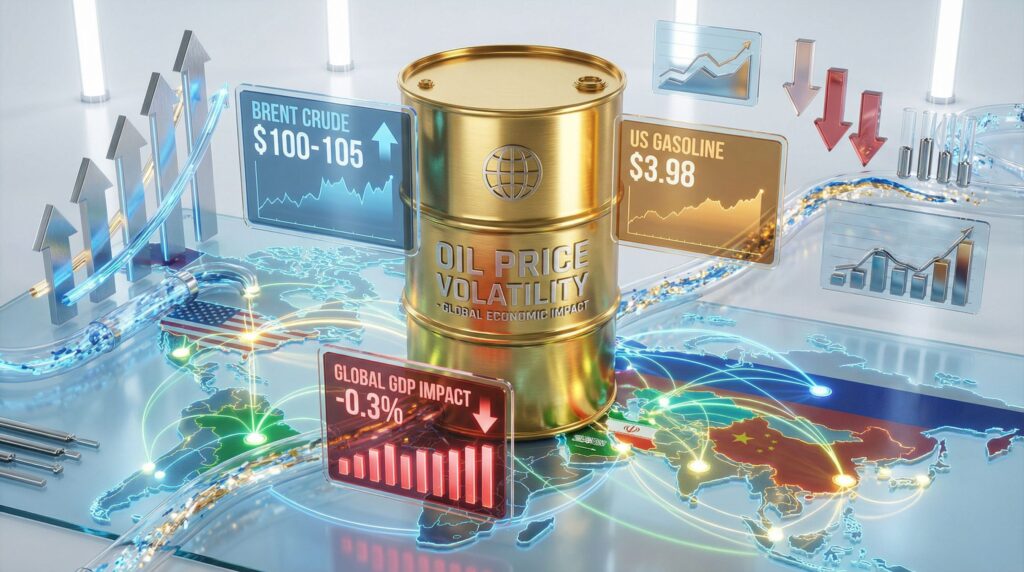
In the modern world, oil is more than just a product; it is the heartbeat of global life. It fuels the machines of war, the tools of peace, and the steady growth of nations. However, nature put most oil in places that are often at risk of fighting. This makes the energy sector a frequent victim—and a powerful weapon—during wartime. War impact on oil production and export instability is now a central concern, as we move through 2026, the weakness of the global oil supply has never been more obvious.
War breaks the balance of energy markets in three main ways: the physical destruction of gear, the use of trade bans (sanctions), and the “export fear” felt by traders. When a missile hits a refinery or a navy blocks a shipping lane, the shock moves instantly from the battlefield to the stock market. This article looks at how modern war stops oil production and why shaky exports are a major threat to our economic safety.
The most direct hit from war is the physical ruin of oil wells and drill sites. In heavy fighting, oil fields are often treated as “prizes” to be won or “assets” to be taken away from the enemy. We saw this in the 1991 Gulf War when retreating troops set fire to over 600 oil wells. This caused a massive drop in production and a mess that took years to clean up.
In the conflicts of 2024–2026, the way energy is attacked has changed. Today, drones and precise missiles can hit “midstream” gear—like pipes and pumping stations—deep inside a country. These strikes create “bottlenecks.” Even if the oil is pulled from the ground, a single hit on a main refinery or pipe junction can stop exports for months. This leaves one area with too much oil while the rest of the world suffers a shortage.
While pipes are important, most oil moves by sea. This makes “chokepoints”—narrow paths like the Suez Canal or the Strait of Hormuz—the most dangerous spots in the supply chain. When war reaches these waters, the effect is instant. A navy block or sea mines don’t just stop one country; they paralyze the energy flow for entire continents.
The Red Sea crisis of the mid-2020s is a great example. When tankers were targeted by missiles, the cost of insurance jumped by 500% to 1,000% in weeks. Many ships had to take the long way around Africa. This added 15 days to the trip and raised the cost of fuel and labor. This delay makes exports unstable because refineries in the West don’t know when their next shipment will arrive, causing gas prices to jump wildly.
War is fought in bank accounts as much as on the ground. Today, the “Oil Weapon” is mostly used through sanctions. By banning a country from selling its oil, the world tries to starve it of the money needed for war. However, these bans rarely stop exports completely. Instead, they push the oil into a “shadow market.”
By 2026, we have seen the rise of the “Ghost Fleet.” This is a huge group of old, uninsured tankers that move blocked oil in secret. These ships often swap oil in the middle of the ocean to hide where it came from. This creates two markets: “clean” oil sold at high prices and “grey” oil sold at a discount. This makes it very hard for groups like OPEC to track how much oil is actually being moved around the world.
A hidden but heavy blow from war is the loss of skilled workers and tech. Modern oil drilling needs expert engineers and special software. When war breaks out, big global firms often leave the country to stay safe or follow the law.
Without constant care and high-tech parts, oil fields begin to fail. In places like Libya or Venezuela, years of fighting have damaged the “reservoirs.” If the pressure isn’t managed right during a shutdown, it can be impossible to get the oil flowing again. War doesn’t just stop production today; it kills the ability to produce for the next generation. This “tech decay” is why oil-rich nations often struggle to recover long after the war ends.
Oil prices are set by fear as much as by the actual flow of oil. This is called the “Geopolitical Risk Premium.” Traders don’t just price in the oil that is lost today; they price in the oil that might be lost tomorrow. A simple rumor of more fighting in the Middle East can add $10 to the price of a barrel in one afternoon.
This mood-driven market makes it hard for nations and businesses to plan their budgets. In 2026, computer programs that trade oil react instantly to “war news” in the headlines. This leads to “flash volatility,” where prices swing up and down based on unverified reports. For countries that sell oil, this means their main income is tied to a roller coaster of global anxiety.
War often forces trade to find new paths forever. For years, oil flowed from the Middle East and Eurasia toward Europe and America. But the wars of the 2020s have broken these old habits. War in Eastern Europe has forced oil that used to go to Germany to travel thousands of extra miles to reach India and China.
This new “Long-Haul” energy world is less stable. it needs more ships and more fuel for the journey. It also needs more protection from pirates or hostile navies. These new routes aren’t chosen because they are the best; they are chosen for survival. This leaves the whole export system at risk of high costs and delays.
For people living in a war zone, oil instability is a matter of life and death. Many oil countries rely on exports for almost all their money. When war stops these sales, the government can’t pay for hospitals, food, or lights. This creates a cycle where oil trouble leads to social anger, which makes it harder to guard the oil fields.
In 2026, we have seen “Petro-States” fall into chaos because they couldn’t pay their workers. This often leads to “unauthorized” production. Local warlords or rebels take over wells and sell the oil on the black market to buy weapons. In this case, oil stops being a national treasure and becomes the fuel that keeps the war going.
If there is a bright side to wartime oil trouble, it is the realization that “Energy Safety” and “Green Energy” are now the same thing. In 2026, many nations realized that as long as they need foreign oil, they are at the mercy of distant wars. This has pushed more countries to use solar, wind, and nuclear power.
In Europe and Asia, “Decarbonization” is now a defense plan. By building local wind farms, countries insulate themselves from the ups and downs of the global oil market. However, this shift has its own risks. The metals needed for green tech (like lithium and copper) are also found in only a few places. We might move away from “Oil Wars” only to see “Mineral Wars” in the future.
The bond between war and oil is one of mutual damage. As we have seen, war hits production through physical ruin, the loss of experts, and the use of messy, long trade routes. Export trouble is a direct result of energy being used as a weapon.
Infrastructure is a Target: Modern war uses drones to hit “bottlenecks” for maximum economic pain.
Shadow Markets are Normal: Sanctions have created a hidden “Ghost Fleet” that makes managing global oil hard.
Transition is Safety: Leaders see green energy as a way to escape the stress of war-hit oil markets.
Healing Takes Time: The loss of skilled workers and reservoir damage means it takes decades for production to recover.
As long as the world runs on oil, war will continue to cast a long shadow over the global economy.