
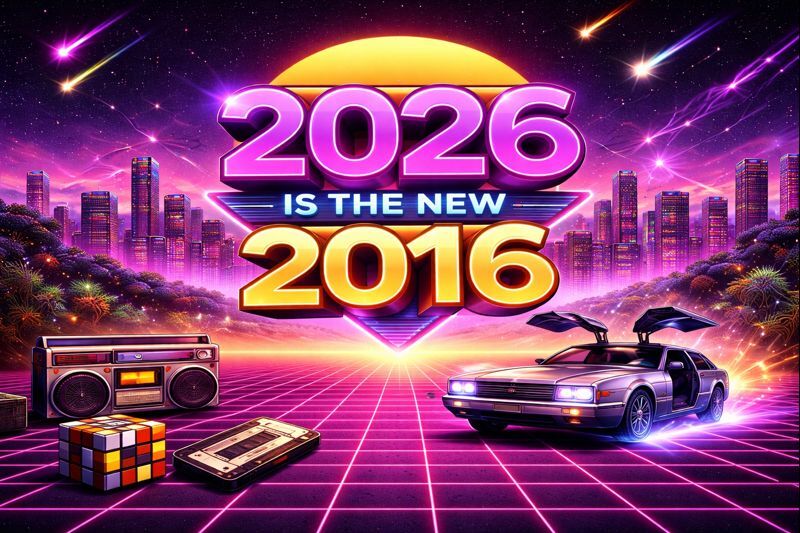
If you’ve been scrolling through social media, reading tech news, or just talking with friends lately, you might have noticed a strange feeling in the air. A lot of people are saying the same thing: 2026 feels like 2016 all over again. And honestly, they’re not wrong.
Back in 2016, the world felt like it was standing at the edge of something new. Technology was booming, social media was reshaping culture, startups were everywhere, and big shifts were happening in politics, entertainment, and how people lived their daily lives. Fast forward to now, and 2026 is giving off that exact same energy, just louder, faster, and way more complex.
So why are people calling 2026 the new 2016? Let’s break it down.
In 2016, tech was all about smartphones, apps, and social platforms going mainstream. Instagram Stories launched, live streaming became popular, and startups felt unstoppable. Everyone wanted to build “the next big thing.”
In 2026, we’re seeing a similar moment, but this time it’s driven by AI, automation, and immersive technology. Artificial intelligence is no longer just a buzzword. It’s everywhere. From personal AI assistants and creative tools to AI agents that can plan, write, code, and even negotiate, the shift feels massive.
Just like in 2016, people are excited, confused, and a little scared at the same time. Back then, it was “Will social media change how we communicate?” Now it’s “Will AI change how we work, create, and think?”
The feeling is familiar. The scale is just bigger.
2016 was a golden era for creators. YouTube stars, Instagram influencers, and early podcasters suddenly became real careers. People realized you didn’t need a traditional job to make money online.
In 2026, creators are having another big moment. But this time, it’s not just about posting content. It’s about building brands, communities, and digital products. Creators are using AI to speed up workflows, design visuals, edit videos, and even manage businesses.
The barrier to entry feels low again, just like in 2016. Anyone with an idea, a laptop, and some consistency can start something. That sense of opportunity is one of the biggest reasons people say 2026 is the new 2016.
Culturally, 2016 was chaotic. Memes exploded, online discourse became louder, and trends moved faster than ever. Internet culture started leaking heavily into real life.
Now in 2026, culture feels like it’s shifting once more. Nostalgia is everywhere. Fashion from the 2010s is back. Music styles from that era are trending again. Even old internet humor is resurfacing, but with a modern twist.
At the same time, people are more self-aware. There’s a stronger focus on mental health, digital balance, and authenticity. In 2016, we jumped into platforms without thinking much about the consequences. In 2026, we’re more cautious, but still curious.
It’s like we’re repeating the cycle, but with more experience.
Ask anyone in tech, and they’ll tell you that 2016 was a wild time for startups. Funding was flowing, ideas were bold, and failure was almost celebrated.
In recent years, things slowed down. Layoffs, tighter funding, and market uncertainty made people more careful. But in 2026, the startup energy is coming back, especially around AI, climate tech, health tech, and creator tools.
Just like 2016, we’re seeing small teams build powerful products very quickly. A few people with the right tools can now compete with big companies. That sense of “anything is possible” is very 2016-like.
In 2016, Facebook, Twitter, and Instagram dominated everything. Over time, people got tired, algorithms changed, and trust dropped.
In 2026, the internet feels more fragmented, but also more personal. Instead of one big platform, we have many smaller spaces: private communities, niche forums, group chats, and decentralized networks.
This mirrors 2016 in a weird way. Back then, people were just discovering online communities. Now, they’re rediscovering them, but with better tools and clearer intentions.
It’s impossible to talk about 2016 without mentioning politics. That year reshaped global conversations and set the tone for the decade.
In 2026, we’re at another turning point. Globally, societies are rethinking leadership, technology regulation, climate responsibility, and digital rights. There’s tension, but also momentum.
People feel like big changes are coming, even if they’re not sure what those changes will look like. That uncertainty, mixed with anticipation, feels very familiar to anyone who lived through 2016.
Calling 2026 the new 2016 isn’t just about nostalgia. It’s about recognizing a reset moment. Times like these don’t come often. They’re messy, exciting, and full of opportunity.
In 2016, some people jumped early and built careers, companies, and movements that still matter today. Others watched from the sidelines, unsure if the hype was real.
Now in 2026, we’re facing a similar choice. Whether you’re a creator, designer, developer, entrepreneur, or just someone trying to figure out your next step, this moment matters.
The tools are new. The challenges are bigger. But the core feeling is the same: something is changing, and those who adapt early will shape what comes next.
So yes, 2026 is the new 2016, but it’s not a copy-paste version. It’s an evolved one. We’re more experienced, more critical, and more aware of the downsides. At the same time, the excitement is back.
If 2016 was the beginning of the social media era, then 2026 might be the beginning of the AI-native era. And just like before, the people who understand the shift early will be the ones telling the story later.
The question is simple: are you watching history repeat itself, or are you part of what’s being built next?