

For a lot of early internet users, Digg isn’t just a website — it’s a memory. Before timelines were infinite and algorithms decided what you should care about, Digg was one of the places where the internet decided what was worth talking about. Stories rose because people voted them up. Communities formed around curiosity, not outrage. Then, slowly, Digg faded out while platforms like Reddit took over the role of the internet’s front page.
Now, Digg is trying something bold: coming back to the public eye with a new platform that positions itself as a modern alternative — and a direct competitor — to Reddit.
This isn’t just a relaunch. It’s Digg making a statement about what online communities could be again.
To understand why this move is interesting, you need to look at the current state of social platforms. Reddit has grown massive, influential, and unavoidable. It’s where trends start, products get reviewed, and internet culture often takes shape. But as Reddit has scaled, so have the complaints: more ads, stricter rules, API controversies, and growing frustration from both users and moderators.
That frustration has created a rare opportunity.
Digg is stepping into that gap by pitching itself as a platform that learns from the past — both its own mistakes and Reddit’s growing pains. The new Digg isn’t trying to recreate the early 2000s. Instead, it’s trying to answer a simple question: What would a community platform look like if it was rebuilt today, from scratch, with users in mind?
According to early previews and public messaging, Digg’s new platform focuses on a few key ideas:
First, community-first design. Digg is putting a lot of emphasis on structured discussions, better moderation tools, and clearer community guidelines. The goal is to reduce chaos without killing conversation — something Reddit often struggles to balance at scale.
Second, less algorithmic chaos. While Digg isn’t abandoning algorithms entirely, it’s aiming to make ranking systems more transparent and less aggressive. Instead of constantly pushing viral outrage, the platform wants to reward thoughtful posts, original insights, and quality contributions.
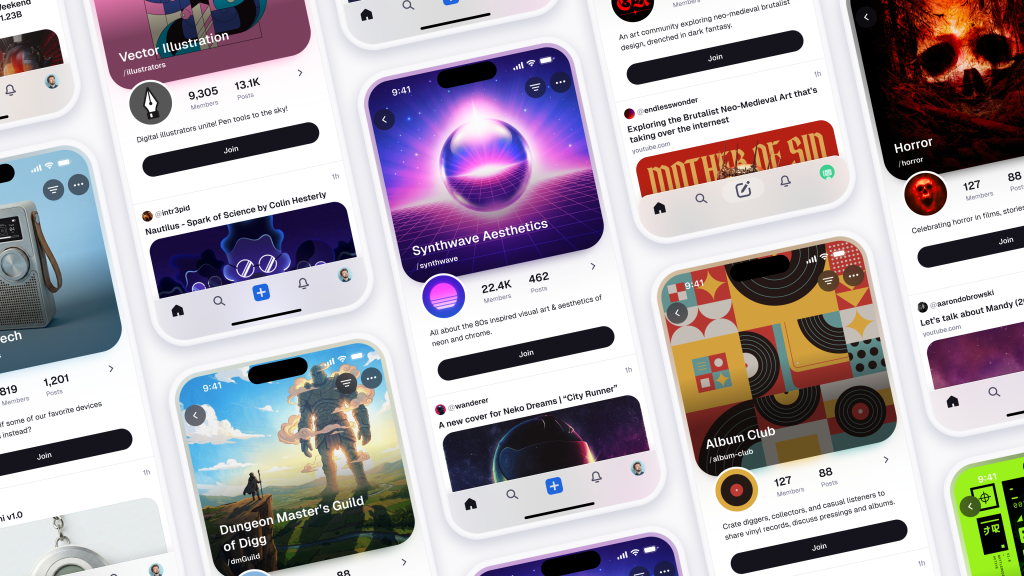
Third, a cleaner, calmer interface. The new Digg feels intentionally quieter. Fewer visual distractions, fewer rage-bait headlines, and more focus on reading and discussion. It’s designed for people who want to stay on a thread, not endlessly scroll past it.
And finally, AI-assisted moderation and discovery. Digg is openly experimenting with AI tools to help surface good discussions, detect spam or toxic behavior, and support moderators instead of replacing them. This is a clear attempt to solve one of Reddit’s biggest problems: burnout among volunteer mods.
It’s important to say this clearly: Digg is not trying to be a Reddit clone.
Reddit is built around subreddits that feel like separate cities with their own laws. Digg, on the other hand, is aiming for something closer to neighborhoods — connected, but not isolated. Discussions are meant to feel part of a broader ecosystem rather than fragmented islands.
Reddit thrives on speed and scale. Digg is betting on depth and quality.
That’s a risky bet in a world dominated by short attention spans, but it’s also what makes the platform interesting. Digg isn’t chasing every user. It’s chasing the right ones: people who are tired of noise, repetitive memes, and constant outrage cycles.
The timing of this launch is not random.
Over the past few years, many users have become more aware of how platforms shape behavior. People are more critical of engagement-driven design and more open to alternatives that promise healthier interactions. The Reddit API backlash showed that users do care about platform decisions — and that loyalty has limits.
At the same time, there’s a growing nostalgia for earlier internet spaces that felt more human and less optimized. Digg is clearly leaning into that sentiment, but with modern tools and lessons learned.
In other words, Digg isn’t saying “remember the old days.” It’s saying, “we can do better now.”
Of course, none of this guarantees success.
Reddit’s biggest strength is its scale. Millions of active communities, years of archived discussions, and deeply embedded habits are hard to compete with. Network effects are brutal — people go where the conversations already are.
Digg also has to rebuild trust. For some users, Digg’s past failures still linger. A comeback only works if the platform proves it’s stable, consistent, and willing to listen long-term.
Then there’s moderation. Promising healthier discussions is easy. Enforcing them at scale is not. Digg’s AI-assisted approach sounds promising, but it will be judged heavily on how fair, transparent, and effective it actually is.
Even if Digg doesn’t “beat” Reddit, its return still matters.
Competition pushes platforms to improve. If Digg succeeds in attracting thoughtful communities, Reddit may be forced to rethink some of its decisions. Users benefit either way — through better tools, clearer policies, or simply having alternatives.
More importantly, Digg’s comeback signals something bigger: people are no longer satisfied with platforms that only optimize for growth. There’s a growing appetite for spaces that value conversation over conflict, contribution over clicks.
That shift might be slow, but Digg is betting that it’s real.
Digg launching a new Reddit competitor isn’t just a nostalgia play. It’s a statement about where online communities might be headed next.
The internet doesn’t need more platforms screaming for attention. It needs places that make people want to think, read, and talk again.
Whether Digg can become that place remains to be seen. But its return is a reminder that even in a crowded, algorithm-driven internet, there’s still room to reimagine how we gather, argue, and share ideas online.
And honestly? That alone makes this comeback worth paying attention to.