

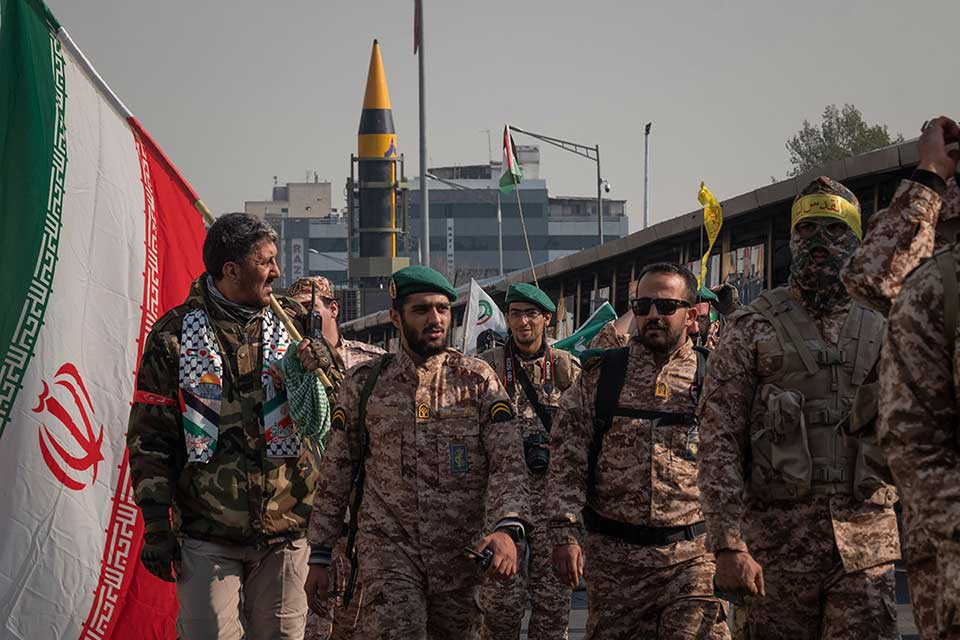
On January 29, 2026, the European Union (EU) made a historic and controversial decision: it officially added Iran’s Islamic Revolutionary Guard Corps (IRGC) to its list of terrorist organizations. This move marks a major shift in how Europe deals with Iran’s most powerful military and political force, something that used to be almost unthinkable.
In this article, we’ll break down what happened, why it matters, how the world reacted, and what comes next, all in plain and easy English.
Before we go deeper, let’s understand what IRGC really is.
The Islamic Revolutionary Guard Corps was created after Iran’s 1979 Islamic Revolution to protect the country’s new political system. Over time, it became much more than a military force. It now controls parts of Iran’s economy, intelligence agencies, and foreign operations.
The IRGC also has influence far outside Iran. It supports allied groups including militias and political movements in places like Syria, Lebanon, Yemen, and Iraq. For many countries and organizations, including the United States, this has raised serious security concerns over the years.
On January 29, 2026, EU foreign ministers agreed to designate the IRGC as a terrorist organization. This didn’t happen overnight, it took years of debate inside the EU.
Here’s what the decision means:
The IRGC is now on the EU’s official list of terrorist groups, alongside well-known organizations like al-Qaeda and ISIS.
Assets linked to the IRGC are frozen under EU law.
Travel bans and sanctions now apply to IRGC members and connected individuals.
Financial or material support to the IRGC is prohibited across EU member states.
In simple terms: Europe has just put the IRGC under heavy legal and financial restrictions that affect how it can operate in and with EU countries.
Like many big political decisions, this move wasn’t just about one issue it was driven by several connected reasons.
Many European leaders pointed to the Iranian government’s violent response to protests as a key reason for the terrorist designation. Since late 2025, Iran has faced large nationwide protests caused by economic frustration and rising inflation. These protests reportedly resulted in thousands of deaths, with the IRGC being blamed for much of the repression.
EU officials argue that when a force kills its own civilians and suppresses rights, it shouldn’t be treated like a normal military but rather as a group responsible for terror-like violence.
Europe’s foreign policy chief, Kaja Kallas, said “repression cannot go unanswered,” meaning that leaders in Brussels felt they needed to act in the face of human rights abuses.
This moral justification is often used by Western countries when they take extreme diplomatic steps especially when they feel states are hurting their own people.
Countries like France, Spain, and Italy shifted their positions in the weeks leading up to the decision. These nations had previously been reluctant due to fear of diplomatic fallout, but growing concerns about Iran’s internal violence helped change minds.
It’s also worth noting that the United States, Canada, and Australia had already listed the IRGC as a terrorist organization before the EU did, so this move aligns Europe more closely with other Western policies.
Unsurprisingly, Iran strongly objected to the EU’s decision.
Iranian officials called the move a “major strategic mistake” and accused the EU of “fanning the flames” of regional tensions rather than helping reduce them.
Iran also described the EU’s actions as blindly following U.S. and Israeli politics, using harsh language and warning of serious consequences. Iranian military leaders suggested that the EU leaders could be held responsible for future fallout related to the decision.
This sharp reaction shows how seriously Iran views this diplomatic shift especially since the IRGC is central to the country’s military, political, and economic power.
This designation has several big implications:
By treating the IRGC as a terrorist organization, the EU can now enforce stricter sanctions preventing the group from moving money, owning assets, or gaining support within Europe.
This could weaken the IRGC’s networks and make it harder for Iran to use European financial systems.
Relations between the EU and Iran will likely get strained. Iran could retaliate politically or diplomatically, making negotiations whether about nuclear issues, trade, or regional cooperation much harder.
Europe is now joining a group of nations that officially view the IRGC as a terrorist force. This could influence other countries either to follow suit or to strengthen their own policies regarding Iran’s involvement in regional politics.
Some critics say that terrorist designations are symbolic meaning they look strong on paper but don’t always change behavior. However, many analysts think this one could be more than symbolic because:
It comes with real sanctions and legal tools.
It reflects a unanimous decision from all 27 EU member states.
It aligns Europe with countries that have already banned the IRGC.
So while it may not lead to immediate conflict, it’s a serious diplomatic and legal move that could shape future geopolitics.
The EU’s decision to label Iran’s IRGC as a terrorist organization is one of the most significant diplomatic actions Europe has taken in years. It’s rooted in concerns over human rights, regional stability, and global security. It’s also a clear message that Europe views Iran’s actions especially violent repression as unacceptable.
Whether this decision will bring real change or fuel more tensions remains to be seen. But one thing is clear: the relationship between Europe and Iran just changed in a major way.