

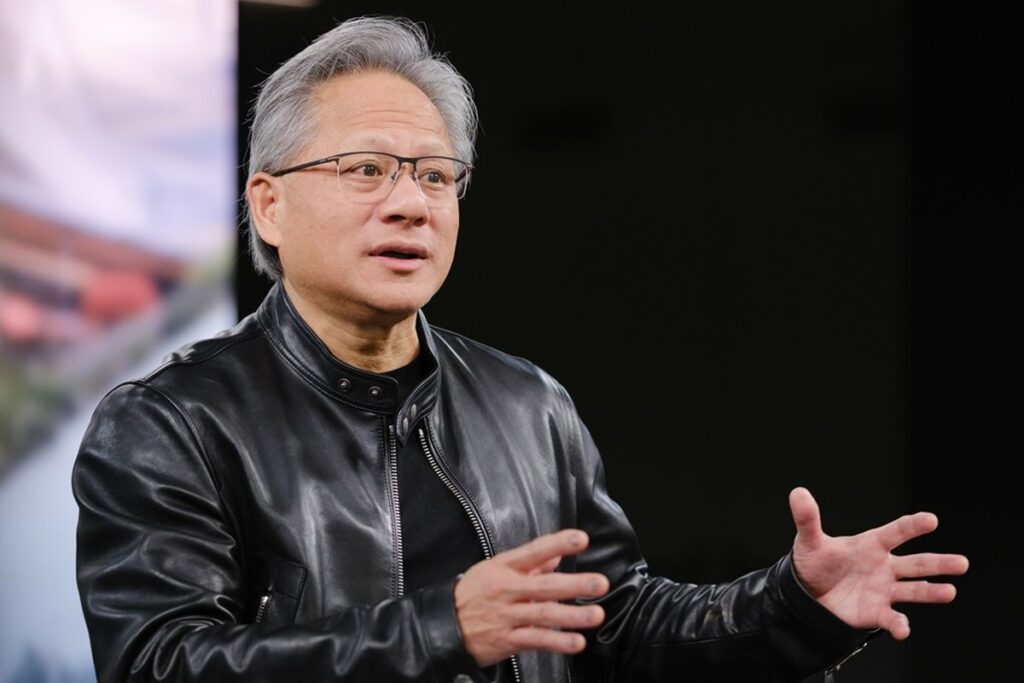
Rumors move fast in the tech world, especially when they involve two of the most influential names in artificial intelligence. Recently, speculation began to circulate that Nvidia CEO Jensen Huang was “not happy” with OpenAI. The rumors quickly gained traction online, fueled by discussions about AI competition, chip shortages, and shifting partnerships in the rapidly evolving AI ecosystem.
However, Jensen Huang has now pushed back against that narrative, making it clear that the idea of him being unhappy with OpenAI is simply not true. His response highlights not only Nvidia’s position in the AI industry, but also how easily misunderstandings can arise when powerful companies operate in the same fast-moving space.
Where the Rumors Came From
The speculation appears to have emerged from a mix of public comments, market analysis, and broader tensions in the AI industry. Nvidia has become the backbone of modern AI, supplying the GPUs that power everything from large language models to data centers. OpenAI, on the other hand, has become one of the most visible AI developers in the world.
As OpenAI continues to grow and deepen its relationship with partners like Microsoft, some observers began to wonder whether Nvidia felt sidelined or concerned about its role in the long term. Others pointed to Nvidia’s close ties with multiple AI companies and suggested that competition between OpenAI and other players could create friction.
But according to Huang, this interpretation misses the point.
Jensen Huang Sets the Record Straight
In response to the rumors, the Nvidia CEO made it clear that there is no hostility or dissatisfaction toward OpenAI. On the contrary, Huang has repeatedly praised OpenAI’s work and acknowledged its role in accelerating AI adoption worldwide.
He emphasized that Nvidia’s business model is built on supporting the entire AI ecosystem, not picking sides. Whether it is OpenAI, startups, research institutions, or enterprises, Nvidia’s goal is to provide the infrastructure that makes advanced AI possible.
From Huang’s perspective, OpenAI’s success is not a threat. It is proof that the AI market is growing, which ultimately benefits Nvidia as well.
Nvidia and OpenAI: More Aligned Than Opposed
Despite being very different companies, Nvidia and OpenAI are deeply connected through the AI value chain. OpenAI relies heavily on Nvidia’s GPUs to train and run its models, while Nvidia benefits from OpenAI’s breakthroughs, which drive demand for more powerful hardware.
This relationship is more complementary than competitive. Nvidia does not build consumer-facing AI products like ChatGPT, and OpenAI does not design chips. Each company focuses on its own strengths.
Huang’s denial of dissatisfaction reinforces the idea that the AI industry is not a simple zero-sum game. Growth in one area often creates opportunities in another.
The Bigger Picture: AI Is Not a One-Company Race
One reason these rumors gained attention is the growing perception that AI leadership is becoming more concentrated. Companies like OpenAI, Google, Meta, and Anthropic often dominate headlines, while Nvidia quietly supplies the tools that make their work possible.
However, Huang has consistently argued that AI’s future will be shaped by collaboration, not rivalry alone. No single company can control the entire AI stack, from hardware to software to real-world deployment.
By rejecting the idea that he is unhappy with OpenAI, Huang is also pushing back against the narrative that the AI industry is driven by personal or corporate grudges. For Nvidia, success comes from enabling others to innovate, not from limiting them.
Market Reactions and Investor Sentiment
Even unconfirmed rumors can affect market sentiment, especially when they involve companies as influential as Nvidia and OpenAI. Some investors worried that tension between major AI players could disrupt supply chains or slow down innovation.
Huang’s clarification helps calm those concerns. It reassures investors that Nvidia remains committed to supporting a wide range of AI partners and that its relationship with OpenAI remains stable.
Given Nvidia’s dominant position in AI hardware, maintaining strong partnerships is crucial. Publicly addressing the rumors shows that Nvidia understands how important perception is in today’s market.
Why Misinterpretations Happen So Easily
The AI industry moves incredibly fast, and public statements are often taken out of context. A single comment about competition, efficiency, or future strategy can quickly be turned into a headline about conflict.
In Nvidia’s case, any discussion about diversifying customers or expanding beyond a single partner can be misread as dissatisfaction. But for Huang, diversification is simply good business, not a sign of frustration.
This situation also highlights how narratives are sometimes shaped more by speculation than facts, especially when transparency is limited due to competitive pressures.
What This Means for the AI Ecosystem
Huang’s response sends a broader message to the AI community. It suggests that collaboration remains the foundation of progress, even as competition increases.
As AI models become larger and more complex, cooperation between hardware providers, software developers, cloud platforms, and regulators will become even more important. Public disputes or strained relationships would only slow things down.
By denying claims of unhappiness with OpenAI, Nvidia is reinforcing its image as a neutral enabler rather than a rival looking to dominate every layer of the AI stack.
Looking Ahead
The relationship between Nvidia and OpenAI will likely continue to evolve as AI technology advances. New models, new hardware, and new regulations will shape how these companies interact.
For now, however, Jensen Huang’s message is clear: there is no hidden conflict, no personal dissatisfaction, and no reason to believe that Nvidia and OpenAI are at odds.
Instead, both companies appear focused on what matters most—pushing AI forward and turning powerful technology into real-world impact.
Final Thoughts
In an industry as influential and fast-moving as AI, rumors are almost inevitable. But not all speculation reflects reality. Nvidia CEO Jensen Huang’s denial of claims that he is unhappy with OpenAI serves as a reminder to look beyond headlines and consider the bigger picture.
Rather than rivalry, the relationship between Nvidia and OpenAI is built on mutual benefit and shared momentum. As long as AI continues to grow, both companies have strong reasons to work in parallel, if not directly together.
For now, the story is less about conflict and more about clarity. Nvidia is not unhappy with OpenAI—and the future of AI is still very much a collaborative effort.