

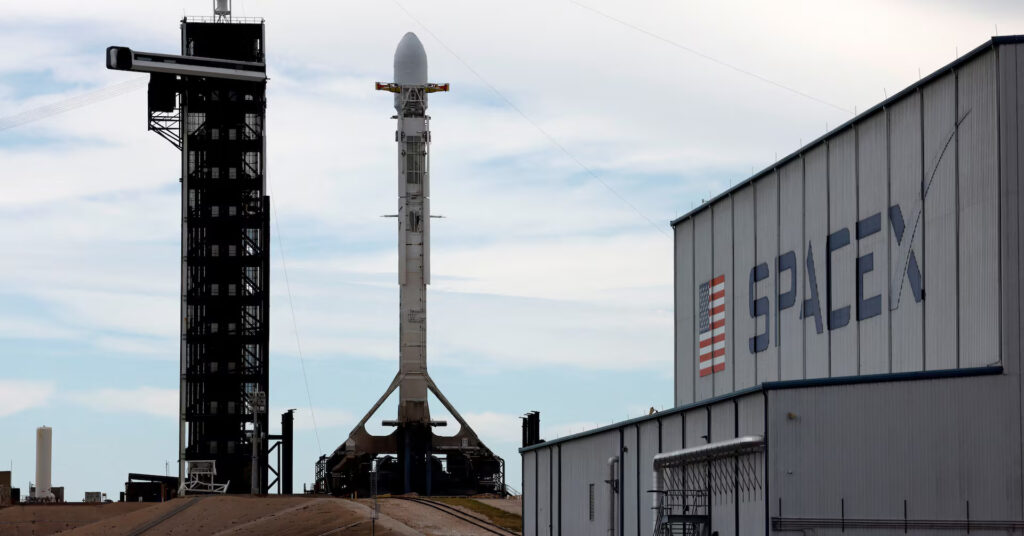
In a move that feels both surprising and totally expected, SpaceX has officially acquired xAI, the artificial intelligence company founded by Elon Musk in 2023. The deal brings two of Musk’s most ambitious projects under one roof and signals a new phase where advanced AI and space technology are no longer running on parallel tracks, but are deeply connected.
While financial details of the acquisition were not fully disclosed, sources close to the companies say the deal is more about long-term strategy than short-term profit. For Musk, this acquisition looks like a natural step toward his bigger vision: building systems that can operate autonomously, intelligently, and at a scale far beyond Earth.
At first glance, a rocket company buying an AI startup might seem odd. But if you look at SpaceX’s future plans, the logic becomes clear.
SpaceX isn’t just launching rockets anymore. It’s running massive satellite networks through Starlink, developing fully reusable spacecraft like Starship, and planning missions to the Moon and Mars. All of this generates enormous amounts of data and requires fast, reliable decision-making in environments where human intervention isn’t always possible.
This is where xAI comes in.
xAI was created with a clear mission: to build AI systems that understand the universe and reason about complex problems. Its flagship product, Grok, already showed Musk’s preference for AI that can handle real-time data, think critically, and operate with fewer restrictions compared to traditional models.
By bringing xAI into SpaceX, Musk is betting that advanced AI will become the brain behind future space missions.
Before the acquisition, xAI was mostly known for Grok, an AI assistant integrated with X (formerly Twitter). Grok stood out because it had direct access to live data and was designed to be more direct and less “filtered” than other AI models.
Now, its role is about to expand dramatically.
Inside SpaceX, xAI’s technology is expected to be used for:
Autonomous spacecraft navigation
Real-time problem solving during missions
Optimizing rocket launches and landings
Managing Starlink satellite traffic
Analyzing massive volumes of telemetry data
Instead of just answering questions or generating text, xAI’s models could soon be making split-second decisions millions of kilometers away from Earth.
One of the biggest reasons this acquisition matters is Starship.
Starship is designed to be a fully reusable spacecraft capable of carrying humans to Mars. But sending people to another planet isn’t just about powerful engines. It’s about intelligence.
Future Mars missions will face communication delays of up to 20 minutes one way. That means astronauts can’t rely on real-time instructions from Earth. Systems onboard must be able to detect problems, evaluate options, and act on their own.
With xAI now part of SpaceX, AI could effectively become a digital crew member. It could monitor life-support systems, predict equipment failures, assist with scientific research, and even help astronauts make critical decisions under pressure.
This is a major shift from traditional space missions, where most decisions are still human-led.
Starlink may also benefit heavily from the acquisition.
With tens of thousands of satellites planned, managing orbital traffic is becoming more complex every year. Collisions, signal interference, and space debris are growing concerns.
xAI’s models could help SpaceX predict and avoid collisions, optimize satellite positioning, and dynamically adjust bandwidth based on user demand. Over time, Starlink could become largely self-managing, reducing costs and improving reliability worldwide.
For users on Earth, this might translate into faster, more stable internet, especially in remote regions.
This acquisition also fits into a broader pattern across Musk’s companies.
Tesla uses AI for self-driving technology. Neuralink works on brain-computer interfaces. X is becoming an AI-powered information platform. Now SpaceX is bringing AI directly into space exploration.
Rather than treating these companies as separate businesses, Musk seems to be building an interconnected ecosystem. Data, models, and talent can move between companies, accelerating development across the board.
By placing xAI inside SpaceX, Musk ensures that AI development is driven by real-world, high-stakes problems instead of just benchmarks and demos.
Not everyone is cheering.
Some critics worry about too much power being concentrated under one individual. SpaceX already plays a critical role in global communications and national security through Starlink and government contracts. Adding advanced AI into the mix raises questions about oversight and regulation.
Others point out potential conflicts of interest, especially as xAI’s technology could influence public discourse through X while also supporting critical infrastructure in space.
There are also technical concerns. AI systems, no matter how advanced, can fail in unexpected ways. Relying too heavily on autonomous decision-making in space could introduce new risks if not carefully tested and controlled.
SpaceX has responded by emphasizing rigorous simulation, testing, and human oversight in all mission-critical systems.
With the acquisition, xAI will no longer operate as an independent startup. Its team will be integrated into SpaceX, though it’s expected to maintain some level of autonomy, especially in research and model development.
Grok is likely to continue existing as a product on X, but future versions may also be influenced by insights gained from space applications. Training AI on physics, orbital mechanics, and real-world engineering problems could make future models more robust and capable than typical consumer-focused AI.
In other words, space might become the ultimate training ground for artificial intelligence.
SpaceX acquiring xAI isn’t just another tech headline. It’s a signal that the future of space exploration will be deeply tied to artificial intelligence.
Rockets will still need powerful engines, but they’ll also need powerful minds digital ones. Missions will rely less on constant human control and more on systems that can think, adapt, and learn on their own.
For Elon Musk, this acquisition brings him one step closer to his long-term vision: a future where humanity becomes a multi-planetary species, supported by intelligent machines that help us survive and thrive beyond Earth.
Whether this bold move pays off or creates new challenges remains to be seen. But one thing is clear: the race to space is no longer just about who can build the best rockets. It’s also about who can build the smartest brains to guide them.