

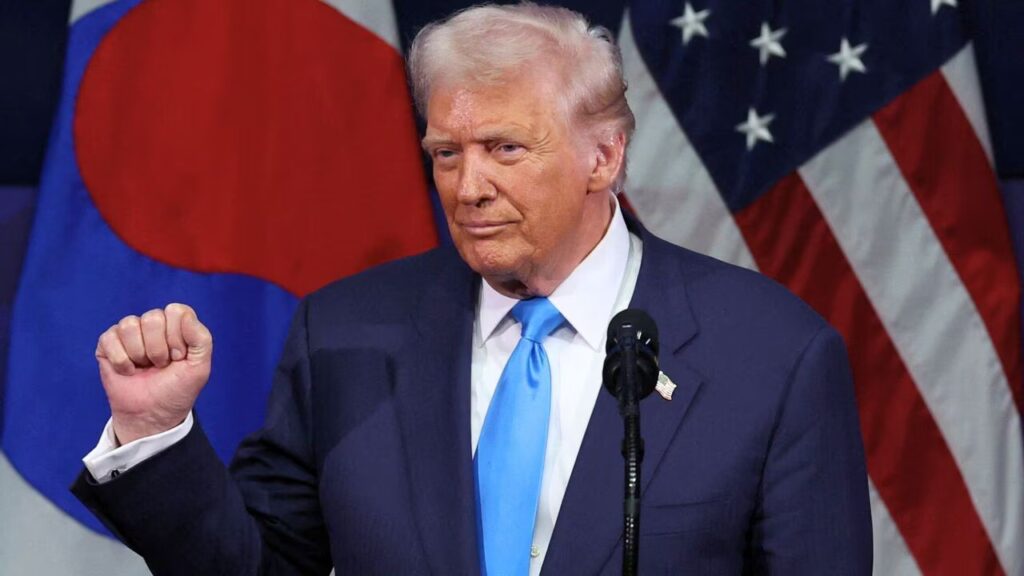
Donald Trump is once again shaking up global trade conversations. In a recent statement, the former US president said he plans to raise tariffs on imports from South Korea, and the news headline “Trump raises tariffs on South Korean imports” has reignited debates about protectionism, fair trade, and America’s economic priorities. Even though Trump is no stranger to tough trade rhetoric, this latest comment quickly caught attention both in Washington and across Asia.
South Korea is one of the United States’ closest allies and a major trading partner, so any talk of higher tariffs is bound to raise eyebrows. From cars and electronics to steel and consumer goods, trade between the two countries runs deep. That’s why Trump’s remarks aren’t just campaign noise they hint at how trade policy could shift if his influence grows again.
Trump’s message was clear and familiar: the US, in his view, is still being treated unfairly in global trade. According to him, higher tariffs on South Korean imports would help protect American industries and workers who feel squeezed by foreign competition.
This approach is very much in line with Trump’s “America First” playbook. During his presidency, tariffs were one of his favorite tools, especially when dealing with countries he believed benefited too much from access to the US market.
Even though South Korea isn’t usually framed as an adversary like China, Trump’s comments suggest that allies are not exempt from pressure if he believes the trade balance doesn’t favor the US enough.
The US and South Korea have a long-standing trade relationship supported by the KORUS Free Trade Agreement, which was renegotiated during Trump’s presidency. At the time, Trump claimed the updated deal was a win for American workers, especially in the auto sector.
Despite that, trade imbalances have remained a political talking point. South Korean companies are major exporters to the US, particularly in automobiles, semiconductors, electronics, and steel. Many of these products are deeply embedded in American supply chains.
Raising tariffs on these imports wouldn’t just affect South Korean exporters it could ripple through US manufacturers and consumers as well.
Trump’s renewed focus on tariffs comes at a time when economic anxiety is still high. Inflation, supply chain disruptions, and global competition remain key issues for voters. Tariffs, for Trump, are an easy message: they sound tough, decisive, and protective.
By targeting South Korean imports, Trump may be signaling that no trade relationship is off-limits when it comes to renegotiation. It’s also a reminder of how he views trade deals not as long-term partnerships, but as transactions that can always be reopened.
This messaging plays well with his political base, especially in manufacturing-heavy regions where foreign competition is often blamed for job losses.
For South Korea, higher US tariffs could be a serious concern. Many of the country’s biggest companies rely heavily on exports to the American market. Automakers, electronics brands, and steel producers could face higher costs or reduced competitiveness if tariffs increase.
In response, South Korean firms might look to shift production, absorb costs, or pass them on to consumers. None of these options are ideal, especially at a time when global demand is already uncertain.
There’s also the diplomatic angle. South Korea balances its economic ties with the US while managing regional tensions in East Asia. Trade friction with Washington adds another layer of complexity to that balancing act.
Tariffs are often sold as a way to protect domestic jobs, but they usually come with trade-offs. Higher tariffs can lead to higher prices, especially for products where alternatives are limited or more expensive.
South Korean goods are deeply integrated into everyday American life. From smartphones and TVs to cars and home appliances, many US consumers rely on Korean brands. If tariffs go up, prices could follow.
That raises a familiar question: who really pays for tariffs? While they target foreign imports, the costs often end up being shared by businesses and consumers at home.
Trump’s tariff talk feels like a return to his first-term approach, where trade disputes were frequent and often unpredictable. Tariffs were imposed, lifted, threatened, and reimposed, sometimes within short time frames.
Supporters argue that this aggressive style forced trading partners to take the US seriously. Critics say it created uncertainty, hurt exporters, and strained alliances.
The situation with South Korea could follow a similar pattern strong statements first, negotiations later, and outcomes that depend heavily on political leverage.
Financial markets tend to react quickly to trade-related news, especially when tariffs are involved. Even the suggestion of higher tariffs can affect stock prices, currency values, and investor confidence.
US allies are also watching closely. If South Korea becomes a tariff target, other trade partners may wonder whether they could be next. That uncertainty can push countries to diversify trade relationships or strengthen regional agreements outside the US.
In the long run, repeated tariff threats can slowly reshape global trade flows, even without immediate policy changes.
One big question remains: is Trump seriously planning to raise tariffs, or is this mainly campaign rhetoric? At this stage, it’s hard to tell.
Trump has a history of using bold trade statements as leverage. Sometimes they lead to concrete action, other times they fade as negotiations evolve. What’s clear is that tariffs remain central to how he talks about economic strength.
For businesses and governments, the challenge is preparing for uncertainty without overreacting.
Trump’s comments on South Korean imports are part of a broader conversation about globalization and national interests. Around the world, governments are rethinking trade dependencies and economic security.
Tariffs, once seen as outdated tools, are back in political discussions. Whether they actually deliver the promised benefits is still widely debated.
What’s certain is that trade policy has become deeply political and highly personal in Trump’s world.
When Trump says he’s raising tariffs on South Korean imports, it’s more than just a headline. It’s a reminder of how quickly trade relationships can become political flashpoints.
For South Korea, the US, and global markets, the real impact will depend on whether words turn into policy. Until then, businesses, consumers, and allies are left watching closely.
One thing is clear: if Trump’s influence continues to shape the conversation, tariffs will remain a powerful and controversial tool in the global economic playbook.