

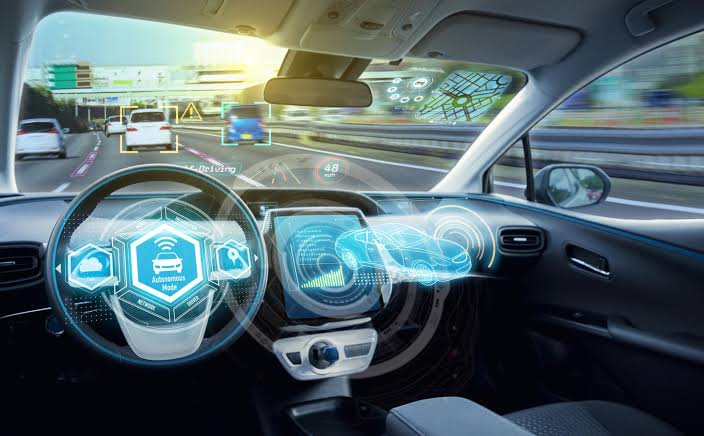
Future of Autonomous Vehicles and Smart transportation… The transportation industry is undergoing one of the most significant transformations since the invention of the automobile. Rapid advances in artificial intelligence (AI), machine learning, robotics, sensors, electric vehicles (EVs), connectivity, and data analytics are reshaping how people and goods move around the world. At the center of this transformation are autonomous vehicles (AVs) and smart transportation systems, technologies that promise to improve road safety, reduce traffic congestion, enhance mobility, lower emissions, and create more efficient urban environments.
Although fully autonomous transportation is still evolving, significant progress has already been made. Driver-assistance technologies, intelligent traffic management systems, connected vehicles, and AI-powered logistics solutions are increasingly becoming part of everyday life. Governments, automakers, technology companies, and urban planners are investing billions of dollars to accelerate innovation while addressing the technical, regulatory, and ethical challenges associated with widespread adoption.
This article explores the future of autonomous vehicles and smart transportation, examining the technologies driving innovation, real-world applications, benefits, challenges, case studies, industry trends, and what the coming decades may hold for mobility worldwide.
An autonomous vehicle is capable of sensing its environment and performing driving tasks with varying degrees of human intervention. These vehicles combine multiple technologies—including cameras, radar, lidar, GPS, artificial intelligence, and advanced software—to perceive surroundings, make decisions, and navigate safely.
Rather than relying solely on human judgment, autonomous driving systems analyze road conditions, identify obstacles, recognize traffic signs, detect pedestrians, and continuously adjust speed and direction based on real-time information.
The automotive industry commonly classifies autonomous driving into six levels, ranging from no automation to full automation.
Smart transportation refers to the integration of digital technologies, communication networks, AI, and data-driven decision-making to improve the efficiency, safety, sustainability, and convenience of transportation systems.
Unlike traditional transportation infrastructure, smart transportation emphasizes connectivity among vehicles, roads, traffic signals, public transit, and infrastructure.
AI serves as the decision-making engine of autonomous vehicles. Machine learning algorithms process enormous volumes of sensor data, recognize objects, predict the behavior of surrounding road users, and determine safe driving actions.
Computer vision enables vehicles to interpret visual information captured by cameras. These systems identify traffic lights, road signs, lane markings, pedestrians, cyclists, and other vehicles.
Lidar creates highly detailed three-dimensional maps of the environment using laser pulses, while radar measures object distance and speed using radio waves. Together, these sensors improve environmental awareness under varying driving conditions.
High-precision GPS combined with digital mapping supports accurate vehicle localization and route planning.
Modern wireless communication technologies enable vehicles to exchange information with nearby vehicles, infrastructure, and cloud services, improving situational awareness and traffic coordination.
Human error contributes to the vast majority of road traffic accidents worldwide. Autonomous driving systems aim to reduce accidents caused by distracted driving, fatigue, speeding, and impaired driving by continuously monitoring the driving environment and responding more quickly to hazards.
Connected autonomous vehicles can optimize driving behavior, maintain efficient following distances, and coordinate movement through intersections, reducing unnecessary braking and traffic bottlenecks.
Autonomous transportation has the potential to improve mobility for older adults, individuals with disabilities, and people unable to drive due to medical conditions.
Many autonomous vehicle programs are closely linked with electric mobility. Optimized driving patterns, efficient routing, and increased adoption of electric vehicles can reduce fuel consumption and greenhouse gas emissions.
Autonomous trucks and delivery vehicles may enhance supply chain efficiency by reducing travel times, optimizing routes, and supporting continuous operations where appropriate.
Several cities have begun testing autonomous buses and shuttle services operating on fixed routes. These vehicles can improve last-mile connectivity between transportation hubs and residential or commercial areas.
Smart Rail Systems
Modern rail networks increasingly use AI for predictive maintenance, automated scheduling, energy optimization, and real-time passenger information systems.
Airports are deploying AI-powered baggage handling, autonomous cleaning robots, intelligent security screening, and digital passenger assistance to improve operational efficiency.
Ground-based delivery robots and autonomous drones are being evaluated for delivering groceries, medical supplies, and small consumer goods, particularly in urban environments and university campuses.
Several technology companies have introduced autonomous ride-hailing services in carefully defined operational areas. These services use fleets of highly instrumented vehicles operating under strict safety protocols and continuous monitoring.
Early deployments demonstrate both the promise and complexity of autonomous mobility. Passengers benefit from innovative transportation options, while developers gather valuable operational data to improve vehicle performance, safety, and reliability.
Many metropolitan areas are implementing AI-powered traffic management systems capable of analyzing live traffic conditions and adjusting signal timing dynamically.
These systems help reduce congestion by minimizing unnecessary waiting times, improving emergency vehicle routing, and responding more effectively to accidents or unusual traffic patterns.
The mining industry has become one of the earliest adopters of autonomous heavy vehicles operating in controlled environments. Autonomous haul trucks improve operational efficiency, reduce worker exposure to hazardous conditions, and enable continuous production under carefully monitored conditions.
The lessons learned from these deployments continue to inform broader autonomous vehicle development.
Autonomous vehicles must safely navigate unpredictable road conditions, severe weather, construction zones, unusual traffic situations, and interactions with human drivers, cyclists, and pedestrians.
Connected vehicles exchange large amounts of digital information. Protecting these systems against cyber threats is essential to maintain public safety and trust.
Governments worldwide continue developing regulations governing autonomous vehicle testing, liability, insurance, safety standards, and certification.
Consumer acceptance remains one of the most important factors influencing adoption. Transparent safety testing, effective communication, and demonstrated reliability will play major roles in building confidence.
Smart transportation depends upon modern infrastructure including reliable digital communications, accurate mapping, intelligent traffic systems, and well-maintained road networks.
The autonomous vehicle industry is expected to influence numerous sectors beyond automotive manufacturing.
While automation may reduce demand for certain driving occupations over time, it is also expected to create new opportunities in software engineering, fleet operations, cybersecurity, vehicle maintenance, AI safety, and transportation analytics.
Smart transportation contributes to sustainability by improving traffic flow, encouraging shared mobility, supporting electric vehicles, and enabling more efficient logistics.
AI-driven route optimization reduces unnecessary travel distances, while predictive maintenance helps improve vehicle efficiency and reduce resource consumption. Smart city planning further integrates transportation with renewable energy, public transit, and active mobility options such as cycling and walking.
AI extends beyond autonomous driving itself. Transportation authorities increasingly use AI to predict traffic demand, optimize public transit schedules, identify road maintenance needs, monitor infrastructure, and improve emergency response coordination.
Machine learning also enables predictive maintenance by identifying early signs of equipment wear before failures occur, reducing downtime and improving transportation reliability.
The successful adoption of autonomous vehicles depends not only on technological progress but also on thoughtful policy development, workforce preparation, public education, and international collaboration.
Governments will need to establish clear safety standards and legal frameworks. Educational institutions must prepare future engineers, software developers, and transportation professionals with the skills required to support increasingly intelligent mobility systems. Businesses should invest in cybersecurity, responsible AI development, and infrastructure modernization, while communities should remain engaged in discussions about accessibility, equity, and environmental sustainability.
Although fully autonomous transportation will likely be introduced gradually rather than through sudden transformation, the direction of travel is clear. Driver-assistance technologies continue to improve, connected infrastructure is expanding, and AI capabilities are advancing rapidly.
Rather than replacing existing transportation overnight, autonomous systems are expected to complement human drivers for many years. Incremental improvements in safety, efficiency, accessibility, and sustainability will likely define the transition toward increasingly automated mobility.
The future of autonomous vehicles and smart transportation represents a profound shift in how societies move people and goods. Advances in artificial intelligence, connectivity, sensing technologies, electric mobility, and intelligent infrastructure are creating transportation systems that are safer, more efficient, more sustainable, and increasingly responsive to real-time conditions.
While significant technical, regulatory, cybersecurity, and societal challenges remain, ongoing collaboration among governments, industry, researchers, and communities is steadily addressing these obstacles. Autonomous vehicles are unlikely to eliminate every transportation challenge, but they have the potential to substantially reduce accidents, improve accessibility, optimize logistics, and support smarter cities. As innovation continues, the combination of intelligent vehicles and connected transportation infrastructure will play a central role in shaping the future of global mobility.