

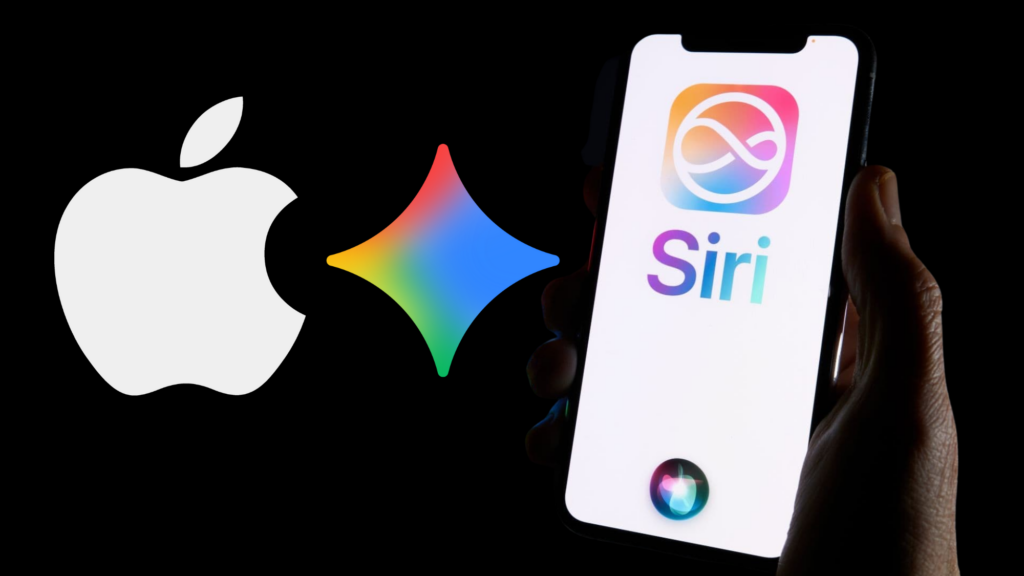
For years, Apple’s Siri has been both iconic and frustrating. It was one of the first mainstream voice assistants, yet it slowly fell behind rivals like Google Assistant and Amazon Alexa. Now, that narrative may be about to change. With reports that Alphabet’s Gemini AI could soon power major parts of Apple’s Siri, the AI landscape is entering a new phase—and Alphabet might be the biggest winner.
If this partnership fully materializes, it wouldn’t just be a technical upgrade for Siri. It could reshape the balance of power in artificial intelligence, pushing Alphabet closer to becoming the undisputed leader in the AI race.
Apple and Google have a long, complicated history. They’re partners, competitors, and sometimes quiet rivals. Google Search being the default on Safari already shows how deeply intertwined the two companies are. Adding Gemini to Siri would take that relationship to a whole new level.
For Apple, the motivation is clear. The AI race has accelerated rapidly, especially after the explosion of generative AI. Users now expect assistants to understand context, hold natural conversations, and actually get things done. Siri, despite its deep integration with Apple’s ecosystem, has struggled to keep up.
Gemini, on the other hand, is one of the most advanced AI models currently available. Built by Google DeepMind, it’s designed to handle text, voice, images, code, and complex reasoning. Plugging that power into Siri could instantly make Apple’s assistant far smarter without Apple having to rebuild everything from scratch.
Gemini isn’t just another AI model—it’s Alphabet’s core AI strategy. Google has been rolling it out across Search, Workspace, Android, and developer tools. Each integration strengthens Gemini’s feedback loop, making it smarter and more useful over time.
If Siri joins that ecosystem, Gemini’s reach would explode overnight. Apple has over a billion active devices worldwide. That kind of distribution is something no AI company can ignore. Every Siri interaction powered by Gemini would generate valuable data, improving the model and reinforcing Alphabet’s AI advantage.
This is how AI leadership is built—not just through better models, but through massive real-world usage.
Relying on Alphabet for AI power is not an easy decision for Apple. Apple prides itself on control, privacy, and vertical integration. Handing part of Siri’s intelligence to Google may feel like a compromise.
However, Apple is also pragmatic. The company knows its strength lies in hardware, ecosystem design, and user experience. If Gemini can operate behind the scenes while Apple controls the interface and privacy layer, the partnership could work.
Apple has already shown it’s willing to collaborate when it makes sense. Using Google Search, outsourcing some cloud services, and partnering with chip manufacturers all follow the same pattern. Gemini powering Siri could simply be the next logical step.
For Alphabet, the upside is massive. Powering Siri would position Gemini as the default AI brain behind two of the world’s biggest platforms: Google’s own services and Apple’s ecosystem. That kind of dominance could be unmatched.
It would also strengthen Alphabet’s position against rivals like OpenAI, Microsoft, Amazon, and Meta. While competitors are building impressive AI models, none have the same level of distribution across devices, search, productivity tools, and now potentially Siri.
This kind of scale matters. AI improves with use, and more users mean faster improvement. Alphabet could reach a point where its AI capabilities pull so far ahead that catching up becomes extremely difficult for others.
If Gemini truly powers Siri, competitors will feel the pressure immediately. Microsoft’s partnership with OpenAI has already reshaped Bing, Windows, and Office. Amazon is racing to reinvent Alexa with generative AI. Meta is pushing open models to stay relevant.
But Apple choosing Gemini sends a strong signal. It suggests that Alphabet’s AI isn’t just powerful—it’s reliable, mature, and ready for mass consumer use. That endorsement alone could influence enterprise buyers, developers, and regulators.
It could also accelerate AI consolidation, where a few dominant models power most digital experiences, while smaller players struggle to compete.
One of the biggest concerns users may have is privacy. Apple has built its brand around protecting user data, while Google’s business has traditionally relied on data-driven advertising.
Any Gemini-Siri integration would need clear boundaries. Apple would likely insist on strict data controls, on-device processing where possible, and transparency about what information is shared. If those safeguards aren’t convincing, Apple risks damaging user trust.
How this balance is handled could set new standards for AI partnerships across the industry.
Voice assistants have been stuck in a kind of awkward phase for years. They could set timers and answer basic questions, but rarely felt truly intelligent. Generative AI changes that.
With Gemini’s reasoning and conversational abilities, Siri could finally feel like the assistant Apple originally promised. More natural conversations, better understanding of context, and smarter task execution could bring voice assistants back into the spotlight.
This could also revive interest in AI-powered wearables, smart homes, and in-car assistants—all areas where Apple and Google already play major roles.
Zooming out, this potential partnership reflects a broader trend: AI is becoming too complex and expensive for even tech giants to build entirely alone. Strategic alliances are replacing pure competition.
Alphabet, by positioning Gemini as a platform rather than just a product, is playing a long game. Powering Siri would be a huge milestone in that strategy, reinforcing Gemini as the default AI layer of the digital world.
For Apple, the move could buy time—time to refine its own AI, time to focus on hardware innovation, and time to deliver better user experiences without falling behind.
“Undisputed” is a strong word, but this partnership would certainly push Alphabet closer than ever. With Gemini running across Google services, Android devices, and potentially Apple’s Siri, Alphabet would have unmatched scale, data, and influence.
AI leadership isn’t just about having the best model today. It’s about ecosystem, trust, distribution, and continuous improvement. Gemini already checks many of those boxes. Adding Siri could seal the deal.
Whether this future fully materializes depends on execution, regulation, and user trust. But one thing is clear: if Gemini becomes the brain behind Siri, the AI race will enter a new chapter—and Alphabet may well be writing the rules.