

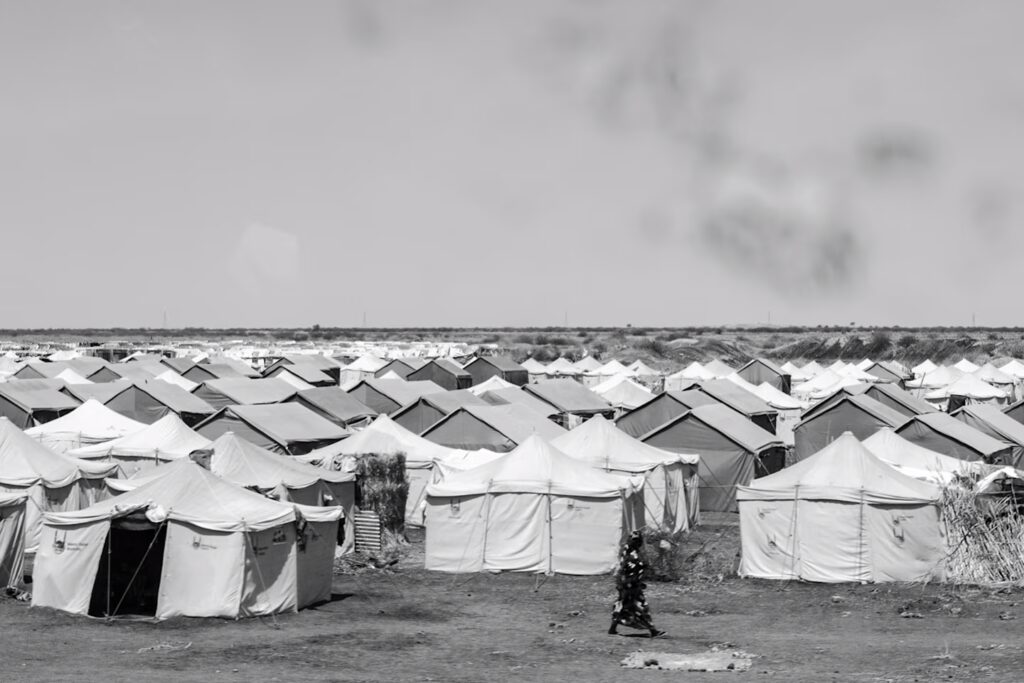
By April 2026, the world is facing a strange problem. The Global Refugee Crisis Worsens as International Support Shrinks, leaving millions without the help they desperately need. The number of people forced to flee their homes is at a record high. War in the Middle East, Asia, and Africa is driving this surge. Yet, at the same time, the systems built to help them are falling apart. For years, countries worked together to share the cost of helping refugees. Today, wealthy nations are turning inward. They are cutting aid and closing their borders.
The results of this pullback are devastating. In 2025, global funding for aid collapsed. Some major donors cut their gifts by as much as 70%. Now, the United Nations and other groups must perform “triage.” They have to decide which hungry children to feed and which medical programs to close. This article looks at why funding is failing, which areas are at a breaking point, and the dangers of leaving millions of people without hope.
In the past, a few steady nations provided most of the world’s refugee aid. By early 2026, that steady support has vanished. Political changes in major Western countries have led to the largest funding gap in history.
Reports show that aid for human rights and refugees will drop by nearly $62 billion a year by the end of 2026. This is not a small cut; it is a total withdrawal. Overall aid has fallen to levels not seen since the year 2000. This is happening even though the number of refugees has tripled in that time. In many high-risk areas, the “funding gap” is now 80%. This means agencies only have 20% of the money they need to keep people alive.
The Rohingya refugees in Bangladesh show what happens when the world stops caring. Over 1.2 million people live in the crowded camps of Cox’s Bazar. They rely on the UN for food, water, and safety.
In 2026, help for the Rohingya has hit a crisis point. Funding has fallen to just 19% of what is needed. This forced the World Food Programme to cut rations. Monthly food money dropped from $12 per person to just $7. For a family in a shack, that $5 loss is the difference between eating and starving. Recent reports show a 34% rise in child labor. Many families are also marrying off young daughters just to have one less mouth to feed.
For the most vulnerable—like those who are sick or at risk—moving to a new country is the only real solution. But while the need for these moves is high, the chance to move is disappearing.
For 2026, the UN estimated that 2.5 million refugees needed urgent moving. Yet, countries around the world have only offered 120,000 spots. This means only about 5% of those in need will find a home. Many countries have also added strict new rules. They often look for specific skills instead of focusing on who needs help most. In places like Lebanon and Jordan, this lack of an exit plan has caused local tension to rise.
In war zones like Sudan and Gaza, shrinking aid is made worse by “aid blocking.” 2026, armies are using red tape and blockades to stop the little aid that is left from reaching people.
In Sudan, nearly half the people do not have enough food. Armies on both sides have created permit systems that block deliveries. Because of the global money shortage, aid groups can no longer afford the security needed for these paths. In April 2026, a long siege in the city of El Fasher led to many deaths from hunger. This happened simply because the money for emergency food flights had been moved to other global problems.
The weight of the refugee crisis is not shared fairly. In 2026, 85% of refugees live in developing nations that are already struggling. Lebanon, for example, has more refugees per person than any other country.
As money for Syrian refugees in Lebanon has dried up, the local government has called for mass deportations. Without UN money for schools or doctors, locals see refugees as a burden on their failing systems. This “host fatigue” is a direct result of the world’s failure to help. When wealthy nations stop paying, the pressure falls on poor neighbors. This often leads to riots and political chaos.
When budgets are cut, programs for women and girls are often the first to go. In 2026, the loss of safety and health services has been devastating.
Reports show that in camps in Myanmar and Ethiopia, cases of trafficking have risen by 40% since aid was cut. Without safe spaces or job training, women are forced into dangerous work to survive. Also, the closure of schools in these camps has left a generation of girls without a future. Many are forced to work as servants or marry early just so their families can buy food.
Security experts in 2026 are worried about the “vacuum” left by empty aid offices. When the UN stops providing food and school, other groups step in. In Africa and Asia, criminal groups use food and protection to recruit young men.
A recent protest in a Kenyan camp turned violent after food was cut by 40%. Residents shouted that “food is a right.” Desperate people are easy to recruit. If the world treats the refugee crisis as a “charity case” instead of a security issue, these camps could become centers for future wars. It is much cheaper to feed people today than to fight a war tomorrow.
Aid is shrinking just as climate change is getting worse. In 2026, “Climate Refugees”—those fleeing drought or floods—are the fastest-growing group of displaced people.
Unlike those fleeing war, climate victims often do not qualify for official refugee status. This means they cannot get what little aid is left. In April 2026, a drought in Africa pushed 1.5 million more people from their homes. Because this is seen as a “natural” event, it gets almost no funding. This leaves millions in a legal trap, moving from one dry land to another with no hope for help.
The drop in support is not just about money; it is about the loss of laws that protect everyone. In 2026, many nations are ignoring the rule that says you cannot send a refugee back to a dangerous place.
Since the UN’s monitoring power has been cut by 75%, there are fewer people to report these crimes. This has led to more people being pushed back at sea or deported without a trial. Human rights groups warn that the Universal Declaration of Human Rights is now just a “suggestion.” When the world refuses to help, it sends a message that human rights only matter if you have enough money.
Despite the bad news of April 2026, there are new ways to help. The goal is to move from “pity” to “investment.”
New partnerships, like the 2025 deal between Europe and Jordan, focus on jobs instead of just handouts. By letting refugees work, host nations can turn a crisis into a way to grow the economy. But these plans need money to start. To fix the safety net, the world must see that helping refugees is not an extra expense. It is the foundation that keeps the world stable.
The refugee crisis of 2026 is getting worse because the world has stopped looking. Shrinking support has created a storm of hunger and danger.
The lesson of 2026 is clear. A world that leaves its most vulnerable behind is a world that is less safe for everyone. The vanishing safety net is a sign of a broken world that has lost its way.