

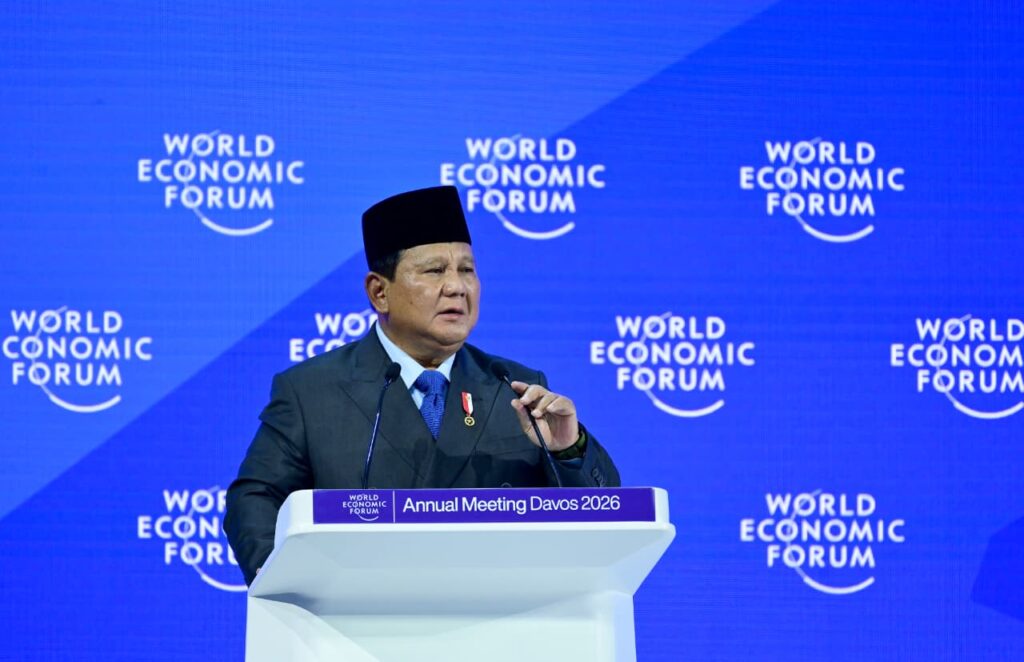
At a time when much of the global economy is still struggling with slow growth, high interest rates, and geopolitical uncertainty, Indonesia has suddenly found itself in a positive spotlight. The International Monetary Fund (IMF) has described Indonesia as a “global bright spot,” and President-elect Prabowo Subianto used the World Economic Forum (WEF) in Davos to confidently present Indonesia as a country that is not just surviving global turbulence, but managing it better than many others. Recently, the IMF calls Indonesia a global bright spot, highlighting its resilience and strong economic management despite worldwide challenges.
For a developing economy, this kind of recognition doesn’t come easily. So what exactly is Indonesia doing right, and why is the world paying attention?
Why the IMF Is Optimistic About Indonesia
When the IMF talks about “bright spots,” it usually means countries that show strong growth, stable finances, and manageable risks despite global headwinds. Indonesia checks many of those boxes.
While many economies are dealing with recession fears or weak recovery, Indonesia has maintained solid economic growth, supported by domestic consumption, investment, and exports. Inflation has remained relatively under control compared to many other countries, and the government has managed to keep fiscal discipline without choking off growth.
Indonesia’s banking sector has also stayed resilient. Unlike during past crises, there has been no major financial instability, no panic in the markets, and no sudden capital flight. That stability matters a lot to international institutions like the IMF.
Strong Fundamentals, Not Just Short-Term Luck
One key reason Indonesia stands out is that its performance isn’t based on a single factor. It’s not just commodities, not just consumption, and not just government spending. It’s a combination of all three.
Indonesia benefited from strong demand for commodities such as nickel, coal, and palm oil, but it didn’t stop there. Over the past few years, the country has pushed hard for downstream industrialization, especially in the electric vehicle and battery supply chain. That move helped Indonesia capture more value instead of just exporting raw materials.
On top of that, domestic consumption—Indonesia’s traditional growth engine—has remained strong thanks to a large middle class and a relatively young population.
Prabowo’s Moment in Davos
Against this backdrop, Prabowo Subianto arrived in Davos with a clear message: Indonesia is stable, open for business, and ready to play a bigger role on the global stage.
At the World Economic Forum, Prabowo highlighted Indonesia’s economic resilience, emphasizing how the country weathered global shocks—from the pandemic to geopolitical tensions—without falling into crisis. His message was simple but effective: Indonesia offers predictability in an unpredictable world.
For global investors, predictability is often more attractive than rapid but unstable growth.
Continuity Over Disruption
One thing that reassured international audiences in Davos was Prabowo’s emphasis on policy continuity. Rather than signaling radical economic changes, he stressed that Indonesia would continue many of the core economic policies that helped maintain stability in recent years.
This includes:
-
Fiscal discipline
-
Infrastructure development
-
Industrial downstreaming
-
Investment-friendly regulations
For investors and international institutions, continuity reduces risk. It suggests that Indonesia’s economic success is not temporary or personality-driven, but built on longer-term structural policies.
Indonesia in a World Full of Uncertainty
The timing of Indonesia’s positive image is important. Many advanced economies are dealing with slowing growth, while some emerging markets face debt pressure and currency volatility.
In contrast, Indonesia has:
-
Relatively low public debt compared to peers
-
A stable currency environment
-
Strong foreign exchange reserves
-
A diversified economy
This makes Indonesia look less vulnerable to sudden global shocks. From the IMF’s perspective, that resilience makes Indonesia a model for other emerging economies.
Davos Is About Narrative—and Indonesia’s Is Working
Davos isn’t just about data. It’s about storytelling. Leaders come to sell a narrative about their country’s future, and Prabowo clearly understood that.
Instead of focusing on problems, he focused on confidence and opportunity. He presented Indonesia as a bridge between developed and developing economies, between East and West, and between traditional industries and the green transition.
That narrative fits well with Indonesia’s role as a G20 member and a major player in Southeast Asia.
Challenges Still Exist—and Prabowo Didn’t Deny Them
What made Prabowo’s message more credible was that he didn’t pretend everything was perfect. He acknowledged challenges such as:
-
Global economic slowdown
-
Climate risks
-
Inequality and job creation
-
The need to improve human capital
By recognizing these issues while emphasizing stability, Prabowo avoided sounding overly optimistic or disconnected from reality. That balance matters in forums like Davos, where audiences are highly skeptical of empty promises.
Why This Matters for Indonesia’s Future
Being labeled a “global bright spot” by the IMF isn’t just good PR. It can have real economic impact.
Positive global perception can:
-
Attract foreign direct investment
-
Lower borrowing costs
-
Strengthen investor confidence
-
Increase Indonesia’s influence in global economic discussions
For a country aiming to move up the global value chain, this kind of recognition can accelerate momentum.
A Test of Leadership Ahead
Of course, praise comes with expectations. As Prabowo prepares to lead Indonesia, the real test will be whether he can maintain stability while pushing necessary reforms.
Indonesia still needs to:
-
Improve education and workforce skills
-
Boost productivity
-
Reduce bureaucratic friction
-
Ensure growth benefits are widely shared
Global optimism won’t last forever unless it’s backed by real progress on the ground.
Indonesia’s Rising Profile on the Global Stage
The combination of IMF praise and Prabowo’s confident presence in Davos signals something important: Indonesia is no longer just reacting to global trends—it’s starting to shape its own narrative.
In a world searching for reliable growth stories, Indonesia is positioning itself as a country that combines scale, stability, and ambition. That doesn’t mean the road ahead will be easy, but it does mean Indonesia is entering the conversation from a position of strength.
Final Thoughts
The IMF calling Indonesia a “global bright spot” and Prabowo showcasing economic resilience in Davos reflect more than a good year or favorable statistics. They point to a deeper shift in how Indonesia is perceived internationally.
If Indonesia can maintain its economic discipline, continue structural reforms, and manage global risks wisely, this moment could mark the beginning of a more influential role on the world stage.
For now, Indonesia is enjoying rare global applause—but the next chapter will be about turning that applause into lasting results.