

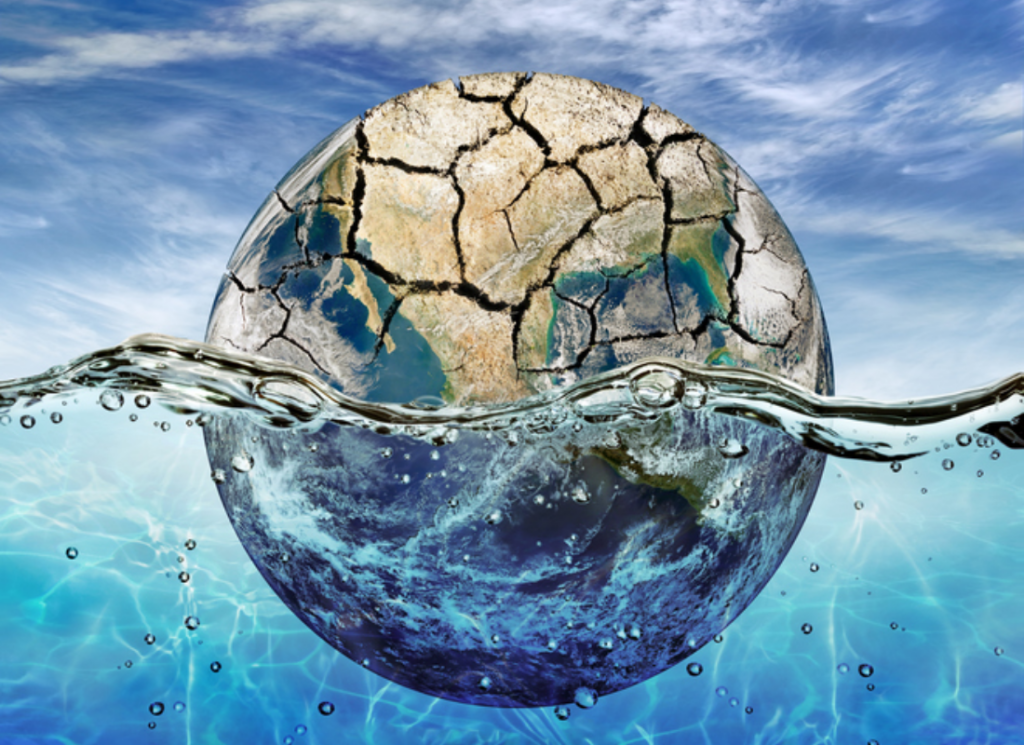
Water is the most basic need for life. Yet, in 2026, it has become one of the most fought-over resources on Earth. Navigating the Global Water Shortage is now a challenge every nation must face. Even though we live on a “Blue Planet,” only about 2.5% of our water is fresh. Even less is actually available for humans to use. Today, the global water crisis is no longer a future threat—it is a daily emergency for billions of people.
A mix of fast-growing populations, climate change, and poor management has created a massive problem. Recent reports show that nearly 2.5 billion people live in countries with water stress. This number is rising as our natural water cycles break down. This article looks at why we are running out of water, how it causes conflict between nations, and what new tools we can use to save our “Blue Gold.”
The water crisis isn’t caused by just one thing. It is a mix of natural changes and human choices. To fix the problem, we first have to understand what is driving it.
The biggest issue is simple demand. With the world population reaching 8.3 billion in 2026, we need more water for drinking, cleaning, and growing food. Farming alone uses about 70% of the world’s freshwater. As more people eat meat and dairy—which take a lot of water to produce—the pressure on our rivers grows. On top of this, new factories in growing economies are competing with local families for the same small water supply.
As water disappears, nations are starting to treat it as a matter of war and peace. Many of the world’s biggest rivers and lakes are shared by two or more countries. These “shared waters” are becoming hotspots for arguments and military tension.
There are over 260 water basins that cross borders. Rivers like the Nile and the Mekong are perfect examples. If a country upstream builds a dam to make electricity, the countries downstream might lose the water they need for farming. In 2026, the argument over the “Grand Renaissance Dam” in Ethiopia is a major story. Egypt fears the dam will cut off its lifeblood, while Ethiopia sees it as the only way to power its future.
Water shortages are a massive, hidden weight on the world economy. Without water, factories stop, power plants cannot cool down, and crops die. This makes the price of everything—especially food—go up.
The World Bank warns that water shortages could cut the wealth (GDP) of some regions by 6% by 2050. We saw a “water shock” in 2025 when a drought in Southeast Asia hit computer chip factories. Because these chips need pure water to be made, the drought caused electronics prices to jump worldwide. Now, big companies are realizing that “water risk” is just as dangerous as “money risk.”
More than half of the world now lives in cities. This puts incredible pressure on city water systems. Some giant cities are literally running out of water. This is often called “Day Zero”—the day the taps finally turn off.
Cities like Mexico City and London are facing major threats. Mexico City is in a tough spot because it was built on an old lake bed. As the city pumps water from the ground, the land is actually sinking. At the same time, their pipes are so old that 40% of their water leaks into the soil. Solving this takes billions of dollars that many cities simply do not have.
While the news is often bad, human invention is fighting back. We are finding new ways to “create” more water. The two biggest methods are cleaning seawater and recycling the water we have already used.
Desalination—taking salt out of ocean water—is a lifesaver for dry places like Saudi Arabia. In 2026, these plants are starting to use solar power to lower their high energy costs. We are also getting better at “wastewater recycling.” In places like Singapore, people now drink highly treated water that used to be sewage. While it sounds strange, this recycled water is often cleaner and more reliable than river water.
Since farming uses the most water, it is the best place to save it. New “smart farming” techniques are changing how we grow our food to keep the Earth hydrated.
Drip irrigation is a great example. Instead of flooding a whole field, this system drips water exactly where the roots need it. This can save 50% of the water a farm usually uses. Farmers are also focusing on “soil health.” Healthy soil acts like a sponge, holding onto rainwater so the farmer doesn’t have to water the crops as often. In 2026, governments are finally helping farmers switch to crops that don’t need as much water to survive.
The UN says that clean water is a human right. However, billions of people still don’t have it. Often, the problem isn’t that there is no water; it’s that the water isn’t shared fairly.
In many big cities, the wealthy have cheap, piped water. This “water gap” hurts women and girls the most. In many cultures, they are the ones who have to walk miles every day to find water, which keeps them out of school. Fixing the water crisis means making sure everyone—not just the rich—has enough to live with dignity.
The newest tool in our kit is “Digital Water.” We are now using Artificial Intelligence and satellites to track every drop of water on the planet.
In 2026, satellites can “see” when underground water is disappearing from space. AI can predict a drought months before it happens, giving farmers time to prepare. We are even using “blockchain” to create fair markets where people can trade water. These tools don’t make more water, but they help us manage what we have with perfect precision. It’s the difference between guessing and knowing.
The global water crisis is the biggest challenge of our time. To solve it, we must remember:
Our water is a limited gift. In 2026, the world must choose to work together. We need a “New Water Ethic” that treats every drop as the precious resource it truly is.