

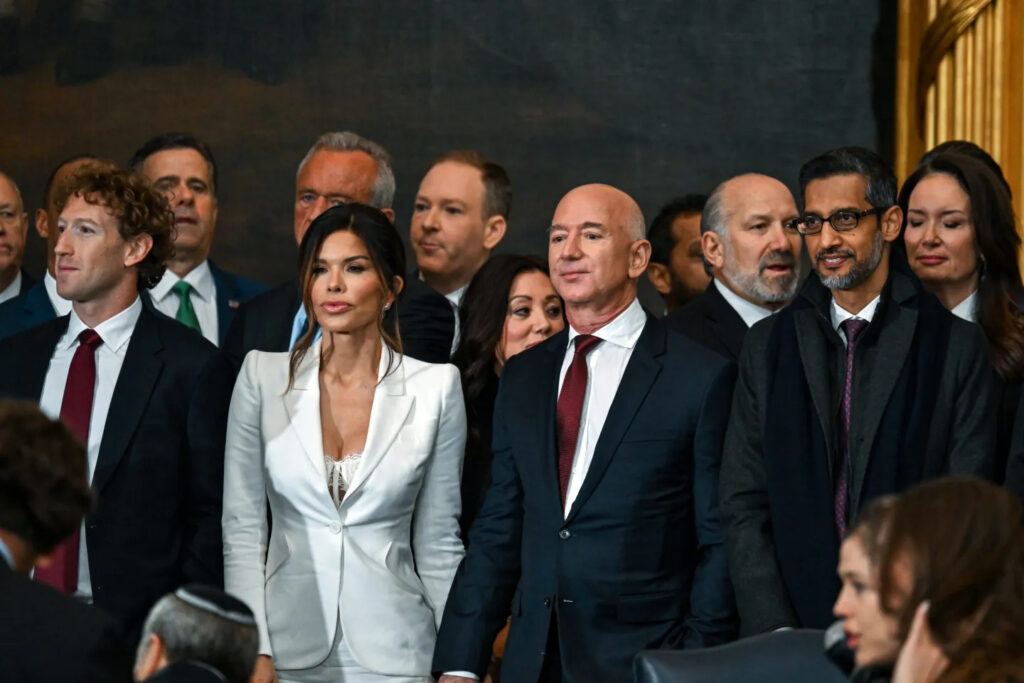
A year ago, it looked like Big Tech was finally on the defensive. Populist politicians aligned with the MAGA movement were promising tougher regulations, louder investigations, and real consequences for Silicon Valley. Tech executives were being dragged into hearings, social media platforms were accused of censorship, and antitrust threats were everywhere.
Fast forward one year, and the picture looks very different. Instead of being cornered, Big Tech has quietly regained control of the narrative. Through legal maneuvering, strategic alliances, smarter messaging, and sheer economic influence, major tech companies have managed to out-maneuver MAGA populists—and in many ways, come out stronger.
At the start, the pressure felt real. MAGA-aligned lawmakers framed Big Tech as a cultural and political enemy. Platforms like Google, Meta, and X were accused of silencing conservative voices, manipulating information, and acting as unaccountable power centers.
These attacks resonated with voters who already distrusted elite institutions. Hearings were confrontational, soundbites went viral, and promises of breaking up Big Tech gained traction. For a moment, it seemed like Silicon Valley might finally face serious political consequences.
But momentum alone isn’t enough. And Big Tech understood that better than anyone.
While populist attacks focused on headlines and outrage, Big Tech focused on strategy. Instead of fighting every accusation publicly, companies leaned into quieter, more effective tactics.
Lobbying efforts expanded. Legal teams worked behind the scenes to slow or weaken regulatory efforts. Tech firms emphasized their role in national security, economic growth, and global competition—especially against China.
By reframing themselves as essential to America’s technological leadership, Big Tech shifted the debate. Suddenly, cracking down on tech wasn’t just about free speech or corporate power—it risked weakening the US on the global stage.
That framing mattered.
Another major advantage for Big Tech has been the legal system itself. Antitrust cases are complex, slow, and expensive. Populist energy doesn’t translate well into multi-year court battles filled with technical details.
Over the past year, many legal challenges stalled, narrowed, or lost momentum. Courts demanded higher standards of proof. Judges questioned whether existing laws even applied cleanly to modern digital platforms.
Big Tech didn’t need to “win” every case outright. Delays alone were enough. Time favors companies with deep pockets, experienced lawyers, and global scale.
MAGA populists framed Big Tech as part of a broader culture war. But culture wars don’t always align with economic reality. Millions of conservative voters still rely on Google, YouTube, Facebook, and Apple every day. Small businesses depend on digital ads. Campaigns depend on social media reach.
Big Tech used this contradiction to its advantage. Publicly, companies emphasized neutrality and user choice. Privately, they continued expanding tools that benefit creators, advertisers, and political campaigns across the spectrum.
It became harder to argue for drastic action against companies that were deeply embedded in everyday economic life.
Perhaps the biggest turning point came with artificial intelligence. Over the past year, AI became a national priority. Governments, militaries, and industries began racing to stay competitive.
Big Tech positioned itself as the backbone of this AI future. Cloud infrastructure, advanced models, and massive data centers made companies like Google, Microsoft, and Meta indispensable.
Populist attacks started to sound out of step with this reality. Regulating or breaking up Big Tech suddenly looked risky when AI dominance was framed as a matter of national security and economic survival.
AI didn’t just change technology—it changed the politics around technology.
While Big Tech stayed coordinated, MAGA populists struggled with internal divisions. Some wanted strict regulation. Others worried about government overreach. Some focused on censorship, others on antitrust, others on moral issues.
Without a unified strategy, pressure weakened. Hearings became repetitive. Proposals overlapped or conflicted. Media attention moved on.
Big Tech didn’t need to crush the opposition—it just needed to wait.
One of Big Tech’s smartest moves was changing how it communicated. Instead of defensive statements, companies talked about innovation, jobs, and small businesses. They highlighted creators earning money, developers building apps, and communities benefiting from technology.
This softer messaging reduced political heat. It also made aggressive populist rhetoric feel less grounded, more ideological.
Tech companies learned from past mistakes. They avoided provocative language, limited executive visibility in culture wars, and let products do the talking.
Another factor often overlooked is global pressure. While MAGA populists focused inward, Big Tech pointed outward. Europe, China, and emerging markets became key talking points.
US tech firms argued that excessive domestic restrictions would only help foreign competitors. That argument found receptive ears in Washington, especially among lawmakers concerned about global influence.
Nationalism, ironically, worked in Big Tech’s favor.
Out-maneuvering doesn’t mean total victory. Public distrust of Big Tech remains high. Calls for regulation haven’t disappeared. New laws could still emerge, especially at the state level.
But one year in, the balance of power is clear. Big Tech has adapted faster, coordinated better, and leveraged its economic importance more effectively than its populist critics.
The promised crackdown didn’t arrive. The tech giants adjusted—and moved on.
This doesn’t mean the conflict is over. Politics moves in cycles. Economic downturns, major scandals, or AI-related crises could shift momentum again.
For now, though, Big Tech has shown it understands power—not just technological power, but political power. It knows when to stay quiet, when to push back, and when to redefine the conversation entirely.
MAGA populists succeeded in creating pressure, but pressure alone wasn’t enough. In the long game of influence, Big Tech played smarter.
And one year later, it’s clear who adapted better—and who’s still trying to catch up.