

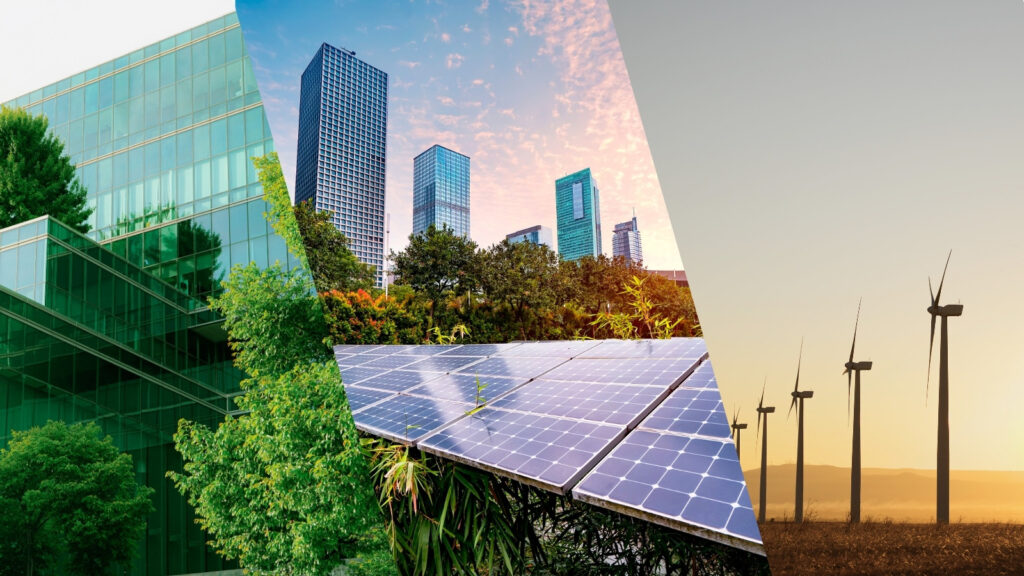
As urban populations continue to grow rapidly, cities around the world face increasing pressure to reduce carbon emissions, improve energy efficiency, and create healthier living environments. Urban areas are responsible for a significant share of global energy consumption and greenhouse gas emissions, making sustainable green energy technology one of the most important solutions for the future of modern cities.
Governments, businesses, urban planners, and environmental organizations are investing heavily in renewable energy systems, smart grids, clean transportation, energy-efficient buildings, and digital technologies that can transform cities into sustainable urban ecosystems.
Today, sustainable green energy technologies are no longer viewed as futuristic concepts. They are already reshaping major cities through solar energy systems, wind power integration, electric transportation networks, intelligent energy management systems, and advanced battery storage solutions.
According to research on smart cities and urban sustainability, cities account for more than 70% of global carbon emissions and consume a large portion of the world’s energy resources. Rapid urbanization is expected to intensify these challenges over the coming decades.
This article explores the most important sustainable green energy technologies transforming cities today, the challenges of urban energy transitions, successful global case studies, and the future of clean energy in urban development.
Urbanization is accelerating worldwide.
By 2050, nearly 70% of the global population is expected to live in urban areas. As cities expand, energy demand continues to rise dramatically.
Traditional fossil-fuel-based energy systems are increasingly unsustainable because they contribute to:
Modern cities require energy systems that are:
Green energy technology offers cities an opportunity to achieve economic growth while reducing environmental impact.
Sustainable green energy technology refers to systems and innovations that generate, store, distribute, and manage energy in environmentally responsible ways.
These technologies focus on reducing greenhouse gas emissions and minimizing dependence on fossil fuels.
Key examples include:
Many of these technologies are becoming essential components of modern smart cities.
Solar energy is one of the most widely adopted renewable technologies in cities.
Urban solar systems typically include:
Solar technology has become increasingly affordable due to falling production costs and technological improvements.
Cities benefit from solar energy because it:
Many cities now require or encourage solar panel installations on new buildings.
Copenhagen has become a global leader in sustainable urban energy.
The Danish capital aims to become one of the world’s first carbon-neutral cities.
The city has invested heavily in:
Copenhagen demonstrates how integrated urban planning and renewable energy technologies can significantly reduce emissions while maintaining economic growth.
Wind energy plays a growing role in urban sustainability strategies.
Although large wind farms are typically located outside urban centers, cities increasingly rely on regional wind power integration.
Some urban areas also use:
Wind energy offers several benefits:
Reports on smart renewable cities highlight solar and wind power as key technologies supporting urban sustainability goals.
Smart grids are among the most important technologies for sustainable cities.
A smart grid uses digital communication systems, sensors, artificial intelligence, and automation to improve electricity management.
Unlike traditional power grids, smart grids can:
Research shows that smart grids are essential for balancing sustainability, affordability, and energy security in modern cities.
Smart grids also support decentralized energy systems, where electricity is generated closer to where it is consumed.
Microgrids are localized energy systems capable of operating independently from the main electrical grid.
They are becoming increasingly important in sustainable urban development.
Microgrids can combine:
These systems improve resilience during:
Studies show that smart microgrids enhance urban sustainability while improving energy efficiency and reliability.
One of the biggest challenges with renewable energy is intermittency.
Solar panels do not generate electricity at night, and wind turbines depend on weather conditions.
Energy storage systems solve this problem by storing excess electricity for later use.
Important storage technologies include:
Battery storage systems are becoming increasingly common in cities because they help stabilize electricity supply and improve renewable energy integration.
Transportation is one of the largest sources of urban pollution.
Sustainable cities are increasingly adopting electric transportation systems to reduce emissions and improve air quality.
Key technologies include:
Electric transportation systems provide several advantages:
Many cities are now investing heavily in EV charging infrastructure to accelerate adoption.
Buildings account for a large percentage of urban energy consumption.
Green building technologies help cities reduce electricity demand and emissions.
Modern sustainable buildings often feature:
Smart buildings use sensors and AI systems to optimize energy use in real time.
These technologies improve efficiency while lowering operating costs.
Artificial intelligence is transforming how cities manage energy systems.
AI technologies can analyze massive amounts of data to optimize:
AI-powered energy management systems can predict demand fluctuations and automatically adjust energy distribution.
Research indicates that AI and machine learning are becoming central to smart city energy systems.
Hydrogen energy is gaining attention as a future clean fuel source for cities.
Green hydrogen is produced using renewable electricity and water electrolysis.
Potential urban applications include:
Hydrogen technology remains expensive today, but experts believe costs will decline significantly over time.
Singapore has become a global model for smart urban sustainability.
Despite limited land resources, the city-state invests heavily in:
Singapore demonstrates how technology-driven urban planning can support sustainability even in densely populated environments.
District energy systems provide centralized heating and cooling to multiple buildings.
These systems improve efficiency by sharing energy infrastructure across neighborhoods.
Benefits include:
Many European cities use district heating systems powered by renewable energy or waste heat recovery.
Sustainable energy technologies provide major economic advantages.
Benefits include:
Clean energy industries are becoming major drivers of economic growth globally.
Investments in sustainable urban infrastructure also attract businesses and skilled workers.
Green energy technologies improve urban environmental quality.
Reduced fossil fuel use helps lower:
Cleaner urban air significantly improves public health outcomes.
Studies link reduced pollution levels to lower rates of:
Despite major progress, cities still face numerous challenges in transitioning toward sustainable energy systems.
Common obstacles include:
Research also highlights the complexity of integrating renewable energy into existing urban infrastructure.
As cities become more digitally connected, cybersecurity becomes increasingly important.
Smart grids and connected energy systems may face risks such as:
Protecting digital energy infrastructure will be critical for future smart cities.
Government policies play a major role in accelerating sustainable urban energy transitions.
Successful strategies include:
International cooperation is also important for sharing technology and best practices.
The future of urban energy will likely involve increasingly integrated systems.
Emerging trends include:
Experts believe future cities will become smarter, cleaner, and more energy efficient through digital innovation and renewable technologies.
Research suggests integrated multi-energy systems may reduce urban energy costs by 15–25% while increasing renewable energy utilization significantly.
Technology alone cannot create sustainable cities.
Citizen participation remains essential.
Urban residents contribute through:
Public awareness and behavioral change are critical components of long-term sustainability.
Sustainable green energy technology is transforming cities into cleaner, smarter, and more resilient urban environments. As global urbanization accelerates, cities face growing pressure to reduce emissions, improve energy efficiency, and ensure long-term environmental sustainability.
Technologies such as solar power, wind energy, smart grids, microgrids, battery storage, electric transportation, AI-based energy management, and green buildings are reshaping how cities generate and consume energy.
Successful examples from cities like Copenhagen and Singapore demonstrate that sustainable urban energy systems are not only achievable but also economically beneficial and socially transformative.
While significant challenges remain—including infrastructure costs, cybersecurity concerns, regulatory barriers, and political resistance—the long-term advantages of green energy technologies far outweigh the obstacles.
Future cities will likely rely on highly integrated, digital, and renewable energy ecosystems that improve quality of life while reducing environmental impact. Governments, businesses, researchers, and citizens all have important roles to play in accelerating this transition.
Ultimately, sustainable green energy technology represents one of humanity’s most important opportunities to build healthier, more resilient, and environmentally responsible cities for future generations.