

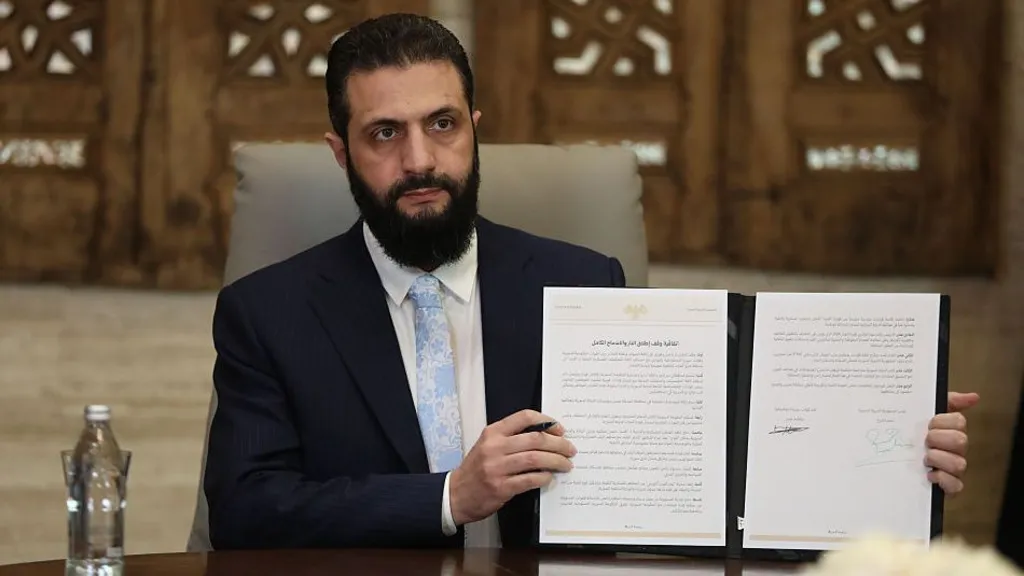
After two weeks of intense fighting that left dozens dead and many more displaced, Syria has agreed to a ceasefire with Kurdish-led forces, signaling a fragile pause in one of the country’s most tense and complex conflicts. The agreement comes after days of escalating violence in northern and northeastern parts of Syria, where government-backed forces and Kurdish fighters had been locked in heavy clashes.
While the ceasefire offers a moment of relief, few believe it marks a permanent solution. Instead, it highlights just how unstable the situation in Syria remains, even after more than a decade of war.
The latest round of clashes reportedly began after a series of local incidents spiraled out of control. What started as isolated confrontations quickly turned into coordinated fighting involving heavy weapons, artillery fire, and troop movements on both sides.
Kurdish-led forces, often associated with the Syrian Democratic Forces (SDF), accused pro-government militias of attacking their positions and local communities. Syrian government sources, on the other hand, claimed Kurdish fighters were expanding control in disputed areas and threatening state authority.
Civilians paid the highest price. Towns near the front lines experienced power cuts, shortages of food and fuel, and waves of displacement as families fled to safer areas.
The ceasefire agreement aims to stop active hostilities and prevent further civilian casualties. According to reports, both sides agreed to halt military operations, pull back heavy weapons, and allow humanitarian aid to reach affected areas.
For now, checkpoints are expected to remain in place, and communication channels between the two sides will stay open to prevent misunderstandings that could trigger new fighting.
Still, observers warn that the ceasefire is fragile. Similar agreements in the past have collapsed within days or weeks, often due to local disputes or external interference.
Kurdish-led forces have played a major role in Syria’s recent history, especially during the fight against ISIS. Backed by the United States during that campaign, they established control over large parts of northeastern Syria and built semi-autonomous local administrations.
However, their relationship with Damascus has always been complicated. While both sides share enemies, including extremist groups, they fundamentally disagree on governance, autonomy, and control of natural resources.
Kurdish leaders say they are open to dialogue but insist on protecting the rights and security of Kurdish communities. For them, the ceasefire is not a surrender but a tactical pause to avoid further bloodshed.
For the Syrian government, agreeing to a ceasefire is both practical and strategic. Damascus is still dealing with economic collapse, international sanctions, and ongoing instability in other parts of the country.
Opening another full-scale conflict in the north would stretch already limited resources. At the same time, the government is unwilling to permanently accept Kurdish autonomy, which it views as a threat to national sovereignty.
By agreeing to a ceasefire, Damascus buys time—time to negotiate, reposition, and possibly seek support from allies like Russia and Iran.
The ceasefire did not happen in a vacuum. Regional powers and international actors have a strong interest in preventing further escalation in Syria.
Turkey, which views Kurdish-led groups as a security threat, has been closely watching the situation. Any major conflict could trigger new cross-border operations or refugee movements.
Russia, a key ally of the Syrian government, is also believed to have played a behind-the-scenes role in pushing both sides toward de-escalation. Moscow has previously acted as a mediator between Damascus and Kurdish authorities, especially when clashes threatened broader instability.
Meanwhile, the United States continues to maintain a limited presence in parts of northeastern Syria, primarily focused on counterterrorism. Washington has repeatedly called for calm and urged all parties to protect civilians.
Ceasefires in Syria are nothing new, and that’s part of the problem. Over the past decade, countless truces have been announced, broken, renegotiated, and broken again.
Local ceasefires often depend on personal relationships between commanders, shifting alliances, and external guarantees that can disappear overnight.
This latest agreement fits that pattern. It reduces immediate violence, but it does not resolve the deeper political issues driving the conflict.
For civilians living in affected areas, the ceasefire brings cautious relief. Shops are reopening, families are checking on damaged homes, and aid groups are trying to assess urgent needs.
But fear remains. Many residents say they don’t trust the calm to last. Parents are hesitant to send children back to school, and farmers worry about returning to fields near former front lines.
Years of war have taught Syrians to treat peace announcements with skepticism.
More than a decade after the uprising that turned into a brutal civil war, Syria remains deeply fragmented. Different regions are controlled by different forces, backed by various foreign powers.
The conflict between Damascus and Kurdish-led forces is just one layer of a much larger crisis. Economic hardship, political deadlock, and unresolved grievances continue to fuel instability.
Until there is a comprehensive political settlement that addresses governance, autonomy, and resource-sharing, ceasefires like this one will likely remain temporary fixes.
The coming days will be critical. If the ceasefire holds, talks may continue on local governance, security coordination, and power-sharing arrangements. If it collapses, the region could slide back into violence just as quickly.
Analysts say much depends on external actors and whether they choose to support diplomacy or pursue their own strategic interests.
For now, guns are quieter, and that alone is significant in a country where silence has become rare.
Syria’s agreement to a ceasefire with Kurdish-led forces after two weeks of clashes offers a brief pause in fighting, but not a clear path to peace. It reflects exhaustion on all sides, as well as the reality that continued conflict benefits no one—least of all civilians.
Whether this truce becomes a foundation for dialogue or just another entry in Syria’s long list of broken agreements remains to be seen.
In a war that has dragged on for years, even a fragile ceasefire is a reminder that diplomacy, however imperfect, is still possible.