

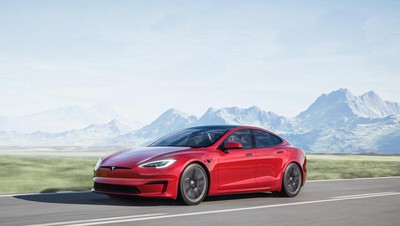
Tesla has never been a company that plays it safe. From betting big on electric cars when most automakers laughed them off, to pushing full self-driving software long before regulations were ready, Elon Musk’s company is known for sudden, headline-grabbing moves. Now, Tesla is making another bold shift: stopping the production of Model S and Model X to focus more seriously on robotics.
For long-time Tesla fans, this sounds almost unthinkable. The Model S was the car that put Tesla on the global map, while the Model X, with its dramatic Falcon Wing doors, became a symbol of futuristic luxury. But in Tesla’s world, nostalgia doesn’t carry much weight. The future does and right now, that future looks less like cars and more like robots.
The End of an Era for Tesla’s Flagship Cars
The Model S and Model X have always been special within Tesla’s lineup. They were premium vehicles, packed with cutting-edge tech, impressive performance, and price tags to match. For years, they represented Tesla’s vision of what electric cars could be: fast, stylish, and smarter than anything else on the road.
But times have changed. Sales of Model S and Model X have been declining compared to Tesla’s more affordable and popular models like the Model 3 and Model Y. Those two cars now make up the bulk of Tesla’s deliveries worldwide. From a business standpoint, it makes sense to focus on what sells the most.
Still, halting production entirely sends a stronger message. This isn’t just about cutting underperforming products it’s about reallocating resources, talent, and attention toward something Tesla believes will be even bigger than electric cars.
Why Robots, and Why Now?
Tesla’s interest in robotics isn’t exactly new. Back in 2021, Elon Musk surprised many by introducing the concept of Tesla Bot, later renamed Optimus. At first, people joked about it. A car company building humanoid robots? It sounded like science fiction or a distraction.
Fast forward to today, and the jokes have mostly stopped. Tesla has already shown working prototypes of Optimus that can walk, carry objects, sort items, and perform basic tasks in factory environments. According to Musk, Optimus could eventually become Tesla’s most valuable product worth more than all its cars combined.
That might sound like an exaggeration, but from Tesla’s perspective, the logic is clear. The global demand for labor, especially in repetitive or physically demanding jobs, is massive. A general-purpose humanoid robot that can work safely alongside humans could transform industries ranging from manufacturing and logistics to healthcare and home services.
Shifting Resources from Cars to AI and Robotics
Building robots at scale is not cheap. It requires advanced hardware, powerful AI models, massive amounts of training data, and specialized engineering talent. By stopping production of Model S and Model X, Tesla can free up factory space, capital, and engineering teams.
Tesla’s real strength has never been just car manufacturing. It’s software, AI, and vertical integration. The same neural networks that power Tesla’s Full Self-Driving system can be adapted to help robots understand and navigate the physical world. Cameras, sensors, chips, and batteries Tesla already has deep expertise in all of them.
In other words, robots aren’t a side project. They’re a natural extension of what Tesla has been building for years.
What This Means for Tesla as a Company
This move signals a major identity shift. Tesla is slowly but clearly transforming from “an electric car company” into “an AI and robotics company that also makes cars.” Cars may still bring in most of the revenue today, but the long-term vision is much broader.
For investors, this is both exciting and risky. On one hand, robotics could open up a trillion-dollar market. On the other, humanoid robots at scale are still unproven. There are technical challenges, safety concerns, and ethical questions that haven’t been fully answered.
For customers, especially fans of the Model S and X, the news is bittersweet. These cars were icons. Ending their production feels like saying goodbye to a chapter in Tesla’s history. However, Tesla has always prioritized innovation over sentimentality.
How the Market and Industry Are Reacting
The wider tech and automotive industries are watching closely. Other companies like Boston Dynamics, Figure AI, and Agility Robotics are also racing to build capable humanoid robots. Tesla’s entry into this space raises the stakes significantly.
Unlike many robotics startups, Tesla already has massive manufacturing capacity, global brand recognition, and a proven ability to scale complex products. If Tesla succeeds, it could accelerate the adoption of humanoid robots across the world.
Traditional automakers, meanwhile, may see this as a warning sign. Tesla is playing a different game one that doesn’t revolve solely around selling cars anymore.
Is This a Gamble or the Next Big Thing?
Critics argue that Tesla is spreading itself too thin. Electric vehicles, energy storage, AI software, autonomous driving, and now robots can one company really dominate all these areas?
Supporters counter that Tesla’s strength lies precisely in this convergence. AI, batteries, and manufacturing are the foundation for both self-driving cars and humanoid robots. By betting early and aggressively, Tesla hopes to stay years ahead of competitors.
History shows that Tesla often looks reckless before it looks visionary. Many doubted the success of the Model 3, Gigafactories, and even electric cars themselves. Yet here we are.
Looking Ahead: Life After Model S and X
While the Model S and Model X may be leaving production lines, their legacy remains. They proved electric cars could be desirable, powerful, and premium. Without them, Tesla might never have reached its current position.
Now, Tesla seems ready to write a new story one where robots work alongside humans, factories run with minimal human intervention, and AI-driven machines become part of everyday life.
Whether this bold pivot will pay off is still an open question. But one thing is certain: Tesla isn’t slowing down. It’s just changing direction.
And if Tesla’s past is any indication, the world should pay close attention.