

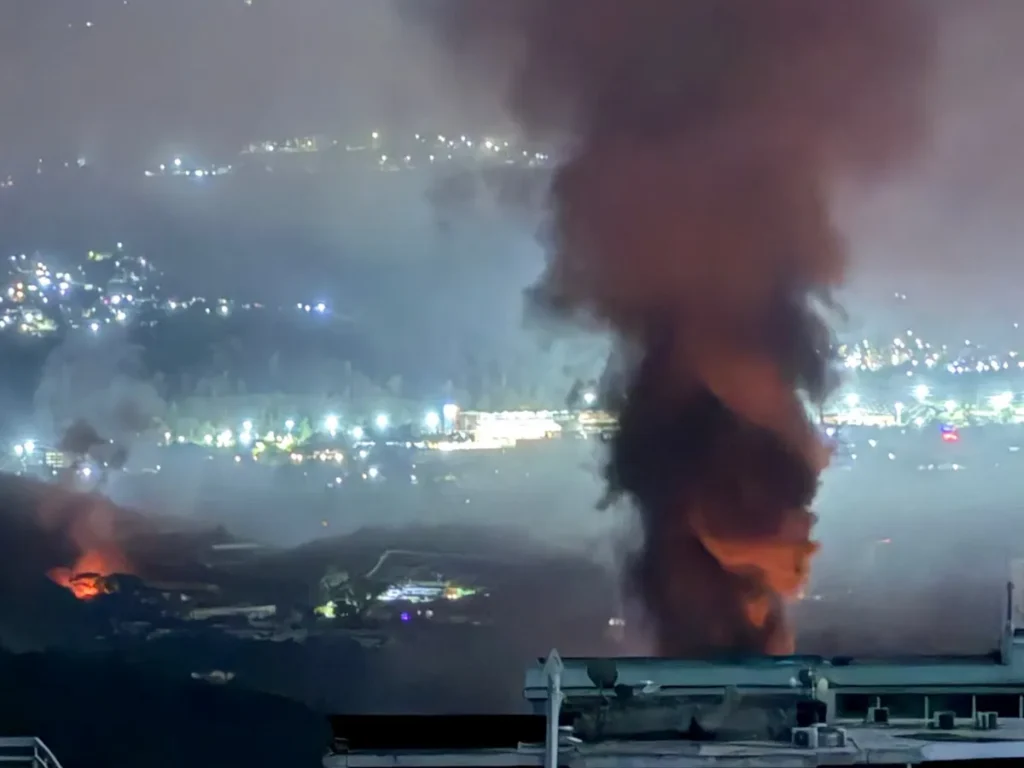
At the start of January 2026, the world woke up to shocking news: the United States had launched a major military attack on Venezuela. This wasn’t just a small strike or a tense diplomatic disagreement — U.S. forces bombed areas around the Venezuelan capital, Caracas, and captured Venezuela’s president, Nicolás Maduro, in what was described as one of the most dramatic interventions in recent years. Al Jazeera+1
On January 3, 2026, the United States carried out a military operation code-named “Operation Absolute Resolve”. According to multiple reports, more than 150 U.S. aircraft and elite special forces participated in the mission. After explosions echoed over Caracas, U.S. troops landed, secured key positions, and seized Maduro and his wife. They were then taken to the United States to face federal charges related to drug trafficking and other alleged crimes. Wikipedia+1
President Donald Trump publicly announced that the U.S. had “captured” Maduro and claimed that the United States would “run the country” for a period to ensure a safe transition of power. He said that controlling Venezuela temporarily would help stabilize the situation and secure Venezuela’s massive oil resources. CBS News+1
The Trump administration gave several reasons for the attack, which are now part of a fierce debate.
1. Drug Trafficking Claims
U.S. officials argued that Maduro’s government was deeply involved in illegal drug networks. They said that Venezuelan officials and criminal gangs were pushing huge amounts of drugs like cocaine into the United States. The U.S. government even labeled some Venezuelan criminal groups as terrorist organizations and increased the reward for Maduro’s capture. https://www.metrotvnews.com
2. Migration and Security Concerns
Another justification from the U.S. side was that Venezuela’s economic collapse and political repression had forced millions of people to flee the country. Many ended up migrating toward the United States, creating social and security pressures. Trump and his supporters argued that Maduro’s government was partly responsible for this crisis. https://www.metrotvnews.com
3. Oil and Strategic Interests
While U.S. officials did not always highlight it publicly, many analysts believe that Venezuela’s huge oil reserves played a big role. Venezuela has one of the largest proven oil reserves in the world, and the U.S. has long had interests in energy security. Trump’s comments about bringing foreign oil companies into Venezuela added fuel to this theory. The Guardian+1
The military operation was violent and sudden.
Explosions and Airstrikes: Early reports described loud explosions and low-flying aircraft over Caracas as the operation began. Al Jazeera
Casualties: Venezuelan authorities reported that at least two dozen Venezuelan security officers were killed, while Cuba confirmed that 32 of its military and police personnel were also killed during the raid. Some later updates suggested the death toll might be as high as 75 people, including civilians. Around six U.S. soldiers were reported injured but not killed. AP News+1
National Mourning: Venezuela’s interim leader, Delcy Rodríguez, declared seven days of national mourning for those killed in the operation and accused the United States of committing a war crime. Cuba also declared days of mourning for its fallen personnel. Reuters
The world’s response was immediate and intense.
At the United Nations, many countries strongly condemned the U.S. military action as a violation of international law and Venezuela’s sovereignty. Nations like France, Denmark, Russia, and China criticized the attack, saying it went against the core principles of the U.N. Charter. Others called for Maduro’s release. TIME
Inside the United States, the action also sparked debates. Some politicians and lawmakers argued that this kind of military intervention violated the U.S. Constitution, which gives Congress — not the president — the power to declare war. Others supported Trump’s decision, saying it was necessary to stop drug trafficking and restore democracy. American Friends Service Committee
Back in Venezuela, the situation is far from calm.
With Maduro detained in the U.S. and facing charges, Vice President Delcy Rodríguez was declared interim president. Yet many Venezuelans remain confused about who truly leads the country. Armed groups loyal to the old government — especially motorcycle gang militias known as Colectivos — were reportedly active in Caracas, creating fear and instability. Some people said these groups were targeting Venezuelans suspected of supporting the U.S. operation. New York Post
Journalists and activists faced arrests, and tensions escalated as violence flared in several parts of the capital and other cities. New York Post
One of the biggest controversies is whether the U.S. attack was legal under international law.
Under the United Nations Charter, countries are only allowed to use force in self-defense or if the Security Council authorizes military action. Venezuela never attacked the United States, and there was no U.N. mandate for this strike. Many international legal scholars now call the operation illegal and unjustified. American Friends Service Committee+1
Critics argue that this move sets a dangerous precedent. If a powerful nation can invade another and abduct its leader without broad international support, it could weaken the global system that protects smaller countries’ sovereignty. American Friends Service Committee
The future of Venezuela is uncertain. The U.S. says it wants a peaceful transition and economic recovery, but the chaotic situation inside the country shows that peace won’t come easily. Chávez’s legacy and Maduro’s long rule have deeply divided Venezuelan society, and a sudden intervention like this could make unity even harder to achieve.
Internationally, the world is watching closely. Some countries may seek ways to bring legal pressure on the U.S. or support Venezuela’s government, while others might pursue diplomatic talks. Meanwhile, Venezuelans suffer from instability, fear, and loss, with everyday life disrupted by violence, political chaos, and economic hardship.
The U.S. attack on Venezuela in early 2026 was more than just a military operation — it shocked the world and raised serious questions about power, justice, and international norms. Whether you agree or disagree with the reasons behind it, one thing is clear: this event will shape global politics for years to come.