

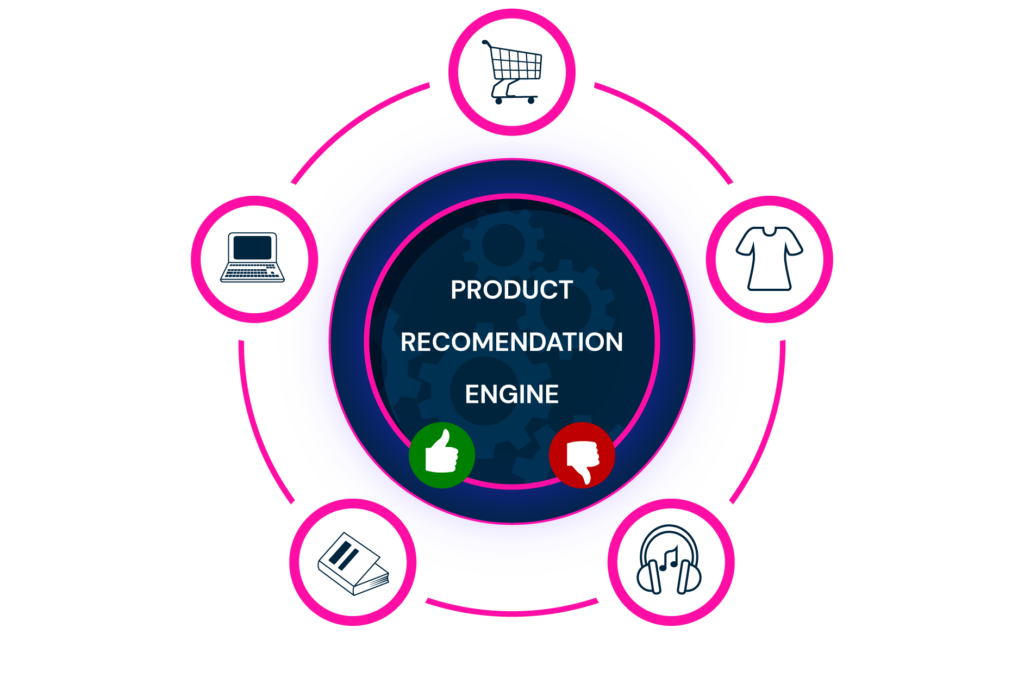
In the fast-paced world of 2026, the digital storefront is no longer a static catalog. One of the most significant changes in recent years is the way AI-Based Recommendation Systems Revolutionized E-Commerce. It is a living, breathing entity that anticipates your needs before you even articulate them. At the heart of this transformation lies the AI-based recommendation system. Once a luxury reserved for tech giants, these sophisticated algorithms now power everything from global marketplaces to niche artisanal shops. They are the “silent salesmen” of the internet, responsible for a staggering 35% of Amazon’s total revenue and 75% of what people watch on Netflix.
The evolution of recommendation engines from simple “frequently bought together” lists to complex deep-learning models has fundamentally changed consumer behavior. As we move through the mid-2020s, the goal is no longer just to sell an item but to curate an entire lifestyle. This article explores the inner workings of these systems, the different types of filtering methods, the ethical challenges of personalization, and the future of hyper-individualized shopping experiences.
To appreciate the impact of AI in e-commerce, one must understand the three pillars of recommendation logic: Collaborative Filtering, Content-Based Filtering, and the increasingly popular Hybrid Model. Each approach uses different data points—ranging from your past clicks to the specific texture of a product—to predict what will make you hit the “Buy Now” button.
Collaborative Filtering is perhaps the most famous. It operates on the principle of “people who liked this also liked that.” By analyzing the behaviors of millions of users, the AI finds “neighbors” with similar tastes. If User A and User B both bought a camera and a tripod, and User B then buys a specialized lens, the system will suggest that lens to User A. It relies on social proof and collective intelligence rather than the specific attributes of the product itself.
Unlike collaborative methods, Content-Based Filtering doesn’t care what other people are doing. Instead, it looks at the “DNA” of the items you have interacted with. If you frequently purchase organic, high-protein dog food, the system builds a profile of your preferences based on keywords, categories, and tags.
In 2026, this has been enhanced by Computer Vision. Modern e-commerce AI doesn’t just read the word “blue dress”; it analyzes the image to recognize the specific shade of cerulean, the cut of the fabric, and the style of the stitching. This allows for incredibly high precision. If a shopper looks at a minimalist watch, the system can instantly surface twenty other minimalist watches that share the same visual aesthetic, even if they have never been purchased together before.
Most successful platforms today, such as Alibaba and eBay, use Hybrid Systems. These models combine the best of both worlds to eliminate the weaknesses of individual methods. For instance, while a content-based system might keep you trapped in a “filter bubble” by showing you more of the same, a collaborative layer can introduce “serendipity”—the discovery of something unexpected but delightful.
Statistics from retail reports in 2025 indicate that hybrid models improve click-through rates (CTR) by up to 25% compared to single-method engines. By weighting different algorithms based on the user’s current context—such as the time of day, the device being used, or the current weather—hybrid systems provide a nuanced experience that feels human. They understand that you might want a coffee maker on a Monday morning but are more likely to browse for home decor on a Saturday afternoon.
The true leap forward in recent years has been the integration of Deep Learning (DL). Traditional algorithms often struggle with “non-linear” relationships—the weird, unpredictable ways humans shop. Deep Neural Networks, however, can process massive amounts of unstructured data, such as customer reviews, voice commands, and social media sentiment.
Case studies from major fashion retailers show that Recurrent Neural Networks (RNNs) are particularly effective for “Session-Based Recommendations.” Instead of relying on what you bought three years ago, these models focus on your current session. They track your journey through the site in real-time, noticing that you looked at a skirt, then a belt, and then a pair of shoes. The AI realizes you are building an outfit and suggests the perfect matching handbag before you even finish your search.
In 2026, we have moved past simple personalization into the realm of Hyper-Personalization. This involves the use of real-time data and AI to deliver products, pricing, and messaging that are unique to a single individual at a specific moment. It is the difference between seeing a generic “Sale” banner and seeing a discount on the exact brand of running shoes you were just discussing with a friend.
This level of tailoring extends to the very layout of the website. Some e-commerce platforms now use AI to change their User Interface (UI) based on the customer’s profile. A “deal-hunter” might see a landing page filled with countdown timers and red discount tags, while a “luxury shopper” sees a minimalist, high-end editorial layout with high-resolution imagery. This ensures that the shopping environment itself matches the psychological state of the buyer, maximizing the likelihood of a conversion.
With great power comes great responsibility. The effectiveness of AI recommendation systems has sparked a significant ethical debate regarding “Filter Bubbles.” If an AI only shows you what it thinks you like, you are never exposed to new ideas or different price points. In e-commerce, this can lead to “price discrimination,” where users are shown higher prices because the AI knows they have a higher willingness to pay.
Privacy is the other major concern. To fuel these engines, platforms must collect vast amounts of personal data. In 2026, consumers are more aware of their data rights than ever. This has led to the rise of “Privacy-Preserving Recommendations,” using techniques like Federated Learning. This allows the AI to learn from user behavior without the raw data ever leaving the user’s device, striking a balance between convenience and security.
How do businesses know if their AI is actually working? It’s not just about the total number of sales. Retailers use specific Key Performance Indicators (KPIs) to fine-tune their algorithms. The most important metric is often the “Lift”—the increase in sales that can be directly attributed to the recommendation engine versus a random or non-AI approach.
Another critical metric is “Average Order Value” (AOV). AI systems are designed to encourage “upselling” (recommending a more expensive version of an item) and “cross-selling” (recommending accessories). If the AI suggests a protective case and a fast-charger when you buy a phone, and you buy all three, the AOV increases significantly. Finally, “Churn Rate” reduction is a major goal; if the AI keeps finding things you love, you are less likely to delete the app or switch to a competitor.
The next frontier for 2026 and beyond is the marriage of recommendation systems with Generative AI (GenAI). We are moving away from clicking on icons and toward “Conversational Commerce.” Instead of browsing through pages of results, you will simply talk to an AI assistant: “I’m going to a wedding in Tuscany next month; find me an outfit that is breathable but formal, under $500, and matches my style.”
Generative AI doesn’t just find the products; it can create “Virtual Try-On” experiences where it generates an image of you wearing the clothes in a Tuscan setting. This reduces the return rate—a multi-billion dollar problem in e-commerce—because the customer has a much more accurate expectation of the product. The recommendation system of the future won’t just be a list of products; it will be a comprehensive personal shopper that understands context, emotion, and aesthetics at a human level.
The impact of AI-based recommendation systems on e-commerce is profound and permanent. As we have seen, these systems are far more than just “gadgets” on a website; they are the core engine of modern business growth.
In conclusion, the future of e-commerce belongs to those who can best harness the power of AI to create meaningful, personalized connections with their customers. The silent salesman is here to stay, and he knows exactly what you’re looking for.