

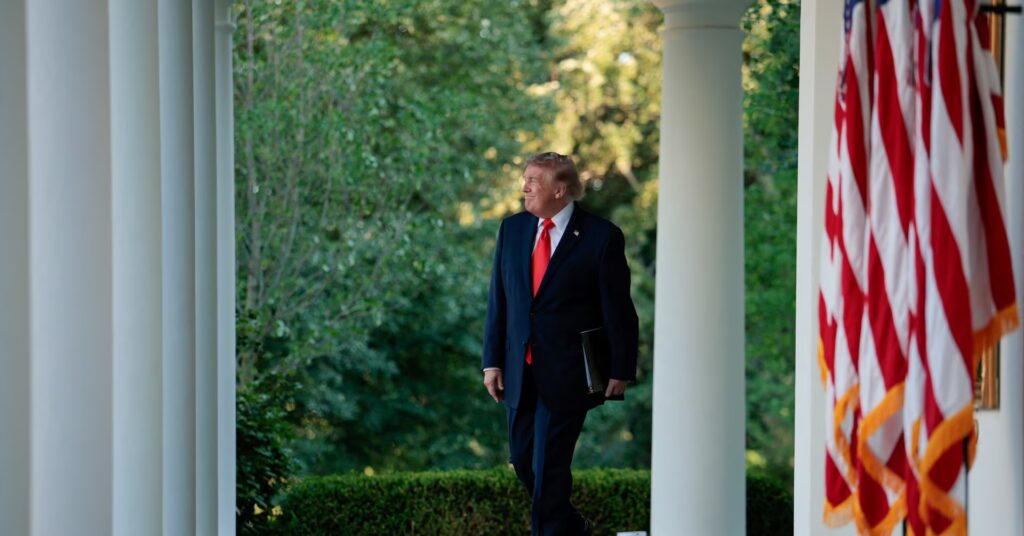
The attempted assassination of President Donald Trump during the 2026 White House Correspondents’ Dinner shocked political leaders, journalists, and the public. The Assassination Attempt on President Trump at the White House disrupted one of Washington’s most prominent annual gatherings. It also immediately raised questions about presidential security, public safety, and the growing threat of political violence.
Federal authorities have charged a California man in connection with the attack, alleging that he attempted to target President Trump after entering the event with firearms and other weapons. According to investigators, Secret Service personnel intervened before the suspect could reach the president. Therefore, they prevented what prosecutors describe as an attempted assassination. The case remains active. Also, court proceedings are ongoing.
The White House Correspondents’ Dinner traditionally brings together journalists, government officials, elected leaders, diplomats, and invited guests. During the 2026 event at the Washington Hilton, an armed individual breached security areas. In light of the Assassination Attempt on President Trump at the White House, there was a rapid response from law enforcement and the U.S. Secret Service.
Authorities stated that President Trump was not injured and was moved to safety while security personnel secured the building. The suspect was taken into custody after being subdued by law enforcement officers. Federal prosecutors later charged him with attempted assassination and multiple firearms-related offenses. Investigators allege the attack had been planned in advance, though the judicial process is still underway.
Protective operations surrounding the President involve multiple layers of security, including advance planning, credential verification, intelligence monitoring, and rapid-response teams. In the wake of the 2026 White House incident, security strategies were tested by the Assassination Attempt on President Trump at the White House.
Officials have stated that the response demonstrated the importance of layered security, while acknowledging that investigators continue to evaluate how the suspect was able to bring weapons into the venue.
Federal prosecutors allege that the suspect traveled to Washington with firearms and other weapons and intended to attack President Trump. Court filings indicate that investigators recovered physical evidence and digital materials during the investigation. The defendant has been charged with attempted assassination. In addition, there are additional federal offenses in connection with the Assassination Attempt on President Trump at the White House.
As with any criminal prosecution, the charges are allegations, and the defendant is presumed innocent unless proven guilty in court. Defense attorneys have challenged aspects of the government’s evidence, and the case remains before the courts.
The incident renewed concern about political violence directed at public officials regardless of political affiliation. Security experts have noted that threats against elected leaders have increased over the past decade, requiring expanded protective measures at public events. As a result, incidents like the Assassination Attempt on President Trump at the White House have heightened these concerns for leaders’ safety.
Political violence has significant consequences beyond the immediate victims. It can undermine public confidence, discourage civic participation, increase political polarization, and require governments to devote greater resources to security.
The White House Correspondents’ Dinner has long served as an event celebrating journalism while bringing together members of the press and government officials. However, the attack transformed what was intended to be a public event into a major security incident. Thus, it was framed with the notoriety of the Assassination Attempt on President Trump at the White House.
Organizers and security agencies are expected to review event procedures and determine whether additional screening measures, access controls, or venue modifications are necessary for future gatherings.
Within hours of the incident, social media platforms saw numerous false claims and conspiracy theories about what had happened. Independent fact-checking organizations and news outlets found no evidence supporting claims that the attack had been staged. Moreover, the Assassination Attempt on President Trump at the White House was rapidly distorted by misinformation. This further complicated the public’s understanding of the facts.
During rapidly developing events, misinformation can spread faster than verified reporting. Therefore, relying on official statements, court documents, and established news organizations remains the most reliable way to understand evolving situations.
Incidents involving threats against political leaders often prompt discussions about public safety, mental health, online radicalization, event security, and the balance between maintaining open democratic institutions and protecting public officials. National conversations have intensified after the Assassination Attempt on President Trump at the White House.
The investigation and subsequent legal proceedings may also influence future security policies for nationally significant events attended by senior government officials.
The attempted assassination of President Trump at the 2026 White House Correspondents’ Dinner represents one of the most serious security incidents at a high-profile political event in recent years. According to federal authorities, rapid intervention by security personnel prevented the attack from reaching its intended target. Meanwhile, the subsequent investigation has led to serious criminal charges against the accused. Those allegations will ultimately be tested through the judicial process. Ultimately, the Assassination Attempt on President Trump at the White House has lasting consequences for national security discussions. In addition, it has prompted protocol revisions.
Beyond the criminal case itself, the incident has renewed debate about protecting public officials, combating political violence, improving event security, and addressing the rapid spread of misinformation during breaking news events. As investigators continue their work and the court process unfolds, the event serves as a reminder of the importance of verified information. It also underscores the need for effective security planning, and the peaceful resolution of political differences in a democratic society.