

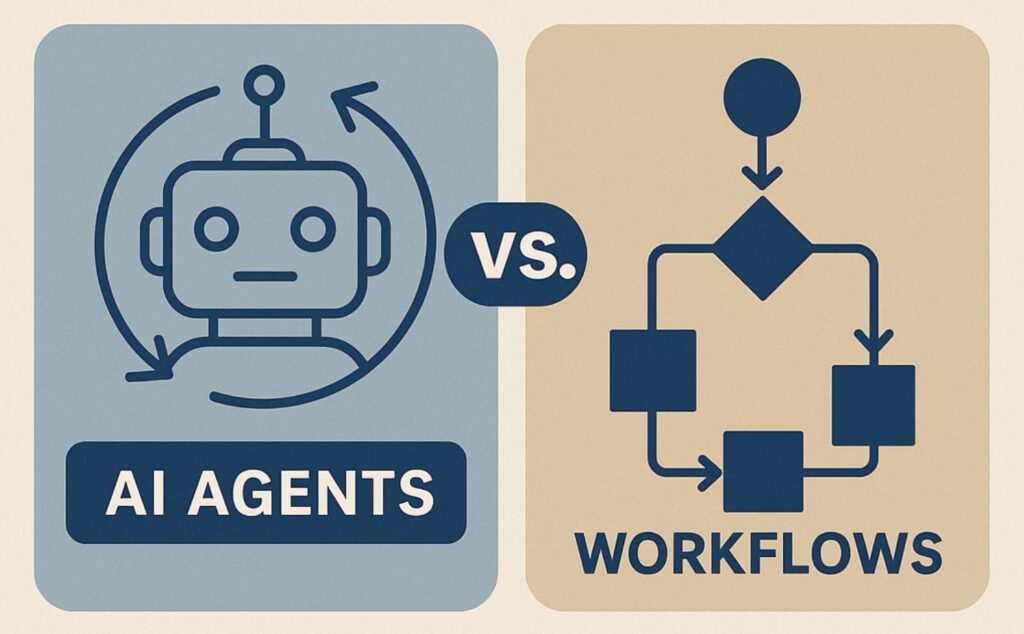
Artificial intelligence is entering a new phase of evolution. For years, businesses and consumers relied on solo AI assistants—single systems designed to answer questions, automate repetitive tasks, generate content, or provide customer support. These assistants improved efficiency and productivity, but they also revealed clear limitations when handling complex workflows involving multiple steps, specialized expertise, and dynamic decision-making. Now, Cooperative AI Agents Replacing Assistants in Modern Workflows is a trend that promises to transform how organisations approach sophisticated tasks and collaboration.
Today, a more advanced model is rapidly emerging: cooperative AI agents. Instead of depending on one all-purpose assistant, organizations are increasingly deploying networks of specialized AI agents that collaborate like teams of human workers. These systems divide tasks, exchange information, coordinate actions, and solve problems collectively.
This shift from solo AI assistants to cooperative AI ecosystems is transforming industries such as software development, healthcare, finance, customer service, logistics, marketing, and scientific research. Cooperative AI systems promise greater scalability, improved accuracy, enhanced specialization, and more autonomous operations.
As enterprises seek higher productivity and smarter automation, cooperative AI agents are becoming a cornerstone of modern digital workflows. This article explores how these systems work, why they are replacing traditional solo assistants, their real-world applications, benefits, challenges, and the future implications for businesses and society.
Cooperative AI agents are multiple AI systems designed to work together toward a shared objective.
Unlike solo assistants that attempt to manage entire workflows independently, cooperative agents divide responsibilities among specialized systems. Each agent focuses on a specific task or area of expertise while communicating with other agents to achieve coordinated outcomes.
This approach resembles human teamwork in organizations.
For example, in a business environment:
Similarly, cooperative AI systems assign specialized roles to different agents.
Examples of AI agent roles include:
By distributing tasks across multiple agents, organizations can create more efficient and adaptive workflows.
The first generation of AI assistants focused primarily on single-user interactions.
Examples included:
As machine learning and natural language processing advanced, AI assistants became more sophisticated. Modern systems can:
However, even advanced solo assistants face limitations.
Common challenges include:
As workflows become more complex, businesses increasingly require systems capable of collaboration, parallel processing, and dynamic coordination.
Modern business operations involve interconnected tasks requiring multiple forms of expertise.
For example, launching a digital product may involve:
Managing all these activities through a single AI assistant is often inefficient.
Cooperative AI systems distribute tasks intelligently across specialized agents.
Different business functions require unique forms of reasoning and domain knowledge.
For example:
Specialized AI agents perform better within focused domains compared to general-purpose assistants.
Cooperative agents can work simultaneously on different parts of a workflow.
This parallelism significantly improves speed and efficiency.
For example:
Tasks that once took hours can now be completed in minutes.
Modern cooperative AI systems are often powered by large language models (LLMs).
LLMs provide:
Language acts as the coordination mechanism allowing agents to collaborate.
Multi-agent systems (MAS) are a long-established area of AI research focused on interactions among autonomous agents.
MAS technologies support:
Recent advances in generative AI have made these systems far more practical and powerful.
Orchestration systems manage communication and coordination between AI agents.
These platforms:
The orchestrator acts similarly to a project manager within an AI ecosystem.
A cooperative AI workflow typically follows several stages.
A primary AI system breaks a large objective into smaller subtasks.
For example, creating a marketing campaign may involve:
Specialized agents receive tasks aligned with their capabilities.
Agents exchange findings and updates continuously.
One agent’s output may become another agent’s input.
Quality assurance agents evaluate outputs for accuracy and consistency.
The orchestrator combines all outputs into a completed workflow result.
Software engineering is one of the fastest-growing use cases for cooperative AI.
AI agent teams can manage:
For example:
This mirrors the structure of human software teams.
Traditional chatbots often struggle with complicated customer issues.
Cooperative AI systems improve customer experiences by assigning different agents to:
This results in faster and more personalized service.
Healthcare workflows involve massive amounts of data and decision-making.
Cooperative AI agents can assist with:
For example:
These systems may help reduce physician burnout and improve efficiency.
Financial institutions increasingly rely on AI for:
Cooperative AI agents can monitor markets, evaluate risks, and generate reports simultaneously.
Many technology companies are experimenting with AI-driven enterprise automation platforms.
In a modern enterprise workflow:
These AI systems can operate continuously, reducing delays and operational bottlenecks.
Research suggests AI-powered workflow automation can significantly improve productivity in knowledge-based industries.
Distributed AI systems handle tasks faster through parallel processing.
Multiple agents working simultaneously reduce completion times.
Specialized agents often perform more accurately than generalized assistants.
Collaborative review systems also reduce errors.
Organizations can add new agents as workflow complexity grows.
This modularity supports business expansion.
AI agents can operate 24/7 with minimal downtime.
This improves responsiveness and operational consistency.
Cooperative systems can dynamically adjust workflows based on changing conditions.
This flexibility is especially valuable in rapidly evolving industries.
Managing interactions among multiple agents is technically challenging.
Poor coordination can lead to:
If one agent produces incorrect information, errors may spread throughout the workflow.
Strong validation mechanisms are essential.
Running multiple AI systems simultaneously requires significant computing resources.
This may increase operational expenses for businesses.
Multi-agent systems introduce cybersecurity concerns.
Potential risks include:
As AI systems become more autonomous, questions arise regarding:
Despite rapid automation, cooperative AI systems are unlikely to fully replace humans in the near future.
Instead, many experts envision hybrid workplaces where humans and AI collaborate.
Humans remain essential for:
AI systems increasingly handle repetitive and analytical tasks.
This may allow human workers to focus on higher-value activities.
The growth of cooperative AI has been accelerated by open-source development.
Several frameworks enable developers to create AI agent ecosystems.
Popular examples include:
These platforms provide tools for:
Open-source innovation is accelerating enterprise experimentation.
The future of AI workflows will likely involve increasingly sophisticated collaborative systems.
Future developments may include:
Improvements in reasoning, memory, planning, and multimodal AI will further expand capabilities.
Some experts believe cooperative AI systems may eventually become core operational infrastructure for large enterprises.
The rise of cooperative AI agents may significantly reshape labor markets.
Potential impacts include:
Professions likely to experience major AI integration include:
However, human oversight and strategic decision-making will remain important.
As cooperative AI systems become more autonomous, governance becomes increasingly critical.
Important questions include:
Governments and regulators worldwide are beginning to explore AI governance frameworks.
Responsible AI development will likely require:
Cooperative AI agents represent a major evolution in artificial intelligence and workflow automation. By moving beyond isolated solo assistants toward collaborative multi-agent systems, organizations can achieve greater efficiency, scalability, specialization, and adaptability.
Industries such as healthcare, finance, software engineering, logistics, and customer service are already beginning to benefit from AI-powered teamwork. Cooperative systems can divide complex tasks among specialized agents, enabling faster execution and more accurate outcomes.
At the same time, this transformation introduces important challenges involving coordination, cybersecurity, ethical governance, and workforce adaptation. Human oversight, creativity, emotional intelligence, and strategic judgment remain essential components of successful AI integration.
The future workplace is unlikely to be fully human or fully automated. Instead, it will increasingly involve collaboration between humans and networks of intelligent AI agents working together in dynamic digital ecosystems.
As cooperative AI technology continues advancing, it may fundamentally reshape how businesses operate, how knowledge work is performed, and how organizations approach productivity and innovation in the decades ahead.