

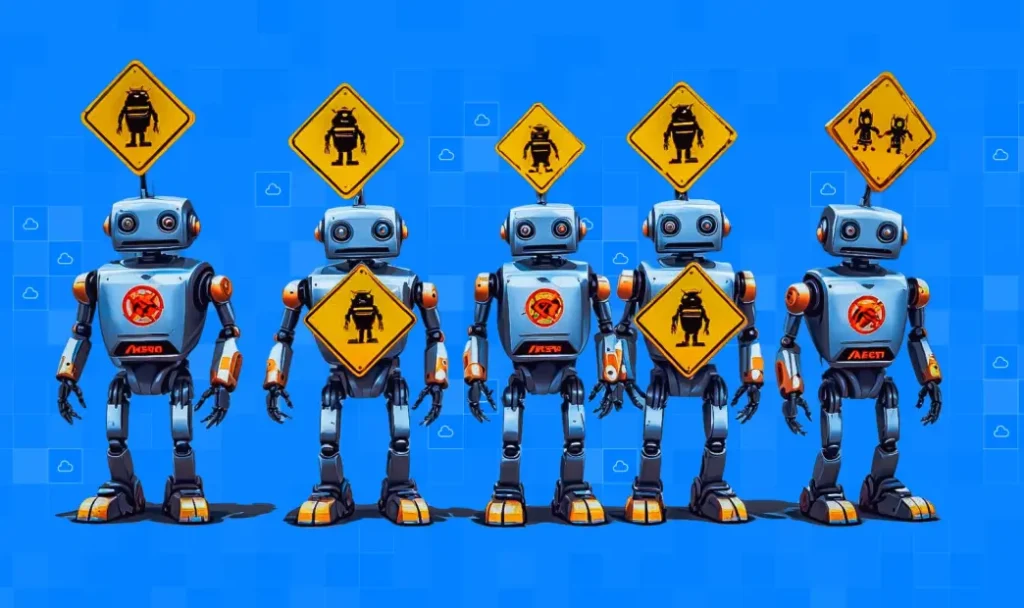
The rapid rise of Artificial Intelligence (AI) and robotics has reshaped modern industries—from manufacturing and healthcare to logistics and defense. Recently, a Critical Security Flaw Found in AI Robotics Platform has raised significant concerns among experts. Today’s intelligent robots don’t just follow static lines of code; they make autonomous decisions, navigate complex environments, and interact directly with humans.
However, this rapid evolution has introduced a dangerous downside. Recent discoveries of critical security flaws in AI robotics platforms have cast a spotlight on unique cybersecurity challenges that traditional security frameworks simply cannot handle.
A vulnerability in an AI-driven robotic system is far more than a data leak. Because these machines interact with the physical world, a software weakness can instantly transform into a threat to human safety, physical assets, and critical infrastructure.
An AI robotics platform merges advanced machine learning algorithms with physical robotic hardware. By combining computer vision, sensors, actuators, and cloud connectivity, these platforms allow machines to operate with little to no human intervention.
Intelligent robotics platforms are deeply embedded across multiple sectors:
Industrial Automation: Manufacturing plants, smart warehouses, and logistics hubs.
Healthcare: Surgical assistance systems and automated medication management.
Infrastructure: Autonomous vehicles, agricultural drones, and smart city operations.
Defense: Surveillance systems and tactical autonomous units.
The Security Challenge: Because these systems blend software, hardware, networking, and AI into a single ecosystem, they create a massive attack surface for cybercriminals to target.
In traditional IT, a critical flaw might mean a data breach. In AI robotics, a critical flaw allows an attacker to manipulate how a machine behaves in the real world.
| Flaw Type | What It Allows the Attacker to Do |
|---|---|
| Remote Code Execution (RCE) | Run malicious code directly on the robot’s onboard computer. |
| Authentication Bypass | Sneak past security checkpoints without valid credentials. |
| API Integration Weaknesses | Intercept or manipulate commands sent between the robot and the cloud. |
| AI Model Manipulation | Trick the robot’s brain into making incorrect or unsafe decisions. |
| Sensor Spoofing | Feed fake environmental data to the robot’s radar, cameras, or GPS. |
Security analysts typically find these weaknesses through penetration testing, code analysis, and bug bounty programs. Recent investigations highlight a recurring theme: weak communication links.
Many robots talk to cloud servers via open Application Programming Interfaces (APIs) that lack basic encryption or access controls. This allows bad actors to eavesdrop on operational data, inject fake commands, or impersonate an authorized operator. Furthermore, vulnerabilities in the machine learning pipeline let hackers alter AI models post-deployment.
Traditional cybersecurity focuses on protecting data assets—like databases, passwords, and credit card numbers. Robotics cybersecurity must protect physical reality.
Traditional Security  ---> Protects Information (Data, Servers, Accounts)
Robotics Security     ---> Protects Action (Human Safety, Physical Assets)
This fundamental shift introduces unique challenges:
Zero-Tolerance Latency: Real-time machines cannot wait for lengthy security checks before making a physical move.
New Attack Vectors: Traditional firewalls cannot stop an attacker from tampering with an AI training model.
Dynamic Environments: Robots operate in public spaces or around human workers, meaning software bugs can cause immediate physical injuries.
Hackers hijack the wireless communication channels used to send instructions to a robot. Once inside, they can send unauthorized commands—such as redirecting a warehouse drone to cause a collision or disrupt a logistics pipeline.
AI models learn from vast datasets. If an attacker corrupts this data during training or updates, they can subtly alter the robot’s judgment. For instance, a vision-guided robot might be trained to ignore stop signs or misidentify hazardous obstacles.
Robots rely on sensors to understand their surroundings. Attackers can blind or deceive a machine by feeding it:
Fake GPS coordinates.
Manipulated live camera feeds.
Distorted LiDAR or radar measurements.
Most modern robots offload heavy AI processing to the cloud. If an attacker breaches a robotics company’s cloud backend, they gain a centralized point of leverage to control or disable thousands of connected devices simultaneously.
Robots are built using open-source packages and third-party software components. If a hacker plants malicious code into a popular software update or development tool, every robot using that component becomes vulnerable.
The fallout from an exploited robotics vulnerability can trigger a cascade of real-world damage.
Operational Stoppages: A hijacked assembly line can freeze factory operations, costing businesses millions of dollars per hour in downtime.
Physical Safety Hazards: Malfunctioning heavy machinery can cause workplace injuries, equipment damage, or facility fires.
Severe Financial Pain: Organizations face direct costs from system recovery, regulatory fines, legal liabilities, and business interruption.
Geopolitical Threats: As militaries deploy autonomous defense systems, a critical flaw could give adversaries total control over strategic assets.
Imagine an automotive plant running hundreds of AI-driven robotic arms. If an attacker exploits a loophole in the factory’s central management console, they can alter precision metrics by just a few millimeters. The result? A silent sabotage that ruins product quality, damages expensive tools, and forces an emergency facility shutdown.
Hospitals use robots for precision surgeries, patient tracking, and dispensing medications. A security flaw here directly threatens human life. Forcing a surgical robot to freeze mid-procedure or altering medication dosages via a compromised system turns a cyber threat into an immediate medical emergency.
To mitigate these risks, engineering and security teams must collaborate on a multi-layered defense strategy.
Security cannot be an afterthought. Developers must practice continuous threat modeling, strict code reviews, and automated vulnerability scanning throughout the entire engineering lifecycle.
Multi-Factor Authentication (MFA): Mandatory for all central management access.
Certificate-Based Identities: Every individual robotic unit must prove its identity using secure digital certificates before joining the network.
Zero-Trust Architecture: Never trust a device implicitly, even if it is operating inside the corporate Wi-Fi network.
Encrypt all data moving between the robot, local edge servers, and cloud interfaces. This stops attackers from reading or altering operational commands mid-transit.
Deploy anomaly-detection systems that watch for unusual physical movements or spikes in data transmission. If a robot suddenly attempts to access restricted files or moves outside its designated operational zone, the system should trigger an immediate alert.
As autonomous systems evolve, regulatory bodies are stepping in. Governments worldwide are drafting stricter laws that require mandatory vulnerability disclosures, supply-chain tracking, and strict safety certifications for autonomous machines.
At the same time, defensive teams must prepare for next-generation threats:
Swarm Vulnerabilities: Attacks that spread like a virus from one robot to an entire fleet.
Adversarial AI: Exploits designed to specifically bypass neural networks.
True security means building systems that can absorb an attack and keep running safely. Organizations must implement physical, fail-safe backups—like hardware-coded emergency stop buttons and isolated backup communication channels—to guarantee that humans always retain the ultimate control over intelligent machines.