

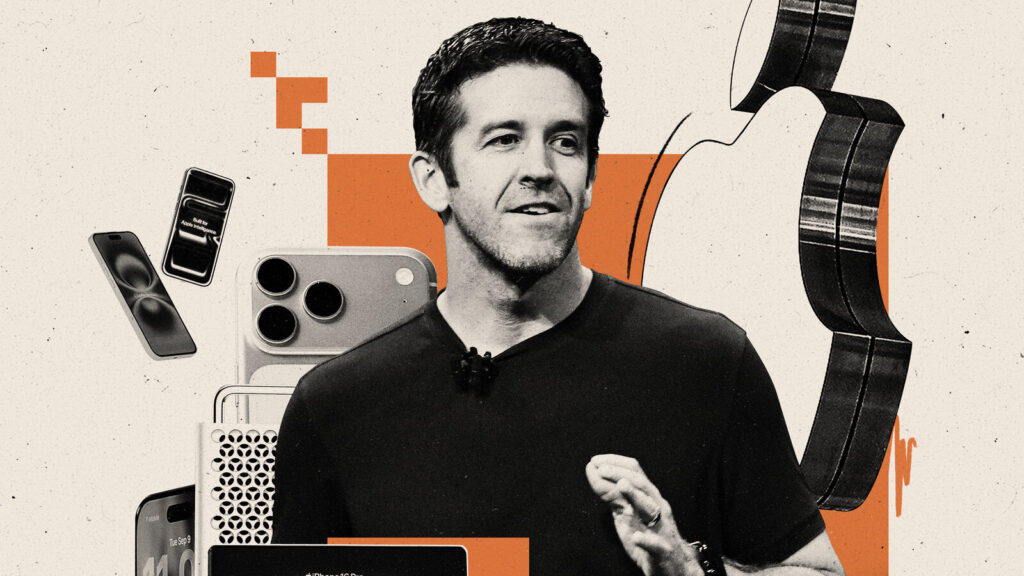
The technology industry is constantly evolving, and leadership transitions at major companies often signal broader strategic changes. In 2026, one of the most significant developments in the tech world was the appointment of John Ternus as the new Chief Executive Officer of Apple. New CEO Ternus aligns chip and device engineering as one unit, marking a major organizational restructuring as Apple brought chip engineering and device engineering under a unified hardware leadership structure.
This move represents more than a simple corporate reshuffle. It reflects a growing industry trend toward tighter integration between silicon design, hardware development, and artificial intelligence capabilities. As devices become increasingly dependent on specialized processors for AI workloads, energy efficiency, security, and performance optimization, the alignment of chip and device engineering may prove to be one of the most consequential strategic decisions of Apple’s next era.
In this article, we explore the reasons behind the restructuring, its implications for Apple’s future, the competitive landscape, potential benefits and risks, and what it means for consumers, investors, and the broader technology industry.
Apple announced that longtime hardware executive John Ternus would succeed Tim Cook as CEO, marking the company’s first major leadership transition in over a decade. Ternus joined Apple in 2001 and spent more than two decades working across hardware engineering roles before becoming Senior Vice President of Hardware Engineering. He played key roles in the development of major Apple products, including the iPhone, iPad, Mac, Apple Watch, AirPods, and Apple Silicon initiatives.
Under Tim Cook’s leadership, Apple grew from a company valued at approximately $350 billion into a technology giant worth roughly $4 trillion. Revenue expanded dramatically, and Apple’s ecosystem became one of the most successful in business history. Ternus inherits a company with enormous strengths but also significant challenges, particularly in artificial intelligence and next-generation computing.
The appointment of a hardware-focused executive rather than a services or software leader sends a clear signal regarding Apple’s strategic priorities for the coming decade.
One of the most notable changes accompanying Ternus’s appointment is the consolidation of Apple’s hardware engineering and hardware technologies organizations into a more unified structure. The move places chip development and device engineering under closely aligned leadership, reducing organizational barriers between teams responsible for silicon and those building consumer products.
Historically, Apple maintained separate divisions for:
While these groups collaborated extensively, the new structure reflects a belief that future innovation depends on even deeper integration between custom silicon and device development.
The importance of custom silicon has grown dramatically over the past decade. Modern smartphones, tablets, laptops, wearables, and mixed-reality devices increasingly depend on specialized chips to deliver performance, battery life, security, and AI capabilities.
Unlike traditional computing companies that rely heavily on third-party processors, Apple has invested billions of dollars in designing its own chips.
Examples include:
By aligning chip and device engineering more closely, Apple aims to ensure that future hardware products are designed around silicon capabilities from the earliest stages of development.
Perhaps the best example of the benefits of hardware-silicon integration is the Apple Silicon transition.
When Apple announced its move away from Intel processors in Mac computers, industry observers questioned whether the company could successfully replace decades of x86 computing dominance.
The results exceeded expectations.
Benefits of Apple Silicon included:
The success of M-series processors demonstrated the strategic value of controlling both silicon and hardware design. Ternus’s restructuring appears designed to replicate and accelerate this model across future product categories.
Artificial intelligence is reshaping the technology industry. Modern AI applications demand specialized hardware capable of processing enormous quantities of data efficiently.
Unlike traditional computing tasks, AI workloads rely heavily on:
Industry analysts increasingly view AI hardware as a critical competitive advantage. Apple’s decision to align chip and device engineering reflects the reality that AI experiences cannot be separated from the underlying hardware architecture.
Whether it involves intelligent assistants, on-device language models, augmented reality experiences, or personalized computing, the future of AI depends on tight integration between hardware and software.
Apple’s restructuring occurs amid intense competition across the technology sector.
Major rivals are investing heavily in custom silicon and AI infrastructure.
As AI becomes central to product differentiation, companies can no longer treat hardware and silicon as independent disciplines.
The competitive landscape increasingly rewards organizations capable of optimizing entire technology stacks from silicon to software.
A key figure in this transition is Johny Srouji, Apple’s longtime silicon architect and hardware technologies leader. As part of the organizational restructuring, Srouji assumes expanded responsibilities that combine oversight of hardware engineering and chip development efforts.
Srouji has been instrumental in developing Apple’s custom silicon strategy and is widely credited with helping establish the company’s semiconductor leadership.
His expanded role offers several potential advantages:
This structure mirrors practices used by several leading semiconductor-driven technology companies.
When chip engineers and product engineers operate under a common strategic framework, innovation can move more quickly.
Features can be planned years in advance, ensuring silicon capabilities align perfectly with product goals.
Custom hardware and custom chips can be designed simultaneously rather than sequentially.
This enables:
AI workloads increasingly require dedicated hardware acceleration.
Unified engineering teams can build products optimized specifically for machine learning and generative AI applications.
Custom silicon provides unique capabilities competitors may struggle to replicate.
This differentiation becomes increasingly important as hardware markets mature.
While the strategy offers significant opportunities, it also introduces risks.
Combining large engineering groups requires careful management.
Differences in culture, priorities, and workflows can create friction during transitions.
The success of integrated hardware strategies depends on flawless execution.
A delay in chip development can affect multiple product categories simultaneously.
Semiconductor engineering remains one of the most competitive labor markets in technology.
Retaining top talent will remain critical.
AI technology evolves quickly, making long-term hardware planning increasingly difficult.
Engineering organizations must balance strategic planning with adaptability.
Apple is not the first company to recognize the value of vertical integration.
Several successful technology firms have demonstrated the advantages of controlling multiple layers of the technology stack.
NVIDIA’s dominance in AI stems partly from its ability to optimize hardware, software frameworks, and developer ecosystems together.
Tesla develops custom AI chips for autonomous driving systems, enabling tighter integration between software and hardware.
Google’s Tensor processors are designed specifically to enhance AI experiences on Pixel devices.
These examples highlight a broader industry trend: successful AI companies increasingly build specialized hardware rather than relying entirely on third-party solutions.
The unified engineering structure could influence numerous future product categories.
Analysts expect future devices to feature increasingly sophisticated AI capabilities operating directly on-device rather than relying exclusively on cloud services.
This requires specialized processors designed specifically for machine learning applications.
Investors generally view organizational alignment positively when it improves operational efficiency and innovation capacity.
Several factors make this restructuring noteworthy:
However, investors will closely monitor execution, particularly as Apple faces increasing competition in AI-driven markets.
For consumers, organizational changes may seem distant from everyday product experiences. However, such decisions often shape product quality and innovation for years.
Potential consumer benefits include:
The closer integration of silicon and hardware teams could ultimately translate into products that feel smarter, faster, and more responsive.
John Ternus’s appointment reflects a strategic shift toward engineering-led leadership. Rather than focusing primarily on operations, services, or finance, Apple appears to be emphasizing hardware innovation as a core competitive advantage.
The decision to align chip and device engineering reinforces this message.
As artificial intelligence reshapes computing, the companies best positioned for success may be those capable of tightly integrating:
Apple’s restructuring suggests leadership believes the future of technology belongs to organizations capable of controlling the entire user experience from the transistor level to the application layer.
The appointment of John Ternus as CEO and the decision to align chip and device engineering into a unified hardware organization mark the beginning of a significant new chapter for Apple. The restructuring reflects broader industry trends in which custom silicon, artificial intelligence, and integrated product development are becoming central to competitive success.
By bringing hardware and chip engineering closer together, Apple is positioning itself to accelerate innovation, improve product performance, and strengthen its ability to compete in an increasingly AI-driven technology landscape. The success of Apple Silicon demonstrated the power of vertically integrated engineering, and the company’s latest organizational changes suggest leadership intends to extend that advantage across future generations of products.
While challenges remain—including fierce competition, rapid AI advancement, and execution risks—the strategic rationale behind the move is clear. In an era where the boundaries between hardware, software, and artificial intelligence are rapidly disappearing, the companies that can align these disciplines most effectively are likely to define the future of computing. Under Ternus’s leadership, Apple appears determined to be one of them.