

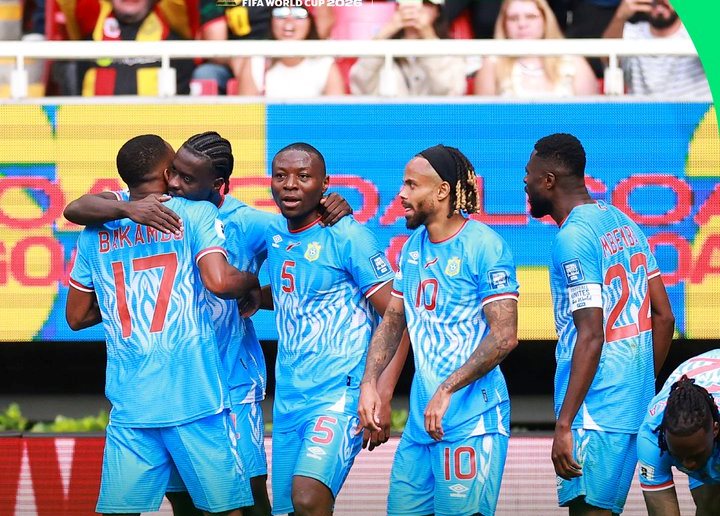
The Democratic Republic of Congo (DR Congo) has achieved one of the most emotional and significant milestones in modern African football by ending a 52-year absence from the FIFA World Cup. This truly marks the moment when DR Congo ends a 52-year World Cup absence with historic qualification. After decades of disappointment, political instability, near misses, and rebuilding efforts, the Leopards finally secured their place at the 2026 FIFA World Cup, marking their first appearance since 1974 when the nation competed under the name Zaire.
The qualification represents far more than a sporting success. For millions of Congolese people, it symbolizes resilience, national pride, and hope. In a country that has faced political challenges, armed conflicts, economic struggles, and humanitarian crises over several decades, football has emerged as a powerful source of unity.
The historic qualification was secured after a dramatic playoff victory over Jamaica, with defender Axel Tuanzebe scoring the decisive goal in extra time. The moment triggered celebrations across Kinshasa and throughout the country, ending one of the longest World Cup absences in international football.
This article explores DR Congo’s remarkable journey back to the World Cup, the history behind the 52-year absence, the key figures responsible for qualification, the significance of the achievement, and what it means for the future of Congolese football.
On March 31, 2026, DR Congo defeated Jamaica 1-0 after extra time in an intercontinental playoff match held in Mexico.
The match remained scoreless for 90 minutes before defender Axel Tuanzebe scored the winning goal in the 100th minute of extra time. The dramatic strike secured DR Congo’s place at the FIFA World Cup for the first time since 1974.
The victory sparked nationwide celebrations as fans flooded streets, waved national flags, and celebrated a moment that generations had waited more than half a century to witness.
For many supporters, the qualification represented redemption after decades of heartbreak and missed opportunities.
Before 2026, DR Congo’s only World Cup appearance came in 1974.
At the time, the country was known as Zaire and became the first sub-Saharan African nation to qualify for the FIFA World Cup.
The tournament, hosted in West Germany, proved difficult for the African representatives.
The heavy defeats overshadowed what was otherwise a historic achievement. For decades afterward, the 1974 campaign became a painful memory that many Congolese football supporters hoped would one day be replaced by a more successful World Cup story.
Many factors contributed to DR Congo’s long absence from football’s biggest stage.
The country possesses enormous football talent, but numerous obstacles prevented consistent international success.
Over the years, DR Congo frequently produced talented players but struggled to build sustained national team success.
Several qualification campaigns ended in disappointment despite promising squads.
Qualifying for the expanded 2026 FIFA World Cup required DR Congo to navigate one of the most difficult qualification paths in international football.
The Leopards faced elite African competition and then survived the intercontinental playoff stage.
According to multiple reports, DR Congo defeated major football nations including Cameroon and Nigeria during their qualification journey before overcoming Jamaica in the decisive playoff.
Their qualification campaign demonstrated consistency, discipline, and resilience.
The team’s ability to remain competitive under pressure became one of its defining characteristics throughout qualification.
One of the most important figures behind DR Congo’s success is head coach Sebastien Desabre.
The French manager helped create a clear tactical identity while fostering strong team unity.
Desabre emphasized:
His leadership played a critical role in turning a talented squad into a successful international team.
Following qualification, Desabre praised the resilience and commitment shown by his players throughout the campaign.
Every historic qualification story needs a defining moment, and for DR Congo, that moment belonged to Axel Tuanzebe.
The former Manchester United defender scored the winning goal against Jamaica in extra time, instantly becoming a national hero.
Tuanzebe’s story is particularly remarkable.
Born in DR Congo before moving to England as a child, he represented England at youth level before switching his international allegiance to DR Congo.
His winning goal ensured his place in Congolese football history forever.
One of the defining features of modern DR Congo football is the contribution of players from the global Congolese diaspora.
Many members of the national team were born or developed their football careers in Europe.
This strategy has helped the country strengthen its talent pool significantly.
Several key players competing in European leagues have chosen to represent DR Congo, strengthening the national team considerably.
Although Tuanzebe scored the decisive goal, qualification was the result of a collective effort.
The squad featured a blend of experienced veterans and emerging stars.
Captain Chancel Mbemba provided leadership and defensive stability, while attackers such as Bakambu and Wissa contributed vital performances throughout the campaign.
Following qualification, celebrations erupted throughout the country.
Supporters gathered in public squares, streets, and stadiums to celebrate the achievement.
The qualification quickly became one of the biggest sporting stories in the nation’s modern history.
For many younger supporters, this was the first time they had ever seen their country qualify for the World Cup.
The achievement united communities across regions and generations.
The significance of qualification extends beyond sports.
DR Congo continues to face serious humanitarian and security challenges.
Several players openly acknowledged that the qualification carried symbolic importance for people experiencing hardship throughout the country.
Forward Cedric Bakambu highlighted the struggles faced by communities in eastern Congo and emphasized that the team’s success represented hope for millions of citizens.
In this context, football became a source of national inspiration and unity.
The expansion of the FIFA World Cup from 32 to 48 teams played an important role in creating additional qualification opportunities.
Africa received more qualification places than in previous tournaments.
While DR Congo still faced a difficult qualification route, the expanded format created pathways that may not have existed under previous tournament structures.
Following qualification, DR Congo was placed into Group K of the 2026 FIFA World Cup.
The group includes:
The draw presents a difficult challenge.
Portugal and Colombia possess strong football traditions and world-class players, while Uzbekistan enters the tournament with growing momentum.
However, DR Congo enters the competition with confidence and the belief that it can compete against elite opposition.
DR Congo’s recent performances in continental competitions helped prepare the squad for World Cup qualification.
The team demonstrated growing maturity, tactical discipline, and defensive organization during major African tournaments.
These experiences allowed players to gain valuable exposure against top-level opposition.
Success at the Africa Cup of Nations helped build momentum and belief within the squad before the World Cup qualifying campaign intensified.
The playoff victory over Jamaica serves as a perfect example of DR Congo’s resilience.
Despite dominating large portions of the match, the Leopards struggled to convert opportunities.
Jamaican goalkeeper Andre Blake made several crucial saves, forcing the contest into extra time. Eventually, a set-piece opportunity allowed Tuanzebe to score the winning goal.
The victory highlighted the team’s persistence and mental strength under pressure.
Qualification has renewed discussions about football development in DR Congo.
Many experts believe the achievement should serve as a foundation for long-term investment.
Successful World Cup participation could inspire a new generation of footballers across the country.
The World Cup provides unmatched international visibility.
Participation allows countries to showcase:
For DR Congo, returning to the World Cup after 52 years places the country back onto one of the world’s largest sporting stages.
Simply qualifying is already a historic achievement.
However, advancing beyond the group stage would elevate the accomplishment even further.
The team hopes to improve significantly upon the experience of 1974 and demonstrate how much Congolese football has evolved.
Even competitive performances against elite opponents could strengthen the nation’s football reputation internationally.
DR Congo’s qualification for the 2026 FIFA World Cup marks one of the most inspiring stories in international football. Ending a 52-year absence from the tournament required perseverance, strategic planning, strong leadership, and the collective effort of players determined to rewrite their nation’s football history.
The dramatic playoff victory over Jamaica provided a fitting conclusion to a remarkable journey. Led by coach Sebastien Desabre and inspired by heroes such as Axel Tuanzebe, Chancel Mbemba, Cedric Bakambu, and Yoane Wissa, the Leopards have restored national pride and reignited football dreams across the country.
Beyond sport, the qualification carries profound symbolic value. For millions of Congolese citizens, the World Cup represents hope, unity, and the possibility of a brighter future. As DR Congo prepares to compete on football’s biggest stage once again, the nation has already achieved something historic: proving that even after 52 years of waiting, dreams can still become reality.