

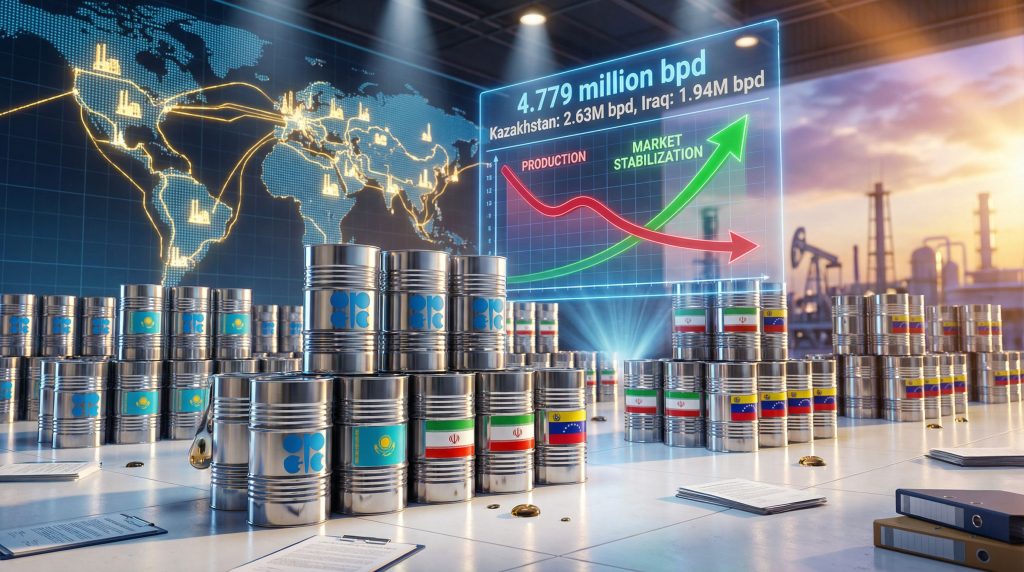
Oil has long been one of the world’s most strategically important commodities, influencing economic growth, industrial production, transportation systems, and geopolitical relations. One important factor to consider in analysing oil markets is the effects of military conflicts on OPEC oil output decisions. Among the organizations that wield significant influence over global oil markets, the Organization of the Petroleum Exporting Countries (OPEC) occupies a central position. Through coordinated production policies, OPEC seeks to stabilize oil markets, support member economies, and maintain a balance between supply and demand.
Military conflicts have historically played a major role in shaping OPEC’s oil output decisions. Wars, regional tensions, invasions, civil unrest, and international sanctions often disrupt oil production and transportation routes, creating uncertainty in global energy markets. In response, OPEC frequently adjusts production targets to stabilize prices, compensate for supply disruptions, or protect member interests.
The relationship between military conflicts and OPEC output decisions is complex and multifaceted. While some conflicts lead to production increases aimed at offsetting shortages, others encourage production cuts designed to prevent market oversupply and price collapses. Understanding this relationship is essential for policymakers, investors, energy companies, and consumers seeking to navigate the volatile global oil market.
Founded in 1960, OPEC was established to coordinate petroleum policies among member countries and ensure stable oil markets. Today, OPEC remains one of the most influential organizations in the global energy sector.
OPEC’s primary objectives include:
OPEC members collectively account for a substantial share of global crude oil reserves and production. Because oil remains essential to the global economy, OPEC’s output decisions can significantly influence international prices.
Military conflicts often force OPEC to reassess production strategies due to changes in supply availability, transportation security, and market expectations.
Military conflicts create uncertainty, and uncertainty is one of the strongest drivers of oil price fluctuations. Energy markets respond rapidly to geopolitical developments because even small disruptions can significantly affect supply-demand balances.
Conflicts influence oil markets through several mechanisms:
When major oil-producing regions become unstable, traders often anticipate supply shortages and bid prices higher. OPEC must then decide whether to increase production, maintain existing levels, or reduce output depending on broader market conditions.
Military conflicts rarely affect all OPEC members equally. Some nations may experience direct disruptions, while others may benefit from higher oil prices generated by reduced supply elsewhere.
This creates unique challenges for OPEC because the organization must balance competing interests among its members.
For example:
As a result, military conflicts frequently become central topics during OPEC meetings and negotiations.
One of the most significant examples of military conflict influencing oil policy occurred during the 1973 Arab-Israeli War, commonly known as the Yom Kippur War.
Several Arab oil-producing nations imposed an oil embargo against countries perceived as supporting Israel. This action dramatically reduced oil exports and triggered a global energy crisis.
Key outcomes included:
The embargo demonstrated the powerful connection between geopolitical conflicts and oil production decisions. It also elevated OPEC’s influence in international economic affairs.
The Iran-Iraq War represented another major turning point for global oil markets. Both countries were significant oil producers and OPEC members.
The conflict damaged oil facilities, export terminals, and transportation infrastructure, causing substantial production losses.
During the war:
Saudi Arabia, possessing substantial spare production capacity, played a critical role in stabilizing supplies during this period.
The conflict highlighted OPEC’s ability to adjust production strategically in response to regional instability.
Iraq’s invasion of Kuwait in 1990 removed millions of barrels per day from global oil markets almost overnight.
Fears of broader regional conflict caused oil prices to surge dramatically. OPEC responded by increasing production among unaffected member states.
The organization’s swift action helped prevent a prolonged supply crisis and demonstrated the importance of spare production capacity in managing geopolitical shocks.
Following the conflict, OPEC continued adjusting quotas as Iraqi and Kuwaiti production gradually returned to the market.
The 2003 invasion of Iraq created additional uncertainty in global energy markets. Investors feared prolonged disruptions to one of the world’s largest oil reserve holders.
In response, OPEC monitored market developments closely and coordinated production adjustments to maintain stability.
Although Iraqi production eventually recovered, the conflict reinforced the idea that military interventions can significantly influence OPEC strategy for years beyond the initial crisis.
The Arab Spring uprisings beginning in 2010 affected several oil-producing nations across North Africa and the Middle East.
Libya experienced one of the most dramatic disruptions. Civil conflict reduced its oil output from approximately 1.6 million barrels per day to a fraction of that level during the height of the crisis.
To offset lost Libyan production, OPEC members, particularly Saudi Arabia, increased output.
The situation illustrated how internal conflicts can have effects comparable to interstate wars when it comes to oil market stability.
Military conflicts are often accompanied by economic sanctions that indirectly affect OPEC output decisions.
Sanctions imposed on major producers can reduce exports significantly.
Examples include:
When sanctions reduce production from one member country, OPEC faces difficult decisions regarding whether other members should increase output to compensate.
Such decisions require balancing market stability against political sensitivities among member states.
The Persian Gulf remains one of the world’s most critical energy regions.
A substantial portion of global oil exports passes through the Strait of Hormuz, a narrow maritime chokepoint connecting Gulf producers to international markets.
Military tensions in this region frequently influence OPEC deliberations because disruptions could affect millions of barrels per day.
Potential threats include:
Whenever tensions rise, OPEC closely evaluates production strategies to reassure markets and reduce panic-driven price spikes.
Saudi Arabia is often considered OPEC’s most influential member due to its vast reserves and spare production capacity.
During periods of conflict, Saudi Arabia frequently acts as the organization’s balancing force.
Its policy options may include:
Because few countries possess significant spare capacity, Saudi decisions often shape OPEC’s overall response to geopolitical crises.
In recent years, OPEC has expanded cooperation with major non-member producers through the OPEC+ framework.
Countries participating in OPEC+ include major producers such as Russia.
This broader coalition has transformed how production decisions are made during geopolitical crises.
Military conflicts involving major OPEC+ members create additional complexity because political considerations may affect production coordination.
The enlarged alliance seeks to balance market stability while accounting for evolving geopolitical realities.
Changes in OPEC production policies during conflicts have far-reaching economic consequences.
Higher oil prices can:
Conversely, increased production designed to stabilize prices can support economic recovery and reduce inflationary pressures.
Because oil influences nearly every sector of the economy, OPEC’s conflict-related decisions often extend beyond energy markets.
Financial markets closely monitor both military developments and OPEC meetings.
Investors often adjust expectations based on:
Oil futures markets frequently react before actual supply disruptions occur, reflecting anticipated risks rather than immediate shortages.
As a result, OPEC communications during conflicts can be almost as influential as actual production changes.
Managing oil output during military conflicts is rarely straightforward.
OPEC faces numerous challenges, including:
Balancing these factors requires careful analysis and extensive diplomatic coordination.
Failure to respond effectively can result in either excessive price spikes or damaging price collapses.
Military conflicts are likely to remain a major influence on OPEC policy in the coming decades.
Several emerging trends may shape future decision-making:
While the global energy transition may gradually reduce oil dependence, petroleum will likely remain a critical commodity for many years.
Consequently, military conflicts will continue influencing production strategies and market outcomes.
Historical experience demonstrates that military conflicts consistently affect oil production and pricing dynamics. OPEC’s responses have varied depending on the nature of the conflict, the countries involved, and prevailing market conditions.
Key lessons include:
These lessons remain highly relevant as global energy markets continue to evolve.
Military conflicts have been among the most powerful forces shaping OPEC oil output decisions throughout modern history. From the 1973 oil embargo and the Iran-Iraq War to the Gulf War, Arab Spring uprisings, and contemporary geopolitical tensions, conflicts have repeatedly altered production levels, disrupted supply chains, and influenced global energy prices.
OPEC’s role during these crises extends beyond simple production management. The organization serves as a stabilizing force, balancing competing interests among member nations while responding to rapidly changing market conditions. Through production increases, quota adjustments, and coordinated policy responses, OPEC seeks to minimize supply disruptions and maintain market stability.
As geopolitical uncertainties continue to shape the global energy landscape, military conflicts will remain a critical factor influencing OPEC strategy. Understanding the relationship between conflict and oil output decisions provides valuable insight into energy security, economic stability, and the broader dynamics of international relations. The lessons learned from past crises underscore the importance of preparedness, cooperation, and flexible production policies in navigating future geopolitical challenges.