

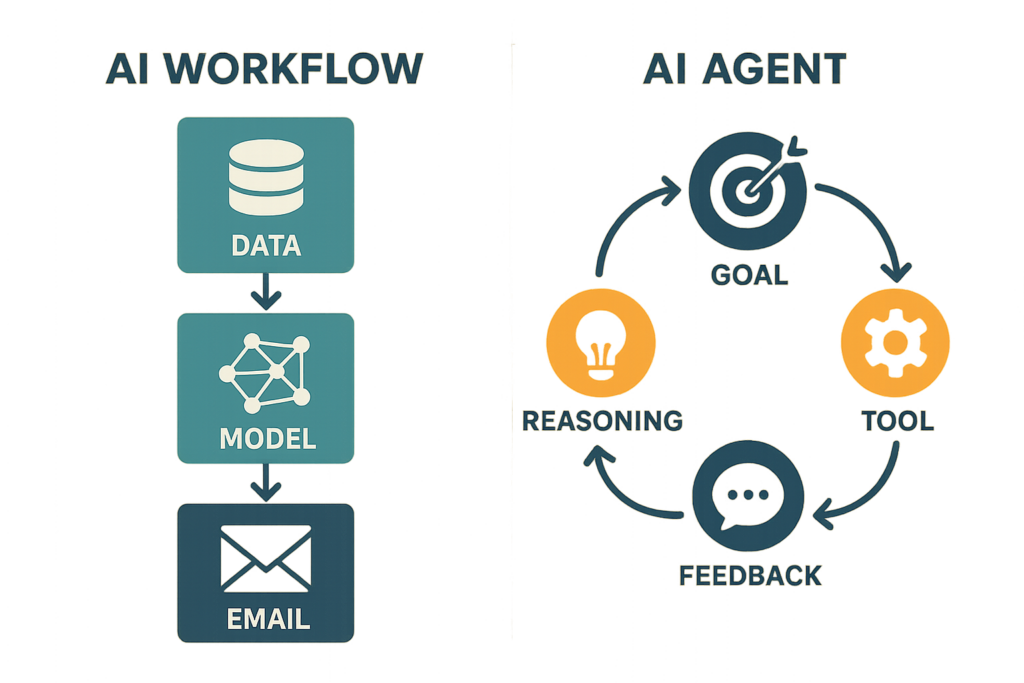
Artificial intelligence has evolved rapidly over the past decade, moving beyond simple automation tools into systems capable of reasoning, planning, and independently executing complex tasks. Among the most transformative developments in this evolution is the rise of autonomous AI agents. How Autonomous AI Agents Are Reshaping Workflows is a topic gaining increasing attention across industries. Unlike traditional software that follows predefined instructions, autonomous AI agents can perceive their environment, make decisions, learn from outcomes, and carry out multi-step processes with minimal human intervention.
Organizations across industries are increasingly deploying these intelligent agents to streamline operations, enhance productivity, reduce costs, and unlock entirely new ways of working. From customer service and software development to healthcare and supply chain management, autonomous AI agents are fundamentally changing how work gets done.
Autonomous AI agents are software systems powered by artificial intelligence that can independently pursue goals by analyzing information, making decisions, and executing actions. Unlike conventional automation tools that perform repetitive tasks based on rigid rules, AI agents can adapt to changing circumstances and determine the best course of action to achieve desired outcomes.
These systems typically combine several capabilities:
For example, a traditional chatbot may answer customer questions based on predefined scripts. An autonomous AI agent, however, can understand customer intent, access databases, process refunds, schedule appointments, escalate issues when necessary, and learn from previous interactions.
Automation has long been a cornerstone of digital transformation. Early workflow automation focused on eliminating repetitive tasks such as data entry, invoice processing, and report generation. While effective, these systems required extensive programming and struggled with unexpected situations.
Autonomous AI agents represent the next phase of this evolution. Instead of merely following instructions, they can:
This shift from rule-based automation to intelligent autonomy enables organizations to automate increasingly complex workflows that were previously considered too dynamic for machines.
Large language models serve as the cognitive foundation for many modern AI agents. These models can understand context, generate human-like responses, summarize information, and perform sophisticated reasoning tasks.
By leveraging LLMs, autonomous agents can communicate naturally with users and interpret complex instructions without requiring specialized programming.
Machine learning algorithms allow agents to improve over time. Through continuous exposure to data and feedback, they can identify patterns, refine decision-making processes, and optimize workflows.
Modern AI agents can access vast repositories of information, including internal company documents, databases, websites, and enterprise knowledge bases. This enables them to make informed decisions based on current information.
Autonomous agents can interact with external applications through APIs, allowing them to execute tasks such as sending emails, updating CRM systems, processing transactions, or generating reports.
Customer support departments are among the earliest adopters of autonomous AI agents. These systems can manage large volumes of customer inquiries around the clock while maintaining consistent service quality.
Modern AI agents can:
Companies implementing advanced AI-driven support systems often report significant reductions in response times and operational costs while improving customer satisfaction.
For example, many global e-commerce businesses now use AI agents to handle thousands of customer interactions daily, enabling human representatives to focus on more complex issues that require empathy and nuanced judgment.
Software engineering has experienced a dramatic transformation due to autonomous AI agents. These systems can assist throughout the development lifecycle.
Common applications include:
Developers increasingly collaborate with AI agents that can analyze codebases, suggest improvements, identify vulnerabilities, and automate repetitive programming tasks.
In some organizations, AI agents can independently create prototypes from written requirements, significantly accelerating development cycles.
HR departments are using autonomous AI agents to improve recruitment, onboarding, and employee engagement processes.
These agents can:
By automating administrative tasks, HR professionals can dedicate more time to strategic initiatives such as employee development and organizational culture.
Healthcare organizations face enormous administrative burdens. Autonomous AI agents are helping reduce inefficiencies while improving patient experiences.
Applications include:
By automating routine administrative processes, healthcare providers can allocate more resources toward direct patient care.
Supply chain management involves coordinating numerous moving parts across suppliers, manufacturers, distributors, and customers.
Autonomous AI agents enhance visibility and responsiveness by:
These capabilities help organizations build more resilient and efficient supply chains.
A major financial institution implemented autonomous AI agents to handle customer onboarding and compliance verification processes. Previously, onboarding required multiple manual reviews and often took several days.
After deployment, the AI agents were able to:
The institution reduced onboarding times from days to hours while maintaining regulatory compliance standards.
A global manufacturing company deployed AI agents to monitor production lines and coordinate maintenance schedules.
The system continuously analyzed sensor data and identified patterns associated with equipment failures. By predicting maintenance needs before breakdowns occurred, the company significantly reduced downtime and improved operational efficiency.
A multinational consulting firm implemented AI agents to manage internal knowledge retrieval. Employees previously spent considerable time searching through documents and databases.
The AI agent system could:
The result was faster decision-making and improved productivity across teams.
Numerous studies suggest that AI-powered workflows can deliver substantial productivity gains. Knowledge workers often spend a significant portion of their day on repetitive administrative tasks, information retrieval, and routine communications.
Autonomous AI agents reduce these burdens by handling:
As a result, employees can focus on higher-value activities such as strategy, innovation, relationship building, and problem-solving.
Organizations that effectively integrate AI agents often report improvements in efficiency, faster project completion times, and increased employee satisfaction.
One of the most exciting developments in the field is the emergence of multi-agent systems. Rather than relying on a single AI agent, organizations can deploy multiple specialized agents that collaborate to achieve complex objectives.
For example, a marketing workflow might involve:
Together, these agents form a digital workforce capable of handling sophisticated business processes with remarkable efficiency.
Despite their potential, autonomous AI agents also introduce significant challenges that organizations must address.
AI agents often require access to sensitive information. Organizations must implement robust security controls, encryption standards, and access management policies to protect data.
AI systems can inherit biases from training data. Regular audits and monitoring are necessary to ensure fair and ethical decision-making.
As AI agents become more autonomous, understanding how decisions are made becomes increasingly important. Explainable AI techniques can help improve trust and accountability.
Industries such as healthcare, finance, and legal services must ensure that AI-driven workflows comply with relevant regulations and standards.
The adoption of autonomous AI agents may change job responsibilities and skill requirements. Organizations must invest in training programs to help employees adapt to evolving roles.
Contrary to fears of widespread job replacement, many experts believe the future of work will be defined by collaboration between humans and AI agents.
In this model:
This partnership allows organizations to combine the efficiency of machines with the adaptability and emotional intelligence of people.
Future agents will likely manage increasingly complex workflows with minimal supervision, making independent decisions across broader operational domains.
Persistent memory capabilities will enable AI agents to retain context across long periods, improving personalization and long-term planning.
AI agents will become more effective at interacting with diverse software ecosystems, enabling seamless workflow orchestration across organizations.
Specialized agents tailored for healthcare, finance, manufacturing, legal services, and education will deliver deeper expertise and improved performance.
Some organizations may eventually deploy networks of AI agents capable of managing substantial portions of operational workflows, creating highly adaptive and efficient enterprises.
Organizations seeking to adopt autonomous AI agents should consider the following strategies:
Successful implementation requires balancing innovation with responsible deployment practices.
Autonomous AI agents represent one of the most significant technological advancements in modern business operations. By combining reasoning, learning, decision-making, and execution capabilities, these intelligent systems are transforming workflows across industries. From customer service and software development to healthcare and supply chain management, organizations are leveraging AI agents to increase efficiency, improve accuracy, and accelerate innovation.
While challenges related to security, transparency, compliance, and workforce adaptation remain important considerations, the benefits of autonomous AI agents are becoming increasingly evident. The future is unlikely to be defined by humans competing against AI. Instead, it will be shaped by organizations that successfully integrate autonomous agents into collaborative human-AI ecosystems. Those that embrace this transformation strategically will be well positioned to thrive in an increasingly intelligent and automated world.