

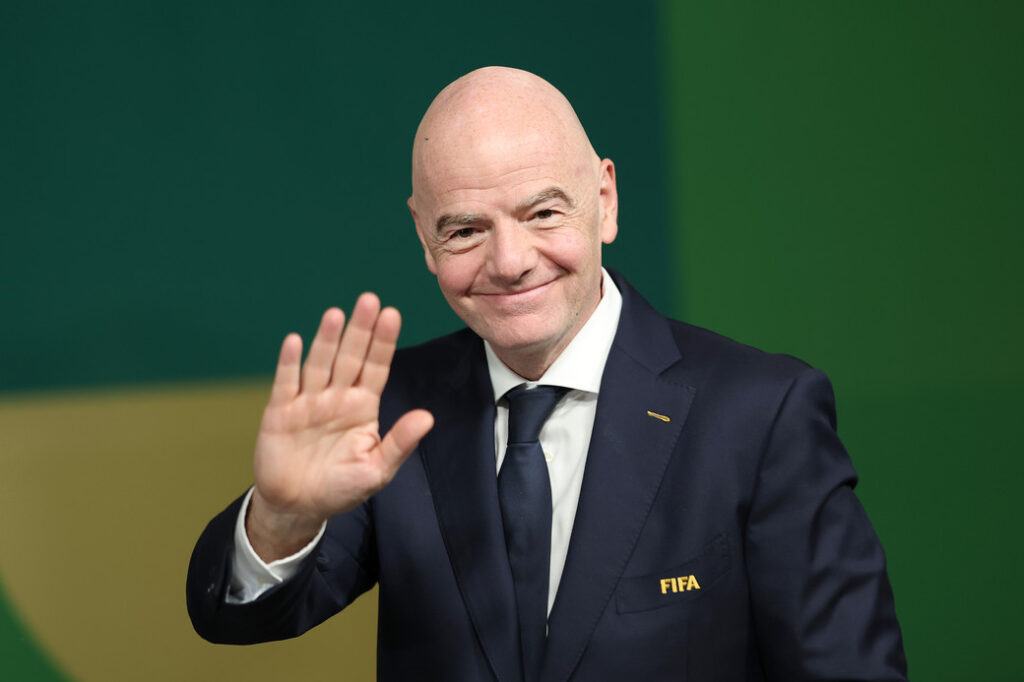
FIFA World Cup 2026 Corruption Scandal… The FIFA World Cup 2026 is one of the most ambitious sporting events ever organized. Hosted jointly by the United States, Canada, and Mexico, the tournament will feature 48 national teams for the first time in history and is expected to generate billions of dollars in economic activity. Alongside the excitement, however, discussions about corruption, governance, transparency, and accountability have once again become part of the global conversation surrounding FIFA.
When people search for a “FIFA World Cup 2026 corruption scandal,” it is important to distinguish between documented facts and speculation. As of today, there has not been a definitive finding that the 2026 FIFA World Cup itself was awarded through a proven corruption scheme comparable to some of FIFA’s historical controversies. Instead, discussions often connect the 2026 tournament with FIFA’s long history of governance failures, previous corruption investigations, and ongoing concerns about transparency in international football.
This distinction matters because corruption allegations require evidence, official investigations, and legal findings. While FIFA continues to face criticism from journalists, advocacy organizations, and football fans regarding governance and financial transparency, not every criticism constitutes proof of criminal wrongdoing.
To understand why many people associate the 2026 World Cup with corruption, it is necessary to examine FIFA’s past. For decades, FIFA faced allegations involving bribery, vote-buying, financial misconduct, and unethical governance.
Some of the most significant events include:
These historical events significantly damaged FIFA’s reputation. Consequently, every subsequent tournament—including the 2026 edition—has been examined under an intense public spotlight.
The FIFA World Cup 2026 bidding process differed substantially from earlier tournaments. Rather than relying solely on a vote by FIFA’s Executive Committee, the final decision was made by the FIFA Congress, allowing more than 200 member associations to participate in the vote.
The two primary bids were:
Supporters of the expanded voting process argued that involving the entire FIFA Congress reduced the influence of a small group of decision-makers and increased transparency. Bid evaluation reports, infrastructure assessments, stadium capacities, transportation plans, and commercial projections were also made publicly available to a greater extent than in previous bidding cycles.
Even with procedural reforms, skepticism remains. Several factors contribute to ongoing public concern.
Past scandals have created a lasting trust deficit. Once an organization has experienced repeated governance failures, future decisions are often viewed with suspicion regardless of whether evidence of misconduct exists.
The FIFA World Cup generates enormous revenues through broadcasting rights, sponsorships, hospitality, ticket sales, and licensing. Events involving billions of dollars naturally attract scrutiny regarding financial decision-making.
Major sporting events often involve governments, multinational corporations, investors, and political leaders. Critics argue that such complex relationships require exceptional transparency to avoid conflicts of interest.
Governments frequently commit substantial public resources toward transportation improvements, stadium renovations, security operations, and tourism infrastructure. Taxpayers therefore expect careful oversight of spending.
Following years of criticism, FIFA introduced numerous reforms intended to improve accountability.
While these reforms have been welcomed by some governance experts, others argue that implementation remains inconsistent and that structural improvements are still needed.
The 2026 World Cup is projected to become the largest football tournament ever held. The expansion from 32 to 48 teams significantly increases commercial opportunities.
Major revenue sources include:
Independent economic analyses estimate that the tournament could generate billions of dollars in direct and indirect economic activity across North America. However, economists frequently caution that projected economic impacts should be interpreted carefully, as estimates often depend on assumptions regarding tourism, infrastructure costs, and long-term benefits.
Corruption risks are not unique to FIFA. Nearly every major international sporting event faces governance challenges due to its size and complexity.
Common risk areas include:
Good governance practices seek to minimize these risks through independent auditing, competitive bidding, public disclosure, and strong anti-corruption regulations.
One important lesson from earlier FIFA controversies is that institutional culture can be just as important as formal regulations. Investigations during the past decade highlighted weaknesses in oversight, insufficient transparency, and concentrated decision-making authority.
Subsequent reforms attempted to address these issues by increasing external scrutiny and improving governance mechanisms. Although experts disagree on whether these reforms are sufficient, they represent a significant departure from earlier organizational practices.
Investigative journalists have played an essential role in uncovering misconduct within international sports organizations. Through document analysis, interviews, financial investigations, and whistleblower reports, media organizations have contributed significantly to public accountability.
The continued presence of investigative reporting encourages greater transparency and provides an additional layer of oversight beyond internal governance structures.
Independent governance experts generally assess sporting organizations using several criteria:
These indicators provide a broader picture of organizational integrity than isolated allegations alone.
One of the biggest challenges surrounding discussions of the 2026 World Cup is the difference between public perception and verified facts. Because FIFA has experienced major corruption scandals in the past, many people assume similar misconduct must also exist in every subsequent tournament.
Healthy skepticism is valuable, but it should be accompanied by evidence-based analysis. Responsible reporting distinguishes between:
This distinction helps maintain credibility while encouraging meaningful accountability.
Large sporting events require sophisticated compliance systems. Effective oversight typically includes:
Strong compliance programs reduce opportunities for fraud while increasing public confidence.
Modern technology has improved accountability in international sports governance. Digital procurement platforms, electronic financial reporting, data analytics, and public disclosure databases make it more difficult to conceal irregular transactions.
Artificial intelligence and advanced forensic accounting tools also assist investigators in identifying suspicious financial patterns that might previously have gone unnoticed.
Rather than focusing solely on rumors, informed observers may wish to monitor measurable indicators of transparency throughout the tournament.
These sources provide a more reliable basis for evaluating governance than social media speculation.
The phrase “FIFA World Cup 2026 corruption scandal” reflects widespread public concern rooted in FIFA’s troubled history rather than a confirmed corruption case tied specifically to the 2026 tournament. Past scandals understandably continue to shape perceptions, but careful analysis requires distinguishing between historical misconduct, ongoing governance debates, and verified evidence. The expanded host-selection process, governance reforms, and increased transparency measures represent meaningful attempts to rebuild trust, although critics argue that further improvements remain necessary. As preparations continue, independent oversight, investigative journalism, public accountability, and evidence-based reporting will remain essential. Ultimately, the success of the 2026 FIFA World Cup will be judged not only by the football played on the pitch but also by the integrity, transparency, and governance demonstrated behind the scenes.