

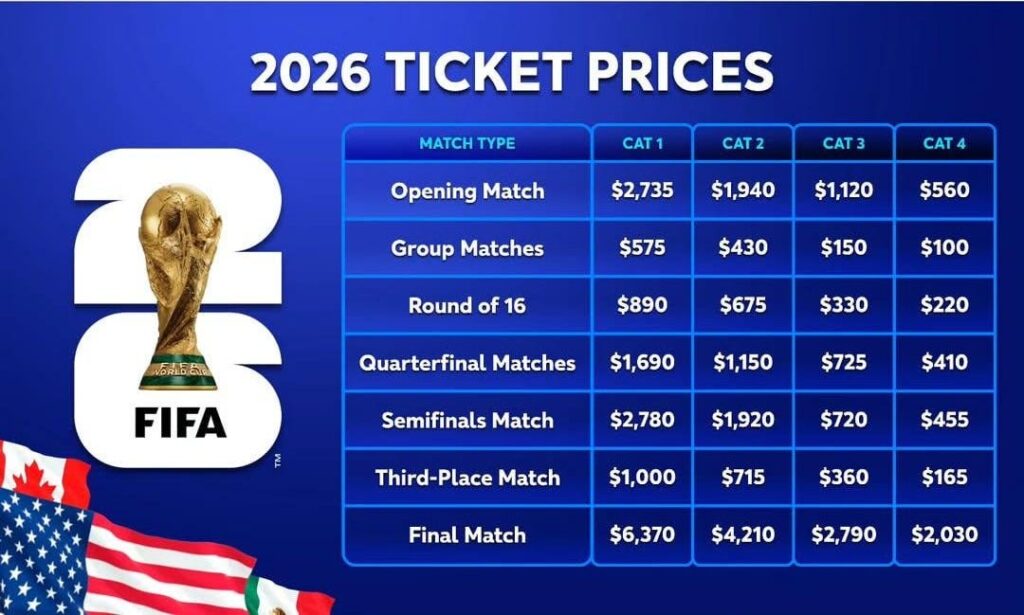
The FIFA World Cup 2026 is one of the most anticipated sporting events in history. For those planning to attend, FIFA World Cup 2026 Ticket Prices and Availability will be crucial information to secure your place at this historic event. For the first time, the tournament is being jointly hosted by three countries—the United States, Canada, and Mexico—and it features an expanded format with 48 teams and 104 matches. This historic tournament is expected to attract millions of spectators from around the world, making ticket demand unprecedented.
As excitement grows, one of the most common questions among football fans concerns ticket prices and availability. Understanding how FIFA’s ticketing system works, what tickets cost, where they can be purchased, and how availability changes throughout the tournament is essential for anyone hoping to attend.
This article explores FIFA World Cup 2026 ticket prices, sales phases, availability trends, purchasing strategies, and the factors influencing costs. It also examines the challenges fans face, including dynamic pricing, resale markets, and ticket scams.
The 2026 tournament is the largest FIFA World Cup ever organized.
Key tournament statistics include:
The expanded format significantly increases ticket inventory compared to previous tournaments. However, demand has also increased dramatically because more fans have access to matches across a wider geographic area. FIFA estimated that nearly two million tickets were sold during the early sales phases alone.
Unlike many sporting events that use a simple first-come, first-served system, FIFA uses multiple ticket sales phases designed to distribute tickets fairly among global fans.
According to FIFA, ticket sales were organized into several stages:
Each phase used different purchasing mechanisms, including lottery-style allocations and first-come, first-served sales. The final sales phase began on April 1, 2026, and continues through the conclusion of the tournament, with tickets allocated in real time based on availability.
The phased approach helps manage overwhelming demand while reducing the advantage of speed-based purchasing systems.
Benefits include:
However, high-demand matches often sell out quickly regardless of the allocation system.
Ticket availability varies significantly depending on the match, venue, and participating teams.
Generally:
The Last-Minute Sales Phase allows fans to purchase any remaining inventory as well as tickets returned through cancellations and exchanges. Availability is updated continuously based on inventory levels.
For fans unable to secure tickets during official sales phases, FIFA operates an official resale and exchange marketplace.
This platform allows:
Availability on the resale marketplace depends entirely on tickets being listed by other fans and cannot be guaranteed.
Ticket prices are influenced by multiple factors:
As a result, ticket prices can range from a few hundred dollars for lower-demand group-stage matches to several thousand dollars for premium seats at marquee fixtures.
Group-stage matches generally represent the most affordable option for fans.
Reports from June 2026 indicated that some of the least expensive tickets available for lower-demand group-stage matches started around $300, while more popular matches exceeded $1,000 for entry-level seats.
Factors affecting group-stage prices include:
As the tournament progresses, prices generally rise substantially.
Knockout-round tickets command premiums because:
Quarterfinal and semifinal matches frequently reach several thousand dollars in premium seating categories.
The FIFA World Cup Final remains the most expensive ticket in global football.
Reports in 2026 indicated that premium final tickets could reach official prices of approximately $10,990, with even higher prices appearing on secondary markets.
Such pricing reflects extraordinary demand for what many fans consider a once-in-a-lifetime event.
Dynamic pricing adjusts ticket costs based on demand and market conditions.
This system has become common in:
For the 2026 World Cup, FIFA adopted dynamic pricing mechanisms that allowed ticket prices to increase as demand rose.
Supporters argue that dynamic pricing:
Critics argue that it:
The debate surrounding dynamic pricing has become one of the most discussed aspects of World Cup 2026 ticketing.
Matches involving globally popular teams consistently attract premium pricing.
Examples include:
Reports indicated that many of these games featured entry-level ticket prices above $1,000 on secondary markets due to overwhelming demand.
This demonstrates how team popularity can dramatically influence ticket costs.
Many fans turn to secondary marketplaces when official inventory becomes unavailable.
Popular resale platforms include:
However, buyers should exercise caution because resale prices can significantly exceed face value.
Some fans have reported difficulties involving ticket fulfillment and transfers through secondary marketplaces.
Cases have emerged in which tickets purchased months in advance were later canceled, forcing buyers to seek replacements at much higher prices.
This highlights the importance of understanding platform policies before making purchases.
Major sporting events often attract fraudsters seeking to exploit enthusiastic fans.
Authorities have warned about fraudulent websites impersonating official FIFA ticket portals. These sites often use convincing branding and misleading URLs designed to trick buyers.
Security experts recommend manually entering FIFA’s official website address rather than relying on search advertisements or unfamiliar links.
The 16 host cities each experience different demand patterns.
Factors affecting local demand include:
Cities hosting knockout matches generally experience significantly stronger ticket demand than those hosting only group-stage contests.
Many fans underestimate the total cost of attending a World Cup.
Additional expenses include:
For international visitors, travel costs may exceed ticket expenses depending on the destination city.
FIFA also offers premium hospitality packages that combine match tickets with additional services.
These packages may include:
Although considerably more expensive, hospitality packages provide guaranteed access and enhanced amenities.
Several unique factors have contributed to extraordinary demand.
These factors have combined to create one of the most sought-after sporting events ever held.
Fans still searching for tickets can improve their chances by following several best practices.
Flexibility often increases the likelihood of securing tickets at more reasonable prices.
The 2026 tournament may influence future FIFA ticketing strategies.
Key trends include:
The lessons learned from 2026 will likely shape ticket distribution systems for future World Cups and other major international sporting events.
The FIFA World Cup 2026 represents the largest and most ambitious football tournament ever organized. With 48 teams, 104 matches, and host cities spread across North America, demand for tickets has reached unprecedented levels. Ticket prices vary dramatically depending on match importance, participating teams, seat categories, and market demand, ranging from several hundred dollars for some group-stage games to more than $10,000 for premium final tickets.
Availability continues to evolve through FIFA’s final sales phase and official resale marketplace, offering opportunities for fans who remain persistent and flexible. However, the popularity of the tournament has also led to challenges, including dynamic pricing controversies, resale market complexities, and increasing ticket fraud risks.
For fans hoping to attend, preparation is essential. Understanding FIFA’s ticketing system, monitoring official sales channels, budgeting for travel expenses, and avoiding unauthorized sellers can significantly improve the experience. While securing tickets may be challenging, the opportunity to witness history at the largest FIFA World Cup ever staged remains an unforgettable prospect for football supporters around the world.