

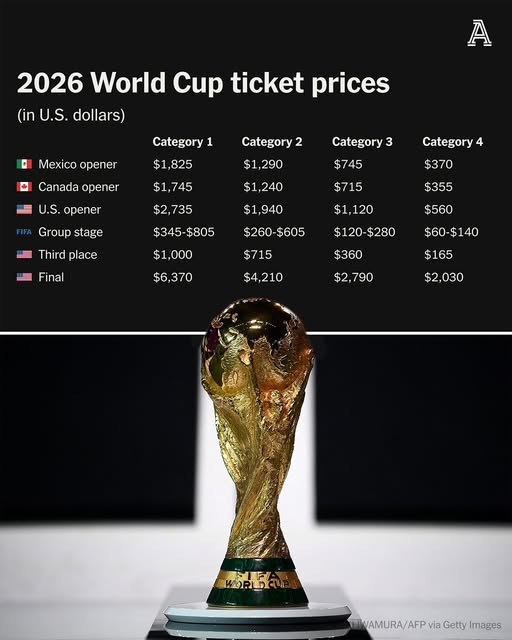
The FIFA World Cup is the most prestigious and widely watched sporting event on the planet. Every four years, billions of viewers tune in to watch the world’s best national football teams compete for the ultimate prize. The 2026 FIFA World Cup promises to be historic, not only because of the football but also because it will be the first World Cup hosted jointly by three countries—the United States, Canada, and Mexico. It will also feature an expanded format with 48 teams, making it the largest FIFA World Cup in history. Many fans are already wondering about FIFA World Cup 2026 Ticket Prices and Availability.
With millions of fans expected to travel from around the world, interest in FIFA World Cup 2026 tickets has reached unprecedented levels. Questions surrounding ticket prices, availability, purchasing processes, hospitality packages, resale options, and travel planning are among the most frequently discussed topics among football supporters.
This comprehensive guide explores FIFA World Cup 2026 ticket prices and availability, explains how the ticketing process works, highlights factors affecting costs, and provides practical advice for fans hoping to secure seats at one of the biggest sporting events ever organized.
The 2026 FIFA World Cup will mark several important milestones in tournament history.
The tournament will be staged across multiple cities in the United States, Canada, and Mexico, giving fans numerous opportunities to experience World Cup football in different locations.
The expanded format means more matches, more participating nations, and significantly more tickets available compared to previous tournaments.
World Cup tickets have always been among the most sought-after sports tickets globally. Several factors are expected to increase demand even further in 2026.
The FIFA World Cup attracts audiences from every continent. The inclusion of 48 teams allows more nations to qualify, increasing fan participation and travel demand.
The United States, Canada, and Mexico possess extensive transportation networks, modern stadiums, and large tourism infrastructures that make attendance more accessible for international visitors.
Many host venues are among the largest stadiums in the world, capable of accommodating tens of thousands of spectators.
Despite larger capacities, demand is still expected to exceed supply for many high-profile matches.
FIFA generally uses a phased ticket sales system to distribute tickets fairly among fans worldwide.
Fans usually begin by creating accounts through FIFA’s official ticketing platform.
This allows supporters to receive updates and participate in ticket lotteries when sales begin.
During initial sales windows, demand often exceeds supply.
In these cases, FIFA may conduct random selection processes where:
Following lottery phases, remaining tickets may become available on a first-come, first-served basis.
These sales often sell out quickly, particularly for marquee matches.
Additional tickets may be released closer to the tournament as stadium allocations are finalized.
Although official pricing structures can vary, FIFA traditionally offers multiple ticket categories.
These tickets generally provide premium viewing locations near the center of the field.
Characteristics include:
For Category 2, tickets typically provide strong viewing positions while remaining more affordable than premium seats.
These tickets are often designed to offer budget-friendly access while maintaining a quality stadium experience.
Premium hospitality experiences generally include:
Official ticket prices can vary significantly depending on match importance, stadium location, seating category, and demand.
Historically, FIFA has offered a broad range of pricing options to accommodate different budgets.
Group-stage games are generally among the most affordable World Cup tickets.
Fans may find pricing across various categories ranging from budget-friendly seats to premium experiences.
As teams advance through the tournament, demand typically increases.
Round of 32, Round of 16, quarterfinal, and semifinal tickets often command higher prices.
The World Cup Final is traditionally the most expensive and sought-after ticket in the tournament.
Premium seating and hospitality packages can cost several times more than standard tickets.
Several variables influence World Cup ticket pricing.
Higher-stakes matches generally attract greater demand.
Examples include:
Host cities with strong tourism appeal may experience increased demand.
Matches involving football powerhouses often generate exceptional ticket demand.
Examples include:
Seats closer to the pitch or near midfield generally command higher prices.
Many fans seek enhanced experiences through hospitality packages.
These premium options often include:
Hospitality packages are particularly popular among corporate guests and international travelers seeking premium tournament experiences.
Although the 2026 tournament will feature more matches than previous editions, obtaining tickets may still be difficult.
Millions of supporters from around the world will compete for a limited number of seats.
Certain matches are expected to sell out almost immediately.
Examples include:
North America’s extensive tourism infrastructure is expected to attract large numbers of international visitors.
Past FIFA World Cups provide valuable insight into expected demand for 2026.
Historically, FIFA has received millions of ticket applications during initial sales phases.
Many high-profile matches have experienced demand far exceeding stadium capacities.
This trend is expected to continue, particularly given the expanded popularity of football globally.
FIFA often establishes official resale platforms to allow fans to transfer or sell tickets safely.
Fans should exercise caution when purchasing tickets from unauthorized third-party sources.
Major sporting events frequently attract fraudulent ticket sellers.
To reduce risk:
Scams often increase as tournament dates approach.
Attending the World Cup involves more than purchasing match tickets.
Additional expenses may include:
For international visitors, these costs may exceed ticket expenses.
Fans should begin planning well in advance.
Recommended budgeting strategies include:
Early planning can significantly reduce overall travel expenses.
Different host cities may experience varying levels of demand.
Factors affecting local demand include:
Some cities may offer greater ticket availability due to larger stadium capacities.
Fans hoping to attend should consider several strategies.
Flexibility often increases the likelihood of securing tickets.
Ticket sales contribute significantly to tournament revenues.
Revenue generated through ticketing supports:
The broader economic impact extends to tourism, hospitality, transportation, and local businesses.
Ticket sales are typically launched in phases prior to the tournament. Fans should monitor official FIFA announcements for exact dates.
Prices will vary depending on match type, seating category, and demand. Premium matches and hospitality packages generally cost significantly more than group-stage tickets.
Yes. Premium hospitality experiences are expected to be available for fans seeking luxury seating and exclusive amenities.
Official resale platforms are often provided to facilitate secure and authorized ticket transfers.
Opening matches, host nation games, semifinals, and the World Cup Final typically experience the highest demand.
The FIFA World Cup 2026 is set to become one of the largest and most exciting sporting events ever organized. With an expanded 48-team format, three host nations, and a record number of matches, millions of football fans around the globe are eager to secure tickets and experience the tournament firsthand. While increased stadium capacity and additional matches may improve overall availability, demand is still expected to be exceptionally high, particularly for premium fixtures and knockout-stage games.
Understanding the ticketing process, expected pricing structures, hospitality options, and availability challenges can help fans prepare effectively and maximize their chances of attending. Early registration, flexible planning, careful budgeting, and purchasing through official channels will be critical strategies for supporters seeking tickets. As anticipation builds toward 2026, fans who stay informed and plan ahead will be best positioned to enjoy what promises to be a historic FIFA World Cup and an unforgettable global celebration of football.