

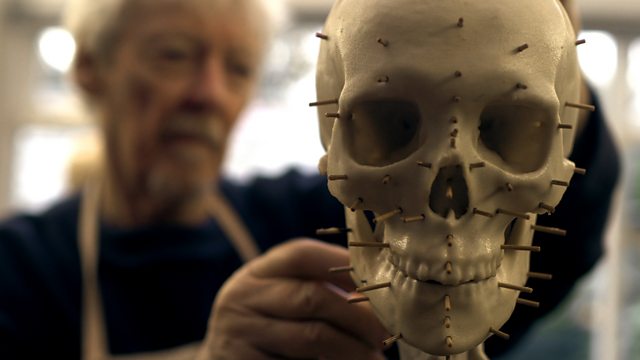
The eruption of Mount Vesuvius in 79 AD remains one of the most studied natural disasters in human history. For the first time, researchers have achieved a First-Ever Facial Rebuild from 79 AD Vesuvius Eruption Remains, shedding new light on the people who lived through this disaster. In a matter of hours, thriving Roman cities such as Pompeii, Herculaneum, Oplontis, and Stabiae were buried beneath volcanic ash, pumice, and pyroclastic flows. Thousands of people lost their lives, while entire communities were frozen in time beneath layers of volcanic material.
For centuries, archaeologists have uncovered buildings, artwork, household items, and human remains from the disaster. These discoveries have provided invaluable insights into everyday life during the Roman Empire. However, despite the abundance of archaeological evidence, many victims remained anonymous individuals whose personal stories were lost to history.
Recent advances in forensic science, digital imaging, anthropology, and facial reconstruction technology have changed that reality. The first-ever facial rebuild created from human remains recovered from the 79 AD Vesuvius eruption represents a groundbreaking achievement in archaeology and forensic science. By reconstructing the face of a victim who lived nearly 2,000 years ago, researchers have provided a remarkable glimpse into the human dimension of one of history’s most devastating volcanic disasters.
This scientific breakthrough not only helps us visualize an ancient individual but also deepens our understanding of Roman society, disaster victims, and the evolving technologies that allow modern researchers to connect with the distant past.
Mount Vesuvius, located near modern-day Naples in southern Italy, erupted violently in August or October of 79 AD, depending on interpretations of historical and archaeological evidence.
The eruption unleashed enormous quantities of volcanic material into the atmosphere. Ash clouds rose miles above the mountain, while pyroclastic surges and flows swept across nearby settlements.
Major affected communities included:
Ancient Roman writer Pliny the Younger provided eyewitness accounts of the disaster, making the eruption one of the best-documented volcanic events in antiquity.
The victims of Vesuvius have fascinated archaeologists for generations because their remains offer an extraordinary snapshot of life and death in the Roman world.
Unlike many archaeological sites where centuries of change alter the original context, the rapid burial caused by the eruption preserved:
This preservation allows researchers to study ancient lifestyles with remarkable detail.
Human remains are particularly valuable because they reveal information about health, diet, occupation, social status, migration patterns, and causes of death.
Facial reconstruction has evolved significantly over the past century.
Early attempts relied heavily on artistic interpretation and limited anatomical data. Modern techniques combine scientific measurements, digital modeling, medical imaging, and forensic anthropology.
Today’s facial reconstruction process often includes:
These methods allow researchers to create highly detailed representations of historical individuals while maintaining scientific accuracy.
The facial rebuild project began with the examination of well-preserved human remains recovered from the Vesuvius disaster zone.
Researchers selected remains that offered sufficient skeletal preservation to support detailed analysis. The skull served as the primary foundation for the reconstruction process.
Scientists carefully studied:
Each anatomical feature contributed to the development of the final facial model.
Creating a facial reconstruction requires a combination of scientific precision and artistic expertise.
The process generally follows several stages.
Researchers first create a high-resolution digital scan of the skull using advanced imaging equipment.
Anthropologists evaluate sex, age, ancestry, and other biological characteristics.
Standardized tissue-depth markers are applied to estimate the thickness of muscles and skin at various facial points.
Features such as the nose, lips, eyes, and ears are modeled using established forensic methodologies.
Specialized software generates a realistic representation of the individual’s face.
The result is not a photograph but rather a scientifically informed approximation based on available evidence.
The completed facial rebuild provided an unprecedented glimpse into the appearance of a person who lived during the Roman Empire nearly two millennia ago.
Researchers were able to observe:
The reconstruction transformed skeletal remains into a recognizable human face, creating a powerful emotional connection between modern viewers and the ancient victim.
One of the most important aspects of facial reconstruction is its ability to humanize archaeological discoveries.
Numbers and statistics often dominate discussions of historical disasters. However, facial reconstructions remind us that each victim was a unique individual with a personal story.
The Vesuvius victim likely had:
By restoring a face, researchers help bridge the gap between ancient history and contemporary audiences.
The Vesuvius reconstruction joins a growing list of famous historical facial rebuilds.
Notable examples include:
These projects have demonstrated the value of combining archaeology with modern forensic science.
In many cases, facial reconstructions have generated renewed public interest in historical research and museum exhibitions.
Forensic anthropology plays a central role in reconstruction projects.
Anthropologists analyze skeletal remains to determine:
This information helps researchers create more accurate representations of ancient individuals.
The reconstruction also contributes to broader studies of Roman society.
Archaeological evidence from Vesuvius sites provides detailed information about:
Each new scientific discovery adds another layer of understanding to daily life in the Roman Empire.
The remarkable preservation of Vesuvius victims is largely due to the unique conditions created by the eruption.
Volcanic materials rapidly covered structures and human remains, limiting exposure to environmental degradation.
Preservation factors included:
These conditions created one of the most important archaeological archives in the world.
Although modern reconstruction methods are highly sophisticated, they still involve certain limitations.
Researchers cannot always determine:
As a result, some aspects of the final appearance remain informed estimates rather than confirmed facts.
Scientists emphasize that reconstructions are approximations based on the best available evidence.
The Vesuvius facial rebuild highlights the growing role of technology in archaeological research.
Modern tools now include:
These technologies enable researchers to investigate ancient remains with unprecedented precision.
Facial reconstructions often attract widespread public attention because they make history more accessible and relatable.
Educational benefits include:
Students and museum visitors frequently find reconstructed faces more memorable than skeletal remains alone.
The success of the first facial rebuild from Vesuvius eruption remains opens new possibilities for future studies.
Researchers may eventually reconstruct additional individuals from:
Future projects could help reveal demographic diversity, family relationships, migration patterns, and population health within ancient communities.
As technology continues to improve, facial reconstructions are likely to become increasingly detailed and scientifically accurate.
Modern archaeological research increasingly considers ethical questions surrounding the reconstruction and display of human remains.
Important considerations include:
Responsible reconstruction projects seek to balance scientific inquiry with dignity and respect for historical individuals.
Nearly 2,000 years after the eruption, Mount Vesuvius continues to shape our understanding of the ancient world.
The disaster preserved an unparalleled archaeological record that allows researchers to study Roman civilization in extraordinary detail.
Every new discovery contributes to a richer understanding of:
The facial reconstruction serves as a reminder that behind every archaeological artifact lies a human story waiting to be rediscovered.
The first-ever facial rebuild from remains associated with the 79 AD eruption of Mount Vesuvius represents a remarkable milestone in archaeology, forensic science, and historical research. By combining advanced imaging technologies, forensic anthropology, and digital reconstruction techniques, researchers have transformed skeletal remains into a recognizable human face, creating an unprecedented connection to an individual who lived nearly two millennia ago.
Beyond its scientific significance, the reconstruction highlights the human dimension of one of history’s most famous natural disasters. It reminds us that the victims of Vesuvius were not merely archaeological specimens or historical statistics but real people with lives, families, ambitions, and experiences.
As technology continues to advance, similar projects will likely provide even deeper insights into ancient civilizations and the people who inhabited them. The Vesuvius facial reconstruction stands as a powerful example of how modern science can bring the distant past to life, transforming forgotten remains into meaningful stories that continue to inspire curiosity, empathy, and discovery.